Food for feed: Fish farming and the struggle to police seafood supply chains
详细摘要
As overfishing and climate change shrink local catches, the Philippines is turning to aquaculture as a solution. But expanding fish farms could deepen reliance on fishmeal, a feed ingredient tied to labor abuse, depleted fisheries, illegal fishing, and food insecurity.
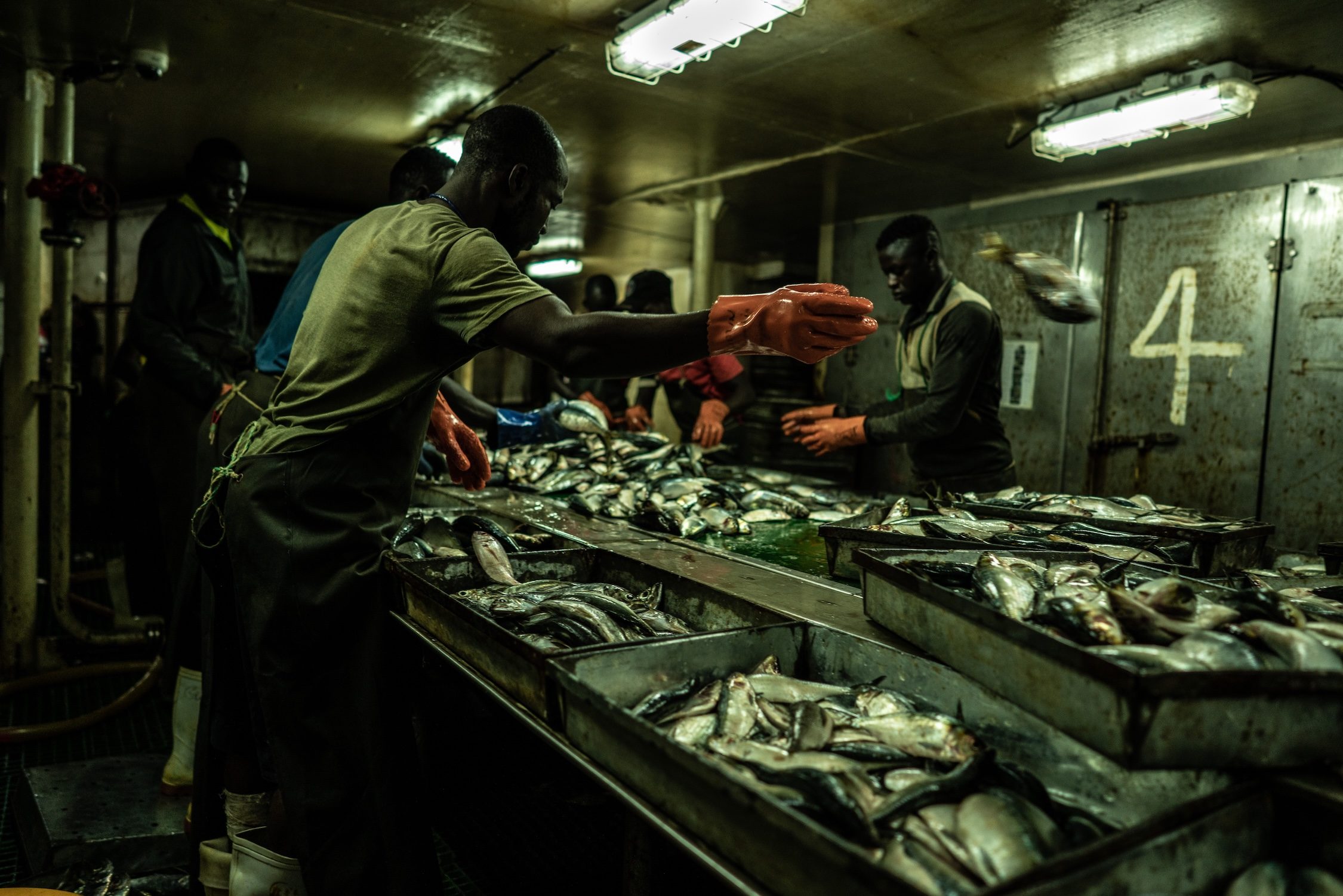
SORTING OUT. Workers sort catch aboard the China-flagged Lu Lao Yuan Yu 010 in Gambian waters in 2019. When Outlaw Ocean Project reporters boarded vessels, they documented widespread complaints about poor living and working conditions.
An archipelago nation consisting of more than 7,000 islands, the Philippines has at least 22,000 miles of coastline and a fishing fleet of roughly 5,000 commercial fishing vessels. Seafood — especially wild-caught, more than farm-raised — is the most popular form of animal protein, above chicken, beef, and pork.
Small species like sardines and scad have always been staples in poorer Filipino households. In the past few decades, however, overfishing and climate change have made these fish less accessible, and Philippine seafood companies have aimed to reroute seafood for export rather than domestic consumption.
Experts say this is cause for concern because the need for more affordable sources of protein has never been greater. By 2050, the Philippines’ population is projected to reach at least 150 million, increasing demand for fish by more than 1.6 million tons annually, according to a 2023 study in The Philippine Journal of Fisheries.
Many of the fishers who supply the country’s fishmeal plants work in exploitative arrangements. The majority of the crew on tuna handliners and purse seiners in the Philippines, for example, worked under some form of debt bondage to pay back cash loans or advances, according to a study by Safe Seas.
Companies avoided minimum wage laws by hiring fishers as contractors rather than employees, or changed their flags, meaning that Philippine laws no longer applied. They then illegally dismissed and blacklisted fishers who attempted to unionize.
Fishers were among the most impoverished groups in Mindanao as of 2022, and their families experience high rates of childhood malnutrition, according to a study by Mrag Asia Pacific.
The compensation did not account for the level of risk they faced; globally, fishing is…
Crew…
文章开头,摘自Rappler。如需阅读全文,请前往媒体网站。
MarketNews 仅展示媒体发布的标题和摘要,全文请在出版方网站阅读。 (www.rappler.com)