Saudi Arabia accused of playing spoiler after COP31 failure
详细摘要
Fossil fuels, the leading cause of climate change, remain indispensable to the Saudi economy – a situation compounded by the Middle East war. Read more at straitstimes.com.
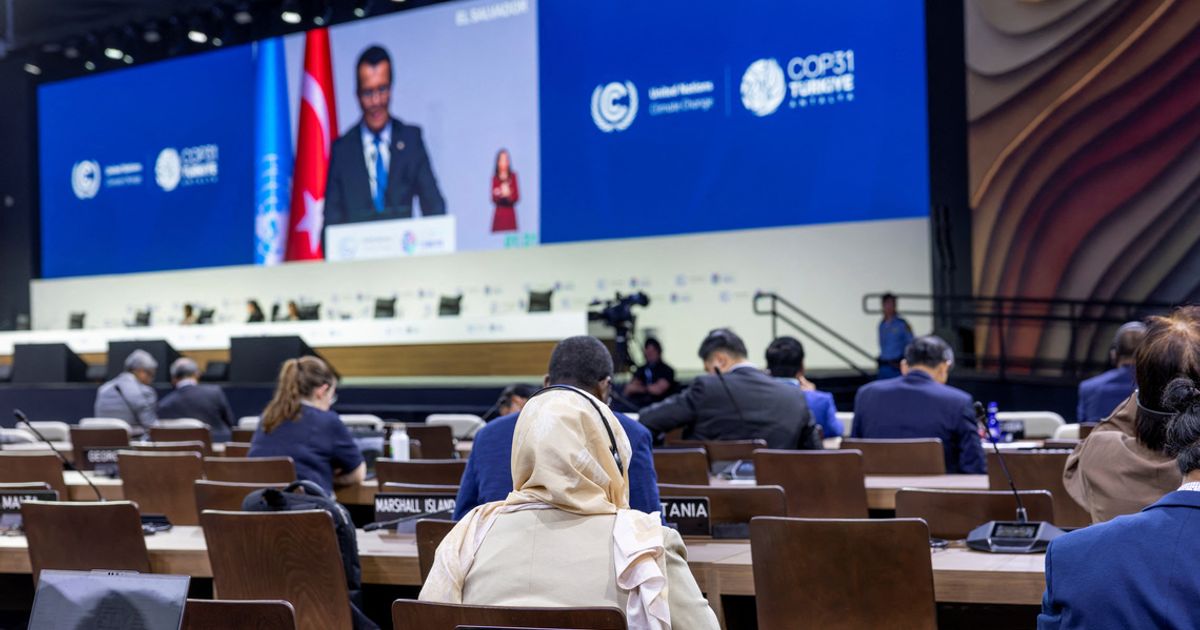
Seats reserved for Saudi Arabia in the foreground as meetings continue at COP31 in Antalya, Turkey, on Nov 17.
ANTALYA, Turkey - After COP31 climate talks collapsed, all eyes were on oil giant Saudi Arabia, which led the push against including language around fossil fuels in the final text as it faces a major economic contraction.
Nations from the Pacific, Europe and Latin America had demanded an explicit mention of fossil fuels, but Riyadh instead pushed for the inclusion of carbon capture and storage technologies, which aim at limiting emissions without giving up oil and gas.
Fossil fuels, the leading cause of climate change, remain indispensable to the Saudi economy – a situation compounded by the Middle East war.
Former US vice-president Al Gore told AFP earlier it was “literally insane” that Saudi Arabia, the world’s top oil exporter, had a de facto veto under the meeting’s consensus system.
The regional war that began in February caused widespread economic fallout.
Iran has sought to block commercial shipping through the Strait of Hormuz waterway, a vital conduit for shipments of crude and gas, and its Houthi allies in Yemen have targeted Saudi Arabia’s oil infrastructure and shipping.
The International Monetary Fund has forecast a 3.3 per cent drop in Saudi GDP in 2026, compared with 4.6 per cent growth in 2025.
Oil revenues were 446.3 billion riyals (S$152.6 billion) in the first nine months of 2026, 52 per cent of public income, according to the finance ministry.
文章开头,摘自The Straits Times。如需阅读全文,请前往媒体网站。
MarketNews 仅展示媒体发布的标题和摘要,全文请在出版方网站阅读。 (www.straitstimes.com)