MSCI removes more Indonesian stocks, dealing fresh blow to market amid reform push
Résumé détaillé
The index provider removes energy company Barito Pacific, owned by billionaire Prajogo Pangestu
The index provider removes energy company Barito Pacific, owned by billionaire Prajogo Pangestu
[JAKARTA] Indonesia’s stock market suffered another setback after MSCI removed several companies from its index on Thursday (Nov 12), piling pressure on the authorities to address the index provider’s concerns about market transparency.
The move follows MSCI’s warning last month that Indonesian stocks could face broader exclusions from its indices next year, alongside the risk of the country being reclassified from an emerging market to a standalone market, a significantly more severe outcome than the initial warning issued in January.
MSCI removed energy company Barito Pacific, owned by billionaire Prajogo Pangestu, from its Global Standard Index, while mining company Bumi Resources Minerals will be downgraded to the Global Small Cap Index, according to the index provider’s latest review released early Thursday.
The index provider also removed nine Indonesian stocks from its Global Small Cap Index, further reducing the country’s representation in its global benchmarks. The changes will take effect after the market closes on Nov 30.
South-east Asia’s largest economy is under growing scrutiny as investors raise concerns over market transparency, the reliability of free-float data and opaque shareholding structures.
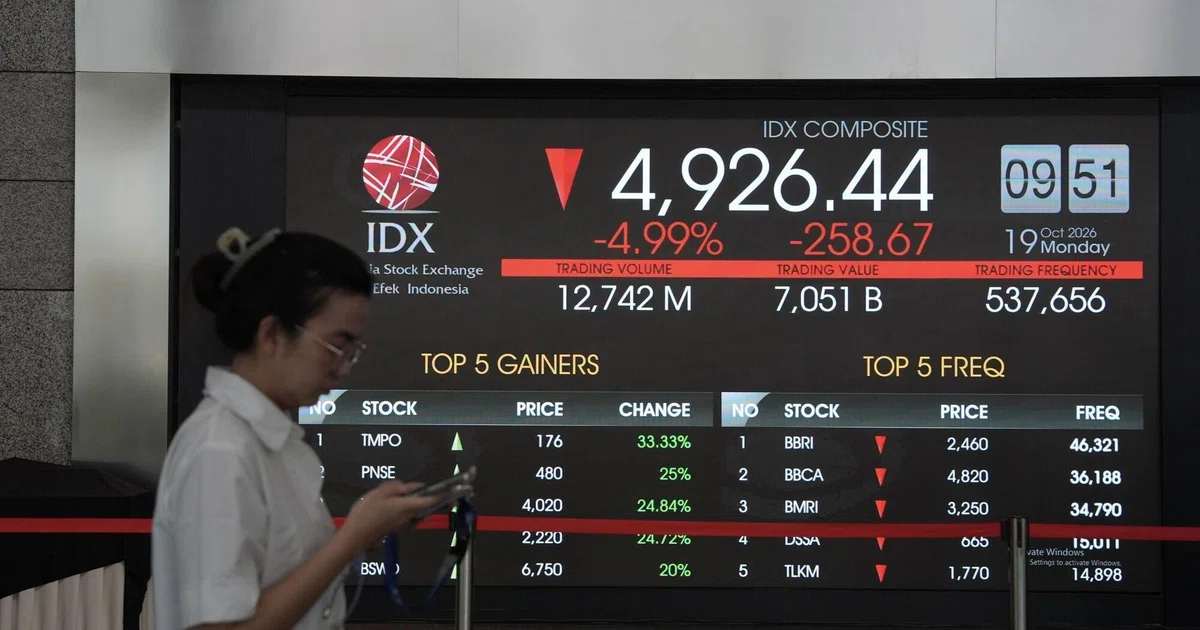
Fears of a potential downgrade have added to selling pressure on Indonesian equities, contributing to a more than 41 per cent decline in the Jakarta Composite Index so far this year, making it the world’s worst-performing major stock market.
Find out how enterprises are navigating power constraints and sustainability targets
Foreign investors have withdrawn about US$5.4 billion from Indonesian equities so far this year, reflecting growing caution over the country’s market outlook.
Début de l'article, extrait de The Business Times. Pour lire la suite, ouvrez l'article chez le média.
MarketNews présente le titre et le résumé publiés par le média. L'article complet se lit sur le site de l'éditeur. (www.businesstimes.com.sg)