Australia’s new gas reservation policy aims to keep supply secure and prices low. Will it work?
Résumé détaillé
Gas exporters will have to keep up to 20% of their production for domestic markets in a bid to secure supply and bring down prices.
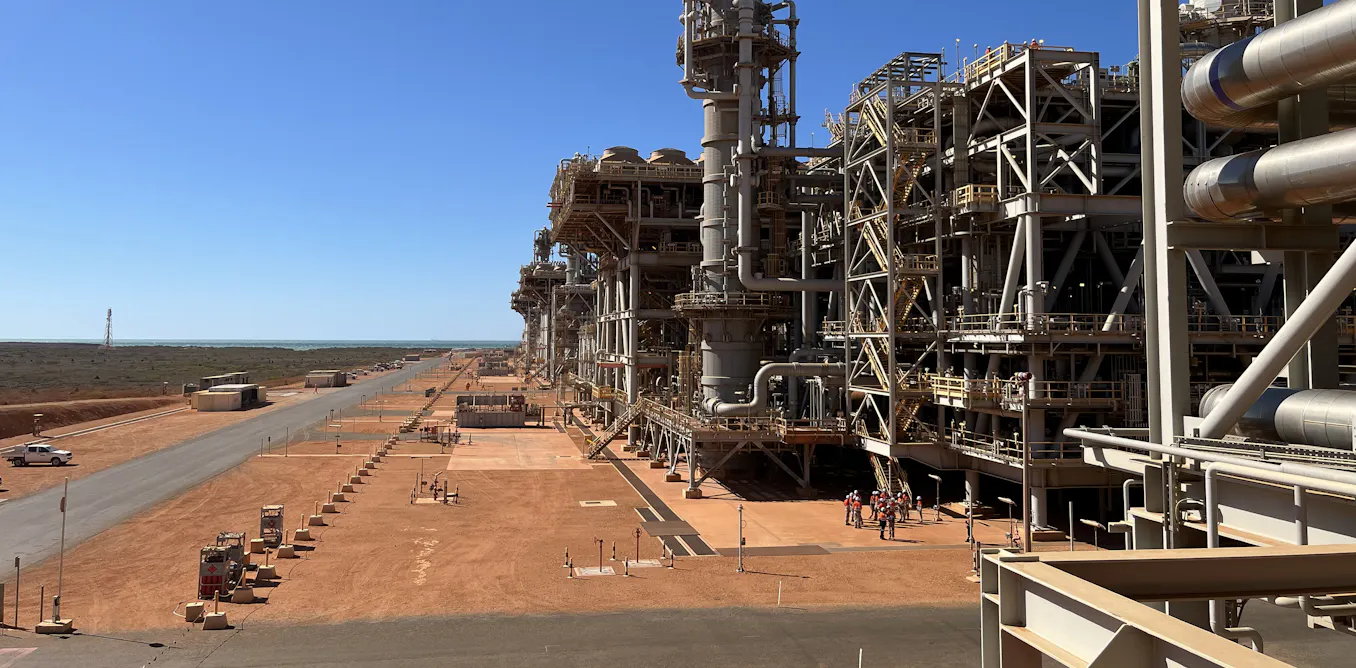
Gas exporters will have to reserve up to 20% of their production for the domestic market from 2028 under the federal government’s new domestic gas reservation scheme.
Australia is a major gas producer, but until now, governments on the east coast have had limited capacity to restrict or control gas exports and reserve gas for domestic consumers.
The aim of the new scheme is to increase domestic gas supply, improve energy security and bring prices down.
The scheme imposes a domestic supply obligation on exporters of liquid natural gas (LNG). This means they must make up to 20% of their export volumes available to the domestic market.
The scheme includes exceptions for gas committed under existing contracts, other domestic gas reservation arrangements, or infrastructure constraints. The supply obligation is also subject to some local variations.
So, 20% is the maximum supply obligation, but it is not fixed across the board. The exact percentage for each gas exporter will be determined by the Australian Energy Regulator, who will adjust it in accordance with domestic demand and the goal of achieving a 10% surplus.
Despite producing and exporting huge amounts of gas, Australia has seen periods of tight supply and high prices, particularly on the east coast.
A reservation policy can prevent large quantities of Australian gas being exported internationally without regard to the needs of Australian consumers. Gas is important for households, as well as for electricity generation and industries such as manufacturing, chemicals, fertilisers and food processing.
The scheme aims to increase the amount of gas available domestically. This should reduce scarcity, improve competition between suppliers and, hopefully, put downward pressure on wholesale prices.
Début de l'article, extrait de The Conversation AU. Pour lire la suite, ouvrez l'article chez le média.
MarketNews présente le titre et le résumé publiés par le média. L'article complet se lit sur le site de l'éditeur. (theconversation.com)