Top economist on the ‘psychological tax’ you pay at the grocery store: It’s ‘on steroids’ compared with the Great Recession
Résumé détaillé
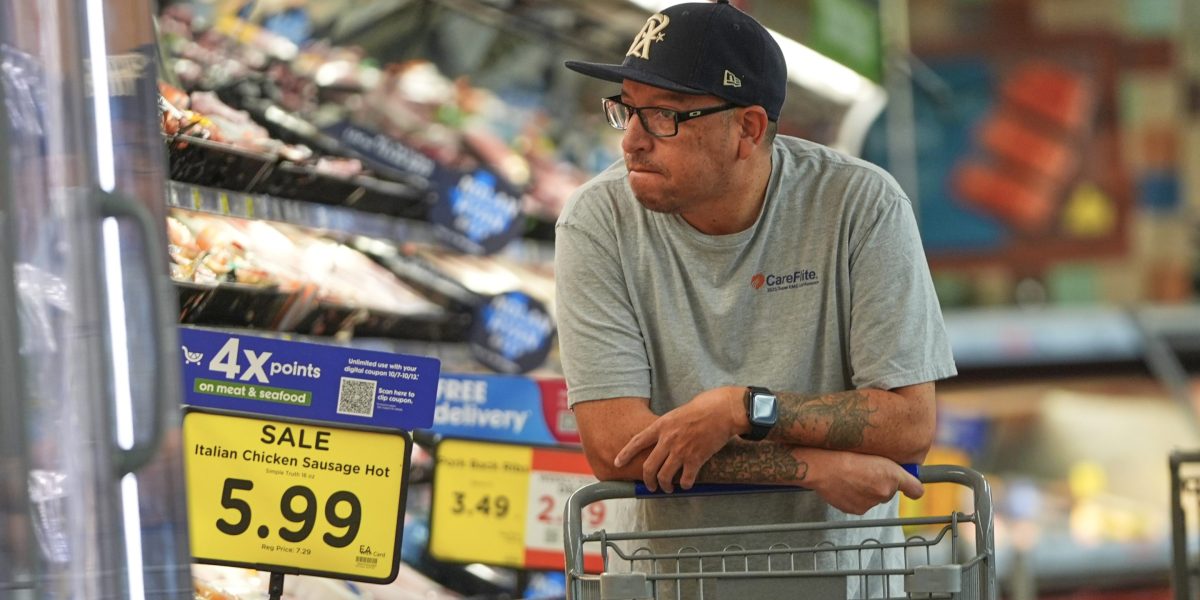
Navy Federal’s Heather Long says the K-shaped economy is now an E, as families pay $140 more a month for bills and gas. She calls it a “psychological tax.”
Mississippi hadn’t sent a new Democrat to the U.S. Senate since 1947. Then Sen. Cindy Hyde-Smith, asked about high beef prices, said Mississippians have “so many proteins to choose from.”
Her opponent, Scott Colom, turned it into a 28-second ad: “Pick another protein? Sheee-it, I’d rather pick another senator instead,” an Army veteran says in it. Colom won.
Democrats also took a Senate seat and the governor’s mansion in Texas, where James Talarico beat Ken Paxton and Gina Hinojosa unseated Gov. Greg Abbott. In Alaska, Mary Peltola’s win over Sen. Dan Sullivan, called Nov. 17, gave Democrats a 56-44 Senate majority. Peltola ran on Alaskans’ frustration with high fuel prices and other costs.
Voters were angry about “affordability” during the off-year elections of 2025 that, among other things, crowned Zohran Mamdani as one of America’s most popular politicians. Then they spent the year being told to adjust. If beef is too expensive, Agriculture Secretary Brooke Rollins said, “you can eat chicken, pork, salmon, eggs.” A Chevron executive, Andy Walz, said in April people should drive less as the Iran war pushed up gas prices. President Donald Trump called the price at the pump “a small price to pay.”
“A year ago, I still got a lot of flak from other economists who were like, that’s not in the data,” she said. “But it felt like Wall Street really embraced it.”
“The top is in its own tier,” Long said. The top third of households spends almost twice as much each month as the bottom two-thirds, and raised its spending by $234 a month from a year ago, against about $73 for everyone else.
“That top third, they’re just in a category of their own,” she said. “They’re not hugely impacted by inflation.” Adjusted for inflation, the top third’s spending is roughly flat since January, down 0.2%, according to the report.
“There’s been more differentiation this year between the middle and the bottom,” Long said.
“The middle is fascinating,” she said. “Yes, they can still pay their bills, but…
Début de l'article, extrait de Fortune. Pour lire la suite, ouvrez l'article chez le média.
MarketNews présente le titre et le résumé publiés par le média. L'article complet se lit sur le site de l'éditeur. (fortune.com)