Drastic spending cuts will win a few votes. But there is a heavy cost which cannot be ignored

Résumé détaillé
Here is why these sort of hefty cuts always fail.
The Great Depression which began about 97 years ago led to massive cuts in government spending, not least on pure scientific research all around the globe.
At one stage, Ernest Rutherford, a New Zealander and Nobel prize winner who was head of the Cavendish Laboratory in Cambridge, England, called a meeting of his staff.
"Gentlemen," he said. (They were all men in those days which might explain the leisurely pace of discovery.)
"We have run out of money. Now we must think." Within three years, scientists from the laboratory had split the atom, mostly by reusing and repurposing old bits of pipe, hose, glass and galvanised iron lying around.
[Pedant watch: If experience is any guide, some people will write to claim this quote for Winston Churchill in 1943. If he said it, and there is no written record of his doing so, even in material in which he scrupulously recorded his own wit, spontaneous interjection, alleged self-serving interventions, and rhetorical triumphs, it was at least 14 years after Rutherford.]
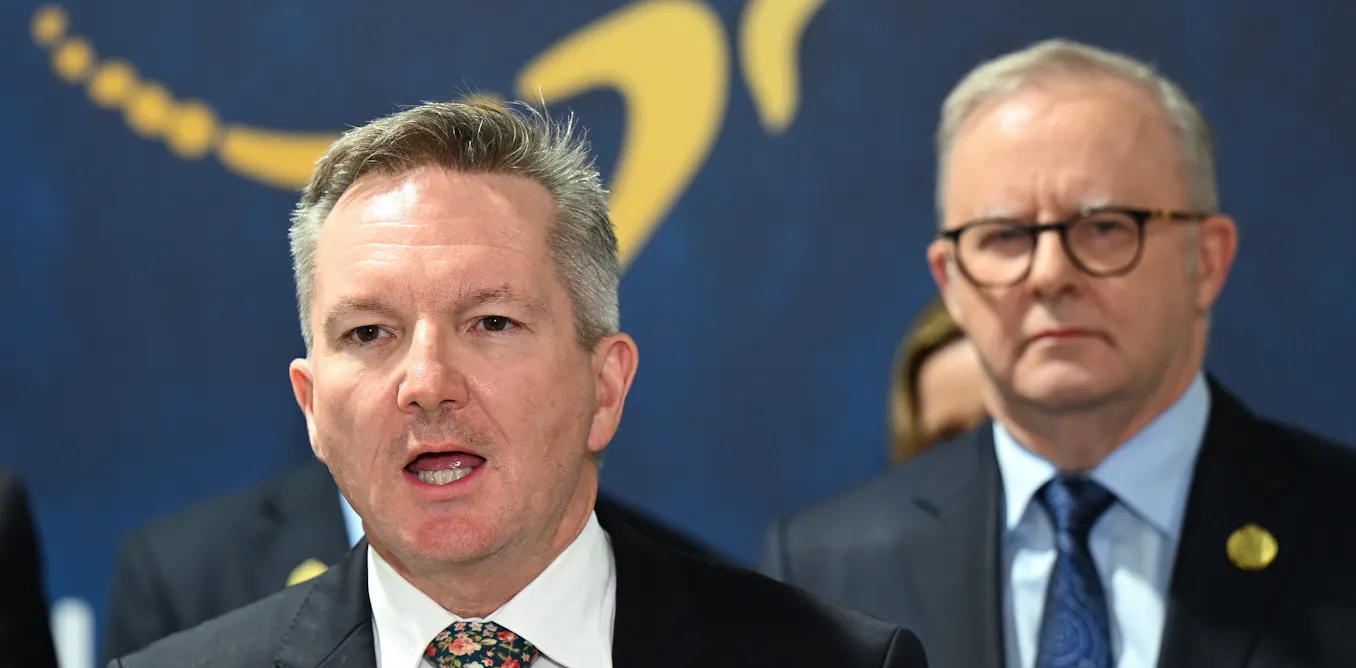
Rutherford's words could be a starting point for the dilemmas of Jim Chalmers and Anthony Albanese, and for Jessica Wilson, the Victorian state Liberal leader widely expected soon to become premier and treasurer of her state. Everyone assumes that this state teeters on the edge of bankruptcy, thanks to wild and reckless overspending by successive Labor governments, and or by handing over the money bags to the CFMEU, a matter being investigated by a royal commission.
Pretty much the same everyone, especially writers and advocates on The Australian and the Australian Financial Review, think the same could be said of the federal fiscus, thanks either to wild and profligate spending on unimportant things such as healthcare, education, pensions and disability care, or, to reckless and silly taxation of the sorts of people who buy the Australian and the AFR.
The governor of the Reserve Bank thinks the same, and Treasury, and former Treasury bureaucrats seem now, privately to…
Début de l'article, extrait de The Canberra Times. Pour lire la suite, ouvrez l'article chez le média.
MarketNews présente le titre et le résumé publiés par le média. L'article complet se lit sur le site de l'éditeur. (www.canberratimes.com.au)