As Trump courts Xi and Putin, middle powers make their own moves
Résumé détaillé
As U.S. President Donald Trump sought to reshape the world order around great powers this week, two U.S. allies looked beyond Washington.
BEIJING/TOKYO -- As U.S. President Donald Trump sought to reshape the world order around great powers this week, two U.S. allies looked beyond Washington.
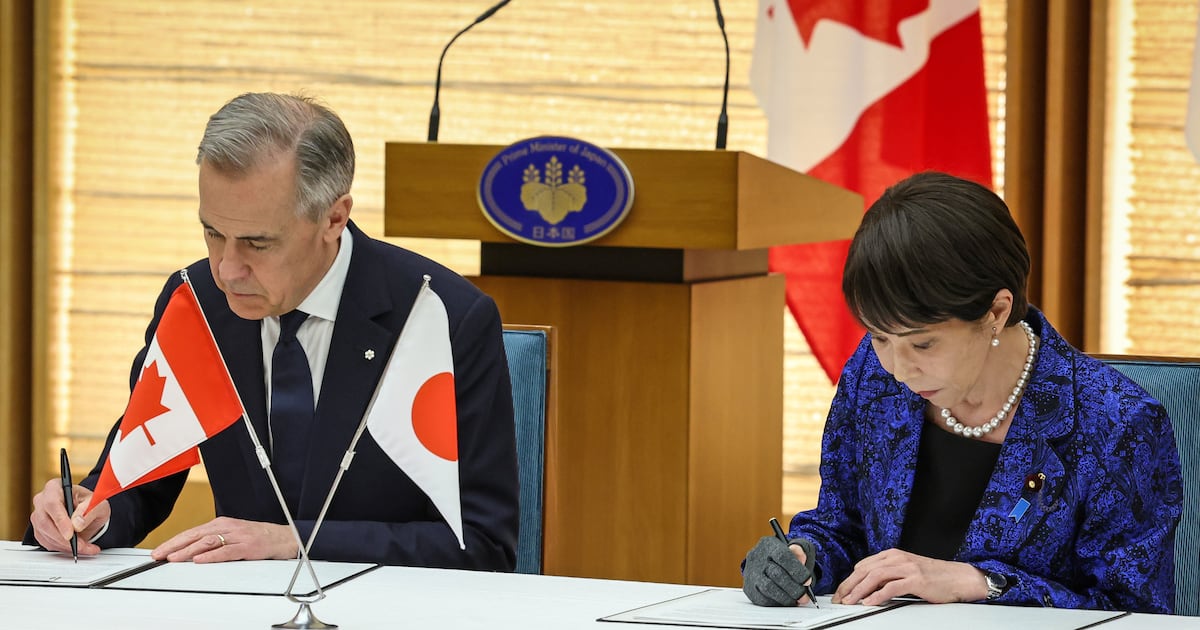
Canada found an opening in Beijing. Japan, at odds with China, turned to partners elsewhere in Asia.
Their middle-power diplomacy was overshadowed on Thursday when Trump joined Chinese leader Xi Jinping and Russian President Vladimir Putin at a lakeside villa in Shenzhen for a meeting that dominated the APEC leaders’ summit.
Trump boasted it was “bigger than Yalta,” the 1945 conference at which the United States, Britain and the Soviet Union divided up postwar Europe.
The meeting’s symbolism mattered even without a substantive agreement, said Alejandro Reyes, an adjunct professor at the University of Hong Kong.
“This is the first time the leaders of the three largest nuclear powers have sat down together,” he said.
But Tokyo and Ottawa’s efforts to forge new alliances show how middle powers can reach for alternative markets and suppliers to help maneuver around Washington’s tariffs or Beijing’s trade restrictions, while new defense partnerships give them more options on security.
“Countries want to reduce dependence on China’s supply chains and economy. But they are also de-risking against the U.S.,” said Zhao Minghao, an international relations expert at Shanghai’s Fudan University.
Canada and Japan show those efforts are gaining traction but also how geography and geopolitics shape which partners they can turn to.
Début de l'article, extrait de BNN Bloomberg. Pour lire la suite, ouvrez l'article chez le média.
MarketNews présente le titre et le résumé publiés par le média. L'article complet se lit sur le site de l'éditeur. (www.bnnbloomberg.ca)