Don’t blame the farmer
Résumé détaillé
INDIA’S groundwater crisis is often narrated through familiar images: a failed borewell, a falling water table, a tanker arriving in summer, or a farmer borrowi ...
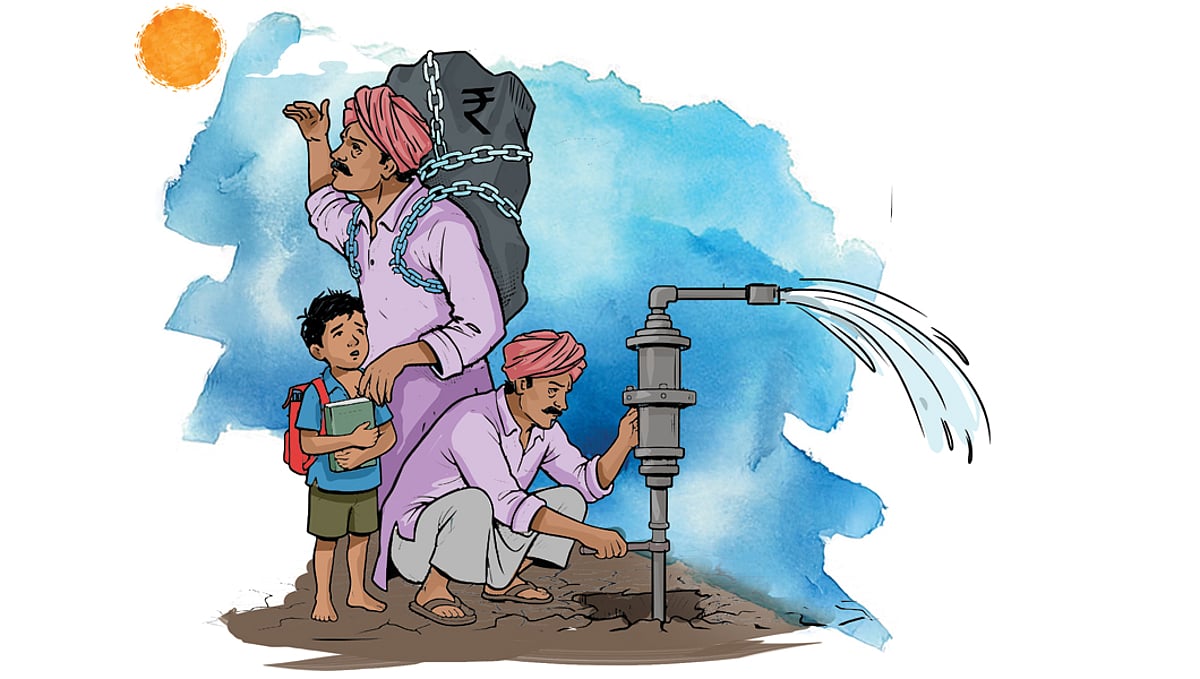
INDIA’S groundwater crisis is often narrated through familiar images: a failed borewell, a falling water table, a tanker arriving in summer, or a farmer borrowing again to drill deeper. Rishu Garg’s The Borewell Paradox: The Rationality of an Irrational Crisis asks us to look beyond these images. Why do people continue to make choices that, when repeated across a landscape, undermine the resource on which their own prosperity depends? And why do public programmes and professional interventions, designed in the name of water conservation, so often fail to alter that trajectory?
The answer, Garg argues, does not lie in blaming the farmer. The farmer at the centre of this book is not irrational. He reads the sky and soil, responds to uncertain rainfall, calculates the risk of crop failure, and has to meet immediate obligations—a season’s crop, children’s education, household expenses, debt and social commitments. When the survival of loved ones is at stake and no other option is there, taking risk of drilling is perfectly rational. Yet at landscape level and if collectively seen, it means draining future security. That contradiction is the book’s central idea: the “borewell paradox”.
One of the book’s strengths is the way it moves across India’s ecological and social diversity—from the northern hills and western plains to the hard-rock aquifers of central India, the drying tanks of peninsular India and landscapes in the Aravalli and Shivalik regions. These journeys are not travelogue. They reveal how water has historically been embedded in local institutions, cultural practices and systems of restraint. Indigenous arrangements treated access, sharing, preservation and recharge as social questions, not merely engineering ones.
The modern borewell altered this relationship. Mechanised drilling gave individual farmers the power to access a resource that exists beneath property boundaries but does not respect them.
Début de l'article, extrait de Down To Earth. Pour lire la suite, ouvrez l'article chez le média.
MarketNews présente le titre et le résumé publiés par le média. L'article complet se lit sur le site de l'éditeur. (www.downtoearth.org.in)