What Andrey Zvyagintsev’s ‘Minotaur’ Gets Wrong About Wartime Russia
Detailed summary
Almost none of them had anything to say about what actually happens in the film.
The reaction inside Russia to Andrey Zvyagintsev’s triumph at the Cannes Film Festival this spring was predictable. After the festival closed, Channel One, Rossiya-1 and NTV aired segments on the closing ceremony and the other winners.
But when it came to the Grand Prix awarded to “Minotaur,” the most acclaimed contemporary Russian director’s latest film, their coverage fell silent. State news agencies mentioned Zvyagintsev only after Kremlin spokesman Dmitry Peskov condemned the anti-war speech he gave at the festival.
Pro-government bloggers and tabloids, by contrast, had plenty to say. Life.ru called the picture a “cheap knockoff” made with Western money and starring “foreign agent” actors and accused Zvyagintsev of “smearing the country for the sake of festival awards.”
Former State Duma lawmaker Sergei Markov, who in 2014 called on Zvyagintsev to apologize to the Russian people for his film “Leviathan,” attributed the prize to “Russophobia,” accusing the director of painting Russia in dark colors film after film. The popular pro-war Telegram channel Rybar ran a string of posts making much the same charge. Zvyagintsev, it said, trashed his homeland on the West’s dime.
Almost none of them had anything to say about what actually happens in the film.
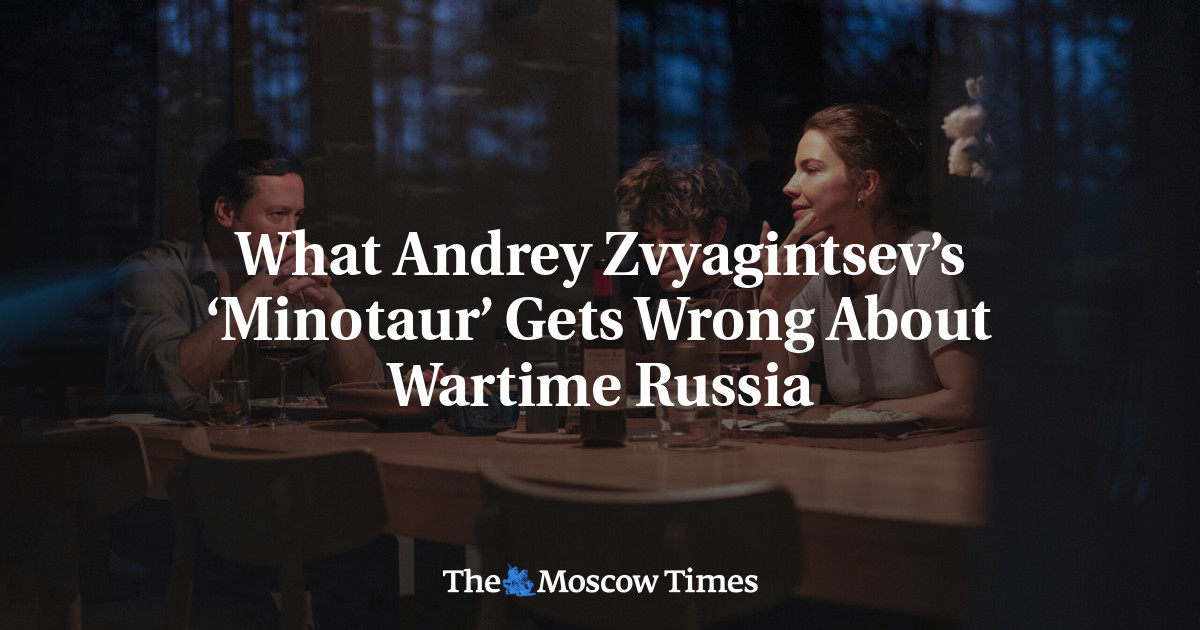
At the center of “Minotaur” is Gleb, a factory director in an unnamed Russian city. When he learns that his wife, Galina, has been unfaithful, he goes to see her lover and kills him in a fit of rage. He leaves behind every possible piece of evidence, from fingerprints to security camera footage. In this part, the plot loosely follows Claude Chabrol’s 1969 thriller “The Unfaithful Wife” (“La Femme infidèle”), in which a husband discovers his wife’s affair and the couple end up trying to cover up a murder together.
Zvyagintsev is especially good at showing how the war cuts into ordinary life, painfully and almost imperceptibly. People take taxis and buses to work or out to dinner.
Equally striking is the way warm, lively…
Much…
Opening of the article, excerpted from The Moscow Times. To read the rest, open the article on the publisher's site.
MarketNews shows the headline and summary published by the outlet. The full article is on the publisher's website. (www.themoscowtimes.com)