Supreme Court of Canada will rule on Quebec secularism law Friday
Résumé détaillé
MONTREAL - The Supreme Court of Canada will hand down its historic ruling on the constitutionality of Quebec's secularism law on Friday.
MONTREAL - The Supreme Court of Canada will hand down its historic ruling on the constitutionality of Quebec’s secularism law on Friday, which could change how provinces can override certain Charter rights in legislation.
Since 2019, Quebec, Ontario, Saskatchewan and Alberta have invoked Section 33 — known as the notwithstanding clause — to shield controversial legislation from legal challenges. These include laws restricting the rights of transgender people in Alberta and Saskatchewan and Quebec’s language-law reform.
The ruling also risks escalating tensions between Ottawa and Quebec’s separatists, as Premier Paul St-Pierre Plamondon has criticized the federal government’s involvement in the legal challenge.
“The federal government is indirectly funding the challenge to Bill 21 through various organizations arguing that this law absolutely must be abolished. So it’s a system we’re funding, and it’s working against us,” he said in 2025.
The case stems from a Quebec law known as Bill 21, which bans those in positions of authority working in the public sector from wearing religious symbols on the job. It also requires people offering and receiving government services to have their face uncovered while doing so.
The legislature pre-emptively invoked the override clause to shield the law from legal challenges based on Charter rights to freedom of conscience and religion and equality rights.
The law applies to public school teachers, police officers, government lawyers and other officials. A grandfather clause was included to exempt those already employed before the bill was tabled as long as they do not change jobs.
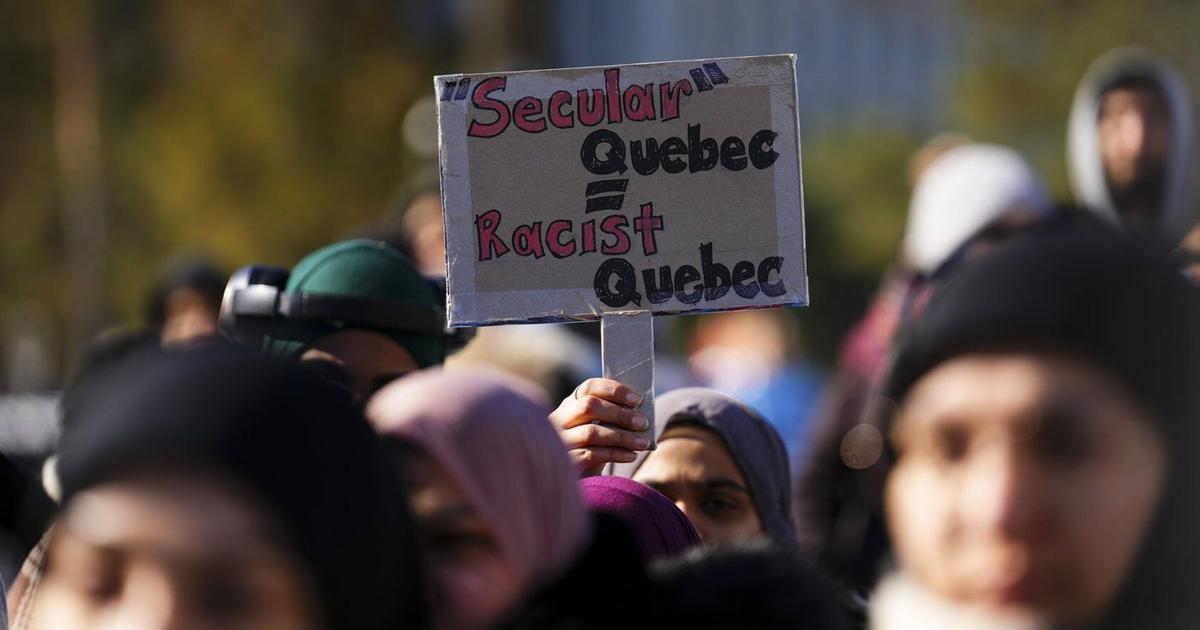
Since the law was tabled in 2019, it has drawn sharp opposition from critics who have argued it targets racialized minorities who practice their faith, particularly Muslim women wearing the hijab.
They say the law effectively prevents them from working in parts of the public sector without compromising their religious beliefs.
Début de l'article, extrait de Toronto Star. Pour lire la suite, ouvrez l'article chez le média.
MarketNews présente le titre et le résumé publiés par le média. L'article complet se lit sur le site de l'éditeur. (www.thestar.com)