China’s research ships turning ocean science into undersea warfare
Detailed summary
Under the cover of scientific research and deep-sea exploration, China is deploying dual-use survey vessels across the Indo-Pacific to map seafloors, track submarines, and…
Under the cover of scientific research and deep-sea exploration, China is deploying dual-use survey vessels across the Indo-Pacific to map seafloors, track submarines, and threaten undersea cables, bolstering its military reach.
This month, defense outlet Janes reported that China is expanding deployments of dual-use special-mission and oceanographic ships across the Indo-Pacific, using civilian and research cover to gather strategic intelligence for the People’s Liberation Army (PLA).
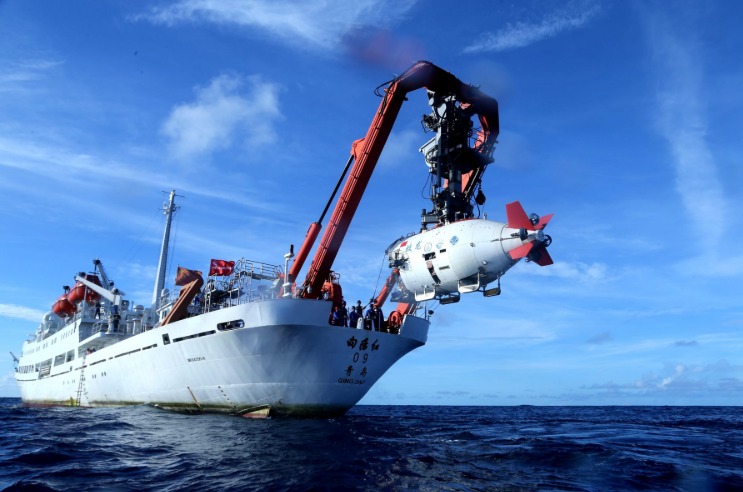
Operating from Chinese ports and institutes such as the Chinese Academy of Sciences (CAS), vessels including missile-tracking ships Yuan Wang 5, 6, and 7, survey ship Xiang Yang Hong 06, low-noise Dong Fang Hong 3, blue-water vessel Shi Yan 6 and submersible support ship Shen Hai Yi Hao — paired with the 7,000-meter-rated Jiaolong submersible — pushed into the Indian Ocean, Bay of Bengal, waters near Guam and chokepoints like the Malacca Strait between 2022 and late 2026.
China pairs parabolic dishes on tracking ships with quieted sonars, bathymetric “lawnmower” grid surveys, and seabed coring on research hulls to gather missile telemetry, map subsea cables and submarine corridors such as the Ninety East Ridge, and assess acoustic propagation and seabed soil strength.
While nominally scientific or commercial, these missions — which have sparked diplomatic friction in Sri Lanka and scrutiny from India and the US — give the People’s Liberation Army Navy (PLAN) peacetime hydrographic, acoustic, and environmental baselines that aid submarine navigation, anti-submarine warfare, and seabed infrastructure without drawing overt military attention.
Establishing peacetime baselines is only the first step, leaving open how China turns civilian-fronted ocean science into gray-zone cable sabotage, anti-submarine warfare, nuclear fleet expansion, and regional power projection.
The dual-use ambiguity of China’s marine surveys complicates countermoves.
Macias and co-authors report that these vessels spend…
Opening of the article, excerpted from Asia Times. To read the rest, open the article on the publisher's site.
MarketNews shows the headline and summary published by the outlet. The full article is on the publisher's website. (asiatimes.com)