Breaking Down the Wicked Finale of Netflix's The Body
Résumé détaillé
That's the tension at the heart of Netflix's The Body, all eight episodes of which are now streaming. But it's certainly not the only conflict at play in the 2004-set raunchy teen…
Warning: This post contains spoilers for the Season 1 finale of The Body.
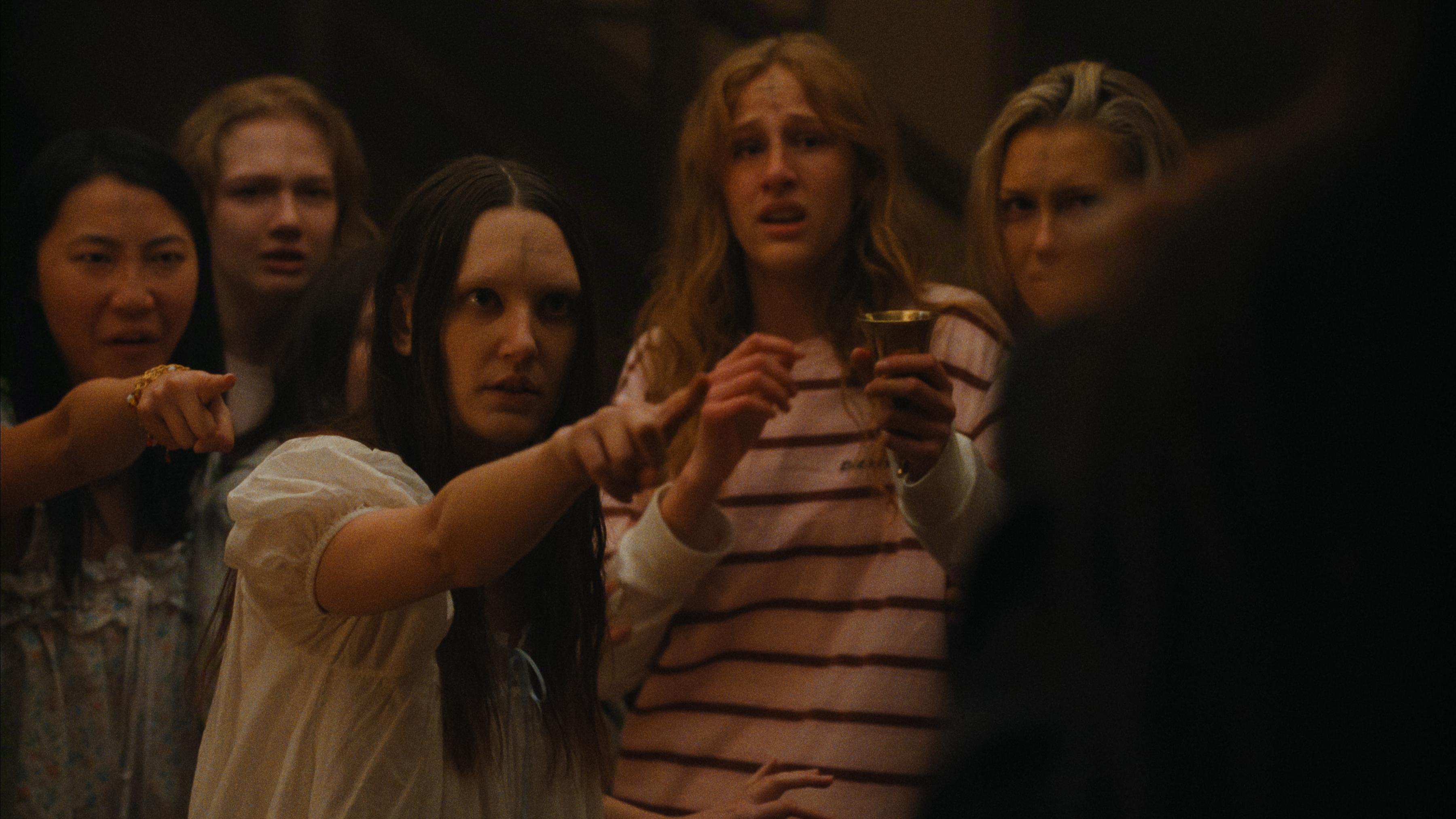
In the aftermath of a team initiation ritual gone wrong on Halloween night, the members of the St. Mark's Catholic school all-girls dance squad find themselves at the center of a townwide mass hysteria event. Or, perhaps the visions of the Lions' comatose new recruit Grace (Sofia Wylie) are actually a sign from God.
That's the tension at the heart of Netflix's The Body, all eight episodes of which are now streaming. But it's certainly not the only conflict at play in the 2004-set raunchy teen psychodrama. Created by Quinn Shephard (Under the Bridge)—who has described the series as a love letter to Y2K-era teen movies and erotic thrillers like Jennifer's Body and Heavenly Creatures mixed with the collective paranoia themes of The Crucible—The Body explores the relationships between the teens as they navigate the buried secrets shaping their lives.
By the time the finale rolls around, Lions captain Anya (Kristina Bogic) has pulled back from her forced friendship with outcast-turned-chief team manipulator Lisbeth (Geena Meszaros) in favor of preserving her secret romance with her best friend and co-captain Elise (Sara Boustany). The problem is, Lisbeth is still the only person who knows Anya was the one who found Grace passed out in a drug-induced stupor at the Halloween party, gave up on her plan to take Grace to the hospital after she appeared to stop breathing, and, at Lisbeth's suggestion, snuck Grace's body back inside her house to try to make it look like she had never been out with them.
"I’ve always been interested in the idea of girlhood as a religious experience. This story is definitely my way of putting a playful spin on all the nightmares of my own teenage-dom," Shephard told Netflix's Tudum. "I think that the emotions of trying to figure out who you are, how to love your identity, where you align with your belief system, and wanting to be loved [don’t] ever really go away.
After it's…
Début de l'article, extrait de Time. Pour lire la suite, ouvrez l'article chez le média.
MarketNews présente le titre et le résumé publiés par le média. L'article complet se lit sur le site de l'éditeur. (time.com)