Deadly Artificial Stone Silicosis Crisis Takes Center Stage in New TRIAL Magazine Article by Brayton Purcell Partner James P. Nevin
Detailed summary
"Artificial Stone, Real Danger" examines the fatal lung disease affecting countertop fabrication workers, the growing wave of product liability litigation, and efforts to hold…
"Artificial Stone, Real Danger" examines the fatal lung disease affecting countertop fabrication workers, the growing wave of product liability litigation, and efforts to hold artificial stone manufacturers accountable.
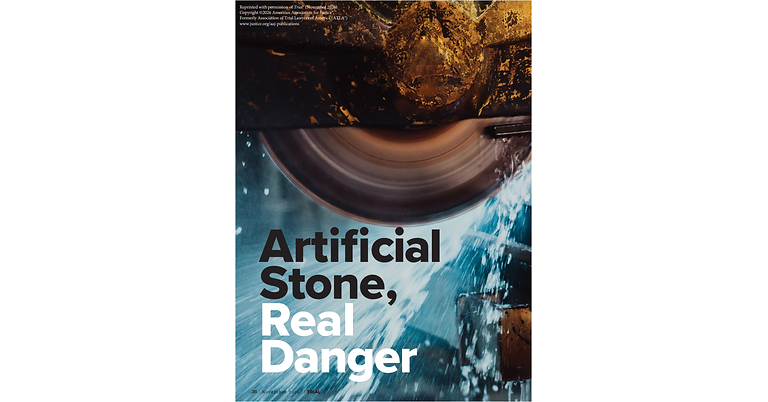
NOVATO, Calif., Nov. 11, 2026 /PRNewswire/ -- Brayton Purcell LLP partner and trial attorney James P. Nevin has authored a new article, "Artificial Stone, Real Danger", published in the November 2026 issue of TRIAL®, the magazine of the American Association for Justice. The article examines artificial stone silicosis, the litigation arising from the disease, and legal and legislative developments affecting fabrication workers and their families.
As Nevin describes the material, "Artificial stone, also known as engineered or manufactured stone, is widely used for kitchen and bathroom countertops. Artificial stone consists of at least 90% respirable crystalline silica, with the remaining approximately 10% consisting of highly toxic dyes, resins, and heavy metals. When artificial stone is cut, ground, or polished, fabrication creates nano-sized, high-surface-area respirable crystalline silica dust, and the other components release volatile organic compounds (VOCs)." Nevin's article examines the consequences of these exposures for countertop fabrication workers.
"Artificial Stone, Real Danger" explains chronic, accelerated, and acute silicosis and describes the diagnostic challenges associated with the disease. Artificial stone silicosis is preventable, progressive, incurable, and fatal.
The article also explains that accelerated silicosis can develop after several months to a few years of exposure and that, by the time of diagnosis, the disease may already have advanced to progressive massive fibrosis. Patients with accelerated or acute silicosis often require supplemental oxygen or a lung transplant.
Nevin also describes the hazardous dust generated during artificial stone fabrication:
"Cutting, grinding, drilling, and polishing artificial stone slabs…
The…
Th…
Opening of the article, excerpted from PR Newswire. To read the rest, open the article on the publisher's site.
MarketNews shows the headline and summary published by the outlet. The full article is on the publisher's website. (www.prnewswire.com)

