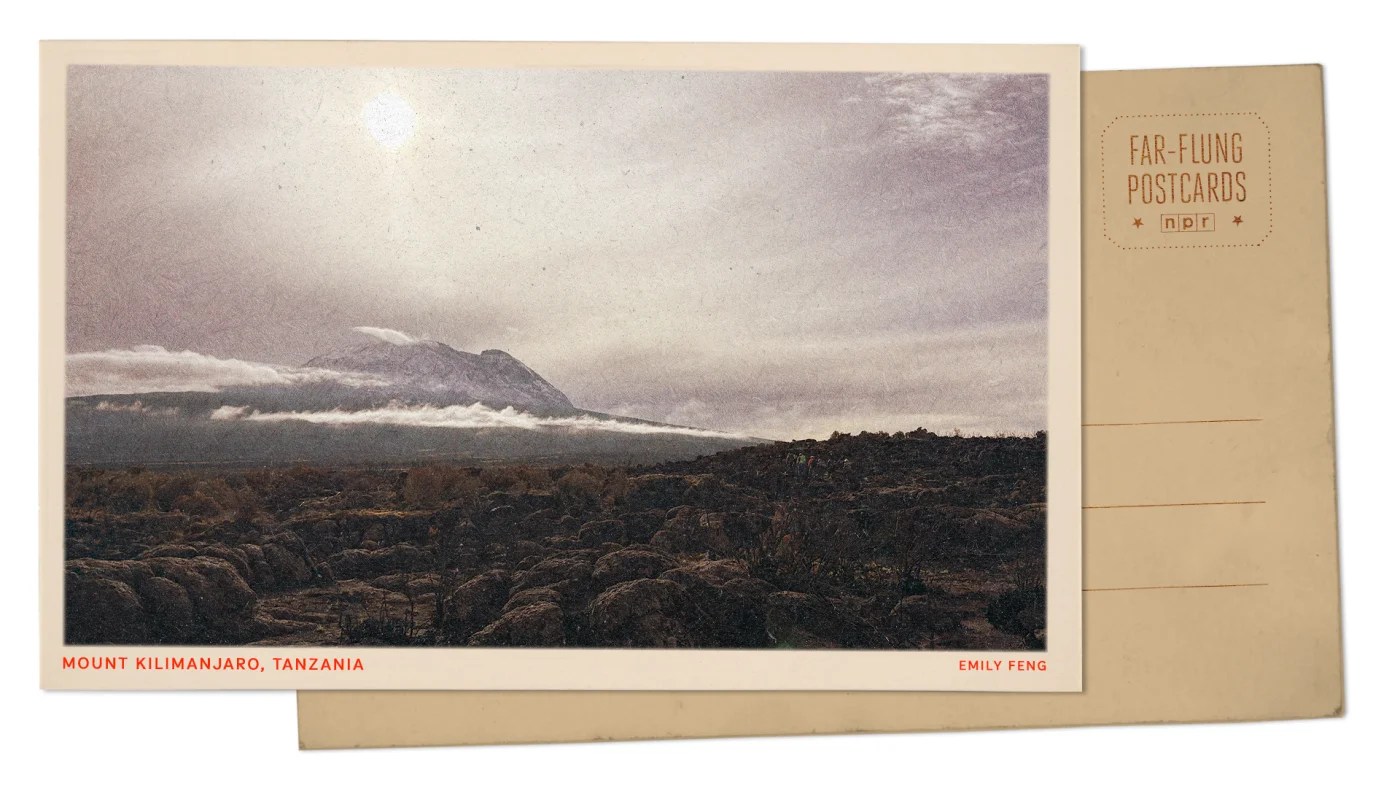
Greetings from Mount Kilimanjaro, Africa's highest point in all its splendor
Résumé détaillé
Climbing tall mountains like Kilimanjaro is a study in contrasts — from beating sun to freezing nights, fire and snow.
As dawn broke one recent morning over camp, we got one of our first full views of the peak of Mount Kilimanjaro, normally hidden behind clouds.
Climbing tall mountains like Kilimanjaro is a study in contrasts. The beating sun bakes you during the day, walking so close to the equator, but the nights quickly dip below freezing. Snow remains constantly in sight from humid rainforest and alpine landscapes, freshly charred from a wildfire three weeks before. And always beckoning is the peak, within sight, but seemingly never nearer; the high altitude means hikers need to walk slowly or else risk exhaustion and altitude sickness.
A group of friends and fellow hikers and I spent days camping at altitude to acclimatize before a final summit push during our second-to-last evening on the mountain. We trudged through heavy snow under the stars, cresting a massive volcanic crater rim, and leaned against drifts of what had become a full blizzard to reach the top in the early morning hours. I stood on the peak I'd seen only from a distance for the last week but saw only whiteness: all snow and ice, the absence of life and color heightened by my low oxygen levels.
Days later, having descended and decompressed and readying myself to fly back home, I looked back at the mountain one last time. For a few minutes, in the dusk light, the clouds parted and she revealed herself before disappearing again into the darkening evening, still as elusive as ever.
Début de l'article, extrait de NPR. Pour lire la suite, ouvrez l'article chez le média.
MarketNews présente le titre et le résumé publiés par le média. L'article complet se lit sur le site de l'éditeur. (www.npr.org)