Gaza faces surge in respiratory illnesses as winter floods displace thousands, WHO warns
Detailed summary
Overcrowded shelters, poor sanitation and flooding are fuelling infections across Gaza, with nearly a million displaced people living in flood-exposed areas.
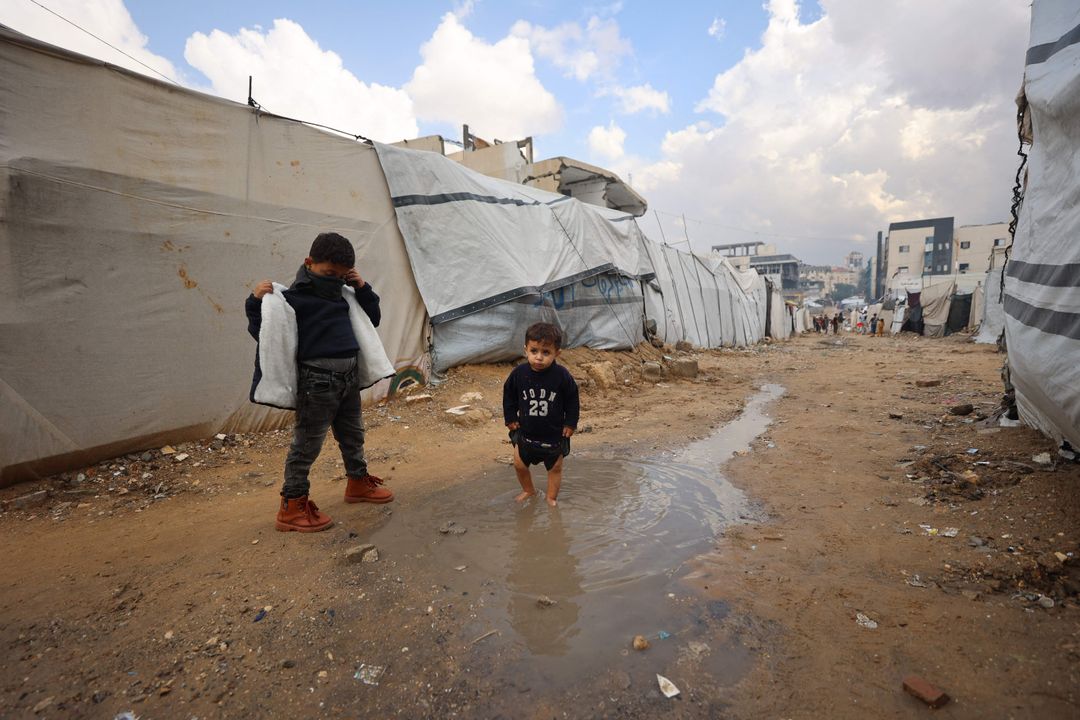
The World Health Organization (WHO) has warned of surging respiratory illnesses in Gaza, with worse expected after heavy rains flooded tens of thousands of tents housing displaced Palestinians.
“The numbers already show the pressure. Acute respiratory infections are 33,000 cases higher than at the same time last year,” Dr Reinhilde Van De Weerdt, WHO representative in Palestine, said.
Poor living conditions and severe overcrowding are driving up infections as Gaza's population is squeezed into an ever-smaller area, WHO said.
The crunch has worsened as the Israeli military expands its control by advancing the "Yellow Line" — a demarcation established under October’s US-brokered ceasefire.
“That means people are living in more crowded conditions, where of course the spread between humans of a virus is much more prone to spread,” Van De Weerdt explained.
COGAT, the Israeli military agency that coordinates aid, said that equipment intended for the reconstruction of Gaza will be permitted to enter only after Hamas has been fully disarmed.
Respiratory infections currently make up 11 percent of all consultations, with the WHO expecting cold weather, flooding, overcrowded shelters and poor ventilation to push these numbers higher.
“It is shocking that just a few days of rain really showed us what the coming months will bring. And winter has not even fully set in. The worst really is yet to come," Van De Weerdt said.
Nearly a million displaced people in Gaza live in flood-exposed areas, and 400,000 of them are in locations that are considered at extremely high risk, according to the WHO.
Opening of the article, excerpted from TRT World. To read the rest, open the article on the publisher's site.
MarketNews shows the headline and summary published by the outlet. The full article is on the publisher's website. (www.trtworld.com)