Jensen Huang is back, but his departure exposed something about the AI trade
Résumé détaillé
The AI boom doesn't depend on who's the CEO of Nvidia, but on who keeps the gains.
In the quarter to September, CoreWeave more than doubled its revenue. It made $207 million in operating profit and incurred $846 million in net interest expense. Its chip supplier, Nvidia, is also a shareholder and has agreed to buy some of the computing capacity CoreWeave cannot sell to its own customers.
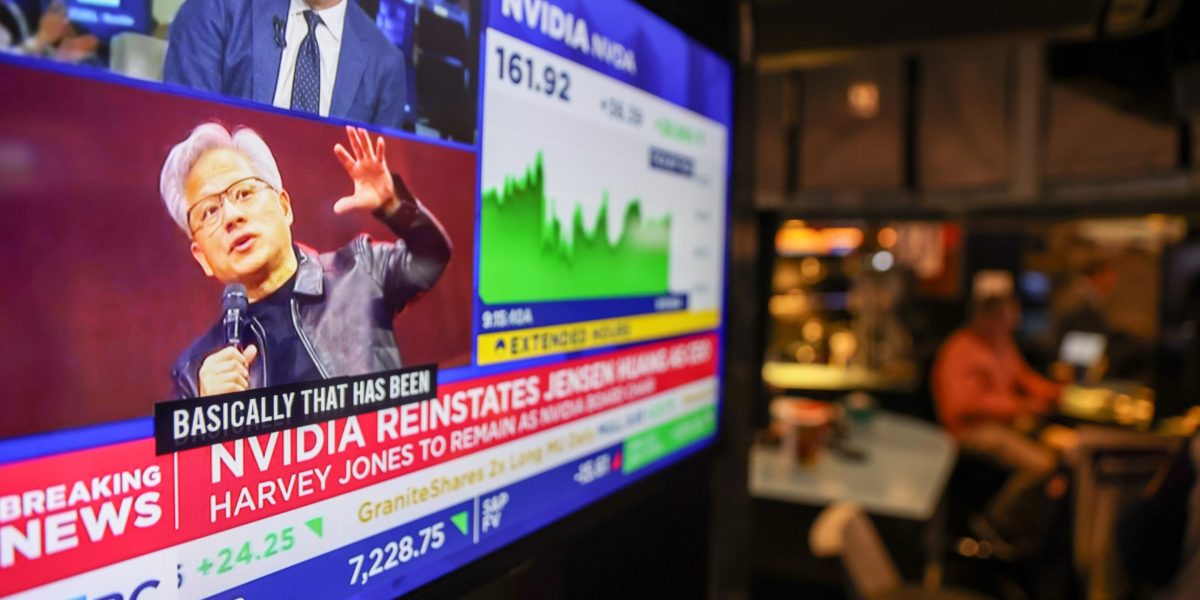
When Nvidia announced Jensen Huang’s return on Nov. 23, shares in CoreWeave and Nebius, another cloud provider Nvidia has invested in, rose by more than a fifth. Donald Trump had pressed for Huang’s reinstatement and acknowledged that the sell-off had probably influenced him. An administration that takes credit for rising share prices was hardly going to watch a correction turn into a panic with equanimity. Huang himself has made astute use of America’s race with China, invoking it to argue for a light touch on AI regulation at home and for permission to sell Nvidia chips in China. It is a capacious view of the national interest.
There is a perfectly good reason to support an ecosystem this way. Several firms would be better off if they all invested, and each has sound reasons to wait for the others. Nvidia gets them moving and makes itself harder to bypass. With CUDA, switching chips meant reworking software. A cloud provider relying on one of these deals also has to ask who will finance the switch. A promise from Nvidia helps get a data center financed. What justifies the next one is repeat business at prices that cover the equipment, the electricity and the financing. That depends on how much companies earn or save using AI, and who gets to keep the gains.
The productivity gains can be substantial. In a study of 802 developers at one software company, Hao He and colleagues found that proposed code changes per active developer roughly doubled after the introduction of AI tools. The workload per reviewer roughly doubled too, and automation came to cover more code changes than human review did.
Some of the gains turn up in somebody else’s accounts.
Some firms have…
Début de l'article, extrait de Fortune. Pour lire la suite, ouvrez l'article chez le média.
MarketNews présente le titre et le résumé publiés par le média. L'article complet se lit sur le site de l'éditeur. (fortune.com)