What it was like to watch crucial COP climate talks fall apart at the last minute
Detailed summary
The Conversation’s Miki Perkins watched Germany’s climate minister pull support from the key text. Soon, the EU was out, too – and the UN climate summit had flopped.
It was a day-and-a-half past the official deadline when the UN climate summit COP31 began to unravel in earnest.
On Sunday morning, the corridors inside the huge expo-style venue in the Turkish city of Antalya were almost empty. Tired groups of delegates and media sat propped against the walls waiting for updates, charging their phones and drinking coffee. Many had barely slept. Australian Energy Minister Chris Bowen – who headed up the COP31 negotiations – reportedly slept for only a few minutes on the final night, as delegates kept waking him.
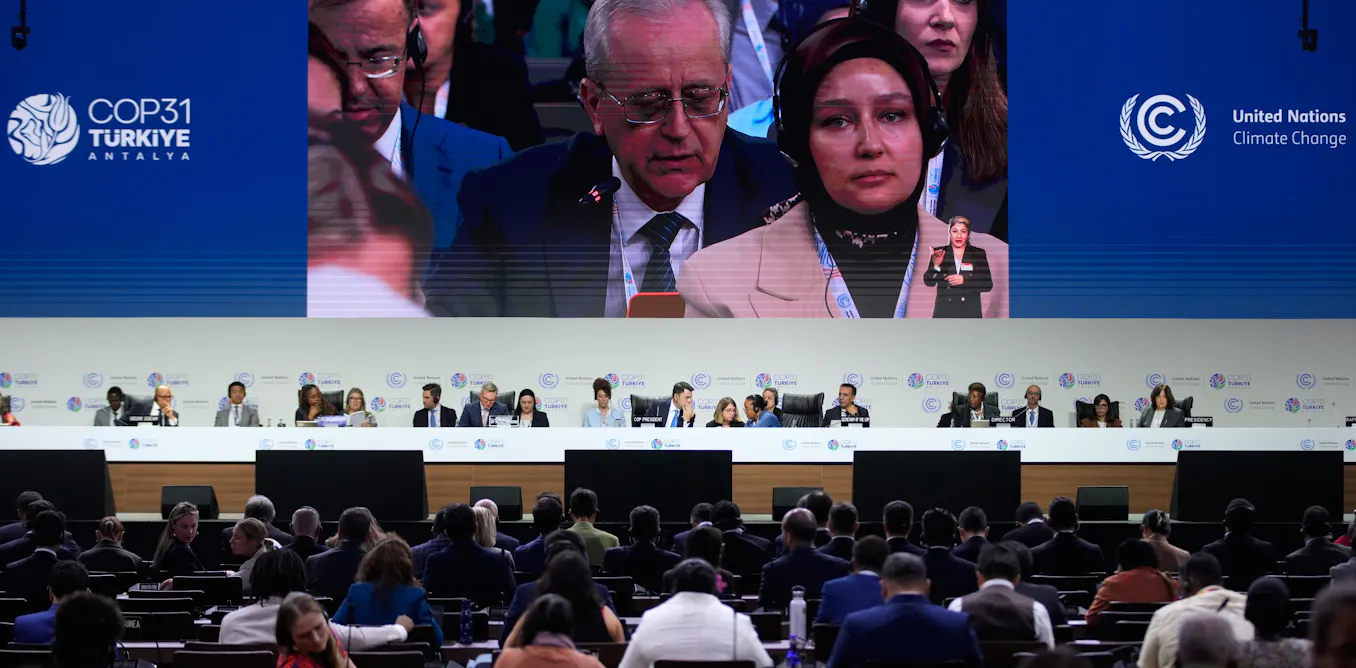
The talks dragged well into overtime to become the longest summit on record. But it would not finish the way co-presidents Bowen and Turkish Environment Minister Murat Kurum had hoped.
A third draft of the proposed agreement had been released overnight. But it still made no mention of the crucial words “fossil fuels”, “oil,” “coal,” or “phase out.”
Suddenly, a media huddle formed and German Climate Minister Carsten Schneider appeared, looking grim. Before the final plenary had even begun, he confirmed Germany would reject the agreement, telling reporters it was a “step backward”.
Shortly afterwards, the European Union followed suit, in a dramatic intervention during the plenary from Ireland’s Climate Minister Darragh O'Brien. The text had failed to meet the moment he told the assembled countries: “We will not endorse a decision […] that does not even mention fossil fuels.”
Journalists were shuttling between the meeting and talking to delegates in the halls, trying to establish the extent of the dissent. A BBC reporter somehow continued a live cross as he ran down the hallway after delegates from the EU and Iceland.
Inside the meeting, Panama announced it was out. This was not surprising – the country’s environment minister had said the world was “held hostage by fossil fuels”, ruefully declaring “we are in love with our kidnappers.” The Marshall Islands soon followed, and the United Kingdom too. The number of countries grew.
By…
Opening of the article, excerpted from The Conversation AU. To read the rest, open the article on the publisher's site.
MarketNews shows the headline and summary published by the outlet. The full article is on the publisher's website. (theconversation.com)