Delhi air improves slightly as AQI drops to 299, 28 stations still 'very poor'
Résumé détaillé
Delhi's AQI improved to 299 on Wednesday morning, entering the poor category. Several hotspots remained very poor, though stronger winds could provide further relief.
Delhi woke up to a slight improvement in air quality on Wednesday, with the city's overall Air Quality Index (AQI) recorded at 299 at 7 am, placing it in the 'poor' category. However, the marginal improvement offered little respite, as pollution levels remained dangerously close to the 'very poor' threshold, with several parts of the national capital continuing to breathe heavily polluted air.
Of the 58 monitoring stations that recorded data, 28 reported 'very poor' air quality, while 30 remained in the 'poor' category.
Among the worst-affected areas, Chandni Chowk recorded an AQI of 379, followed by IIT Delhi and Delhi Technological University (DTU) at 375 each. North Campus of Delhi University registered an AQI of 374, while ITO recorded 367 and Burari Crossing 362.
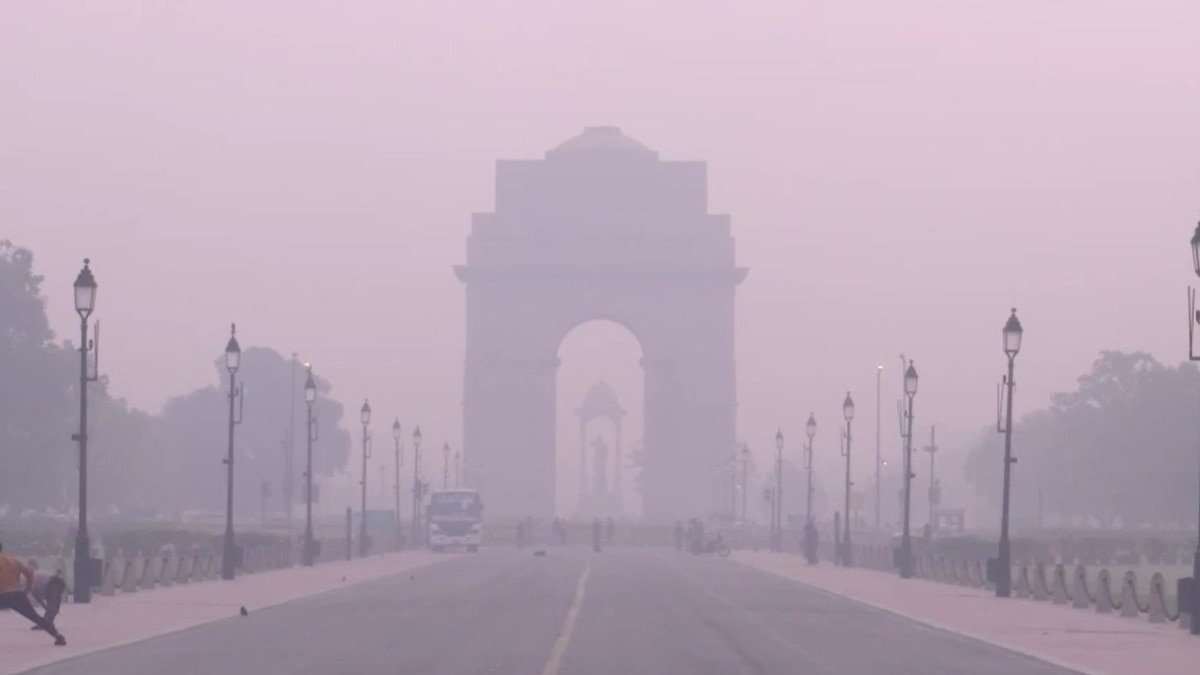
Pusa and Punjabi Bagh also reported high pollution levels, with AQIs of 359 and 341, respectively. At India Gate, the AQI stood at 242, while Anand Vihar continued to reel under 'very poor' air quality at 303.
Delhi Cantonment was the only location to record 'moderate' air quality, with an AQI of 117.
The improvement comes after a post-Diwali spike in pollution, with Delhi's AQI climbing to 376 on Diwali day, placing it firmly in the 'very poor' category. Despite restrictions on firecrackers, their bursting, coupled with unfavourable weather conditions, contributed to a rise in pollutant levels.
The city subsequently saw some respite, with the AQI dropping to 344 on Monday and further to 299 on Tuesday and Wednesday, as stronger winds aided the dispersion of pollutants.
Weather experts expect pollution levels to ease further over the next couple of days, with stronger winds aiding the dispersion of pollutants. Mahesh Palawat, vice-president of Skymet and a weather expert, said changing wind patterns had helped improve the situation.
"The wind direction and speed have changed. Now northwesterlies are impacting the Delhi region, with an average speed of 12-14 kmph, which has helped the dispersion of…
Début de l'article, extrait de India Today. Pour lire la suite, ouvrez l'article chez le média.
MarketNews présente le titre et le résumé publiés par le média. L'article complet se lit sur le site de l'éditeur. (www.indiatoday.in)