U.N. talks seek to rein in 'killer robots' as fears over AI weapons grow
Detailed summary
Countries are meeting in Geneva to negotiate rules on weapons that can select and kill targets without human intervention. But with the U.S., Russia and Israel resisting legally binding controls, campaigners fear the window to act is closing.
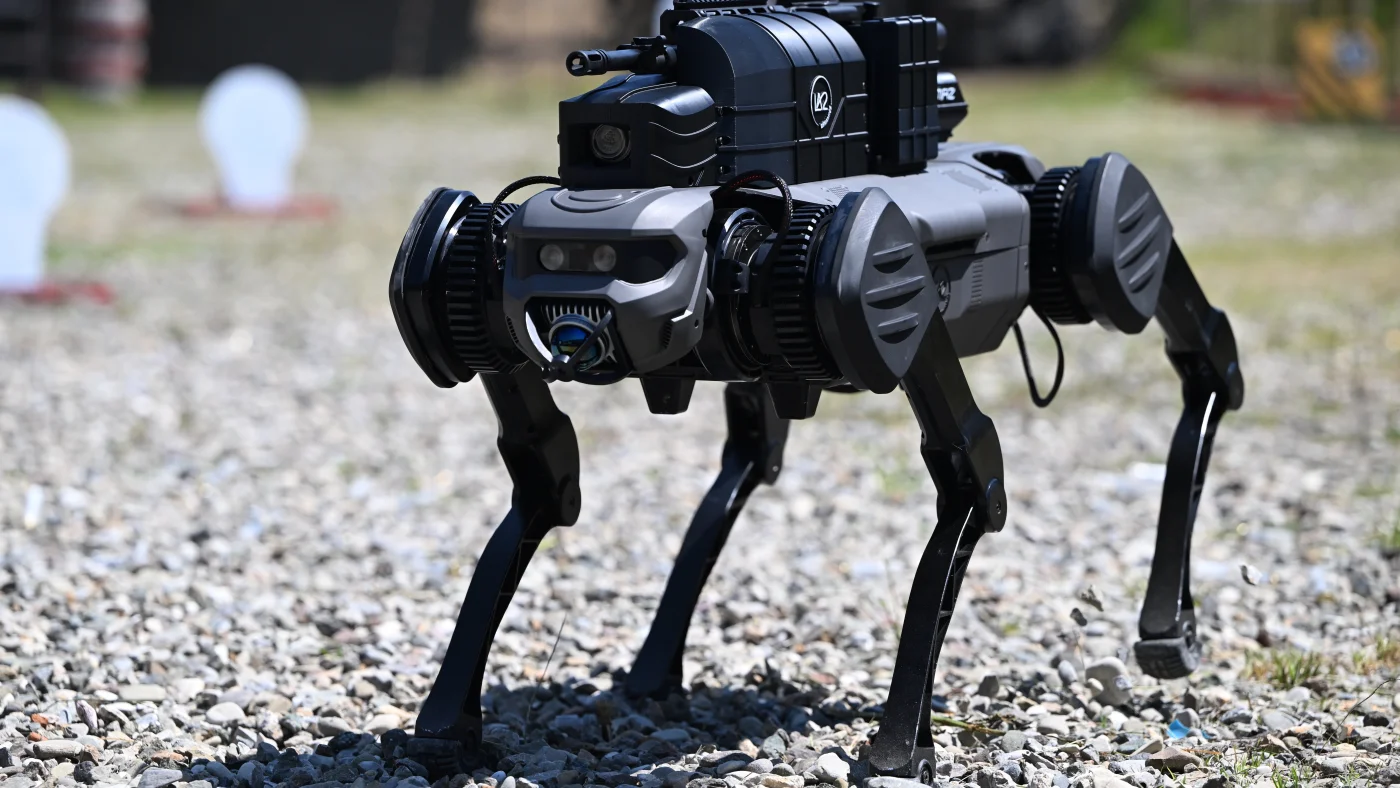
An armed robot developed by Turkish defence companies is demonstrated at a facility in Duzce, Turkiye, on April 29, 2026. Omer Urer/Anadolu via Getty Images hide caption
GENEVA — Negotiations on possible rules for the use of lethal autonomous weapons, also known as 'killer robots' are underway at the United Nations in Geneva.
Supporters of controls on autonomous weapons say this week's U.N. conference on Certain Conventional Weapons (or CCW), which meets just once every five years, is the last best chance to agree rules before it is too late.
Warfare technology has advanced rapidly in the last few years, with some experts warning that the world is just months away from having weapons that can choose targets and make the decision to kill autonomously.
In Ukraine and Gaza, AI-assisted weapons have already been used to take out targets, with Ukrainian civilians reporting being 'hunted' by drones as they shop or go to school. But these are still controlled remotely by humans.
Humanitarian organizations say the decision to kill – and responsibility for that choice – must stay in human hands. Ahead of this week's meeting, the United Nations, the International Committee of the Red Cross and the Pope have all called for legally binding rules. U.N. Secretary-General Antonio Guterres warned that allowing fully autonomous weapons to kill would be 'crossing a moral red line'.
The Red Cross is especially worried that existing rules of war – the Geneva Conventions – cannot be fully respected by autonomous weapons. War is often chaotic and confusing, and the situation can change rapidly. Under the Conventions, soldiers who are wounded or in the process of surrendering can no longer be targeted.
Georgia Haines, a legal adviser with the Red Cross, worries that autonomous weapons will not be able to distinguish between a soldier who is still fighting, one who is wounded and one who wants to surrender.
'The risk is that, based on the technology we are seeing, they are not able to understand…
Opening of the article, excerpted from NPR. To read the rest, open the article on the publisher's site.
MarketNews shows the headline and summary published by the outlet. The full article is on the publisher's website. (www.npr.org)