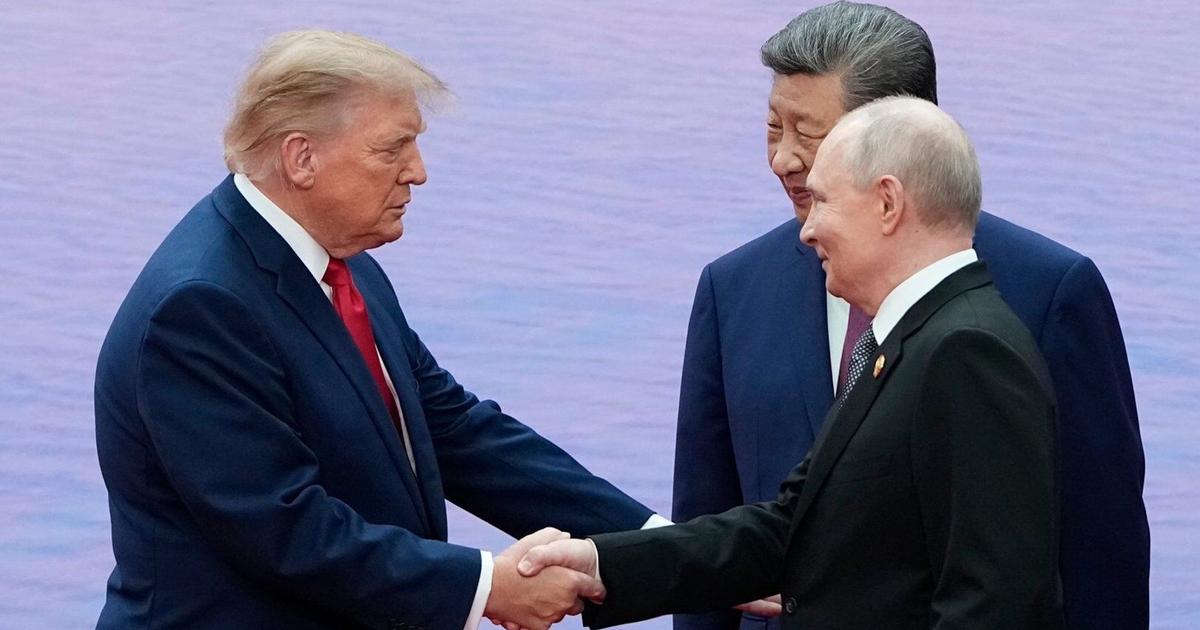
For Putin, sharing a spotlight with Trump and Xi boosts his profile on the global stage
Detailed summary
For Russian President Vladimir Putin, the three-way meeting with Donald Trump and Xi Jinping offers a much-coveted chance for the Kremlin leader to demonstrate that he heads a…
For Russian President Vladimir Putin, the three-way meeting with Donald Trump and Xi Jinping offers a much-coveted chance for the Kremlin leader to demonstrate that he heads a superpower on a par with the United States and China.
While dealing another blow to Western efforts to isolate Putin, it also gives him an opportunity to try to persuade Trump to lean into Moscow’s demands for a settlement in Ukraine at a time when Washington wants to broker a peace deal.
Kremlin foreign affairs adviser Yuri Ushakov said Putin, Trump and Xi are expected to touch on a broad variety of issues, including Ukraine and other conflicts that “are literally festering now.” Ushakov also confirmed that Trump and Putin will meet separately.
Kyiv and its European allies view the three-way meeting on the sidelines of the Asia-Pacific Economic Cooperation summit with deep suspicion. German Chancellor Friedrich Merz has said Europeans feared another “Anchorage moment,” a reference to a Putin-Trump meeting in Alaska in August 2025 that produced proposals that were rejected by Ukraine and its partners.
Some in the West are comparing the three-way meeting to the 1945 Yalta conference, where the wartime leaders of the U.S., Britain and the Soviet Union divided Germany and Berlin, carved out zones of influence in Europe, and agreed to establish the United Nations. The Kremlin, which long has courted the concept of a “multipolar world” offering an equal say to all nations, plays down the Yalta comparisons, which are also unwelcome to China for similar reasons.
Fyodor Lukyanov, a pro-Kremlin foreign policy expert, noted that even as Moscow publicly rejects the Yalta analogy, it seems to believe the leaders could “reach agreements and make decisions that will determine global developments.”
Of the three nations, “it seems that only Russia really believes in the possibility of global control,” he told a recent roundtable.
Chatham House director Bronwen Maddox said in a commentary that “standing with Xi and…
T…
Opening of the article, excerpted from Toronto Star. To read the rest, open the article on the publisher's site.
MarketNews shows the headline and summary published by the outlet. The full article is on the publisher's website. (www.thestar.com)