India ends Maoist terror, brings security and jobs to tribals, says PM Modi
Résumé détaillé
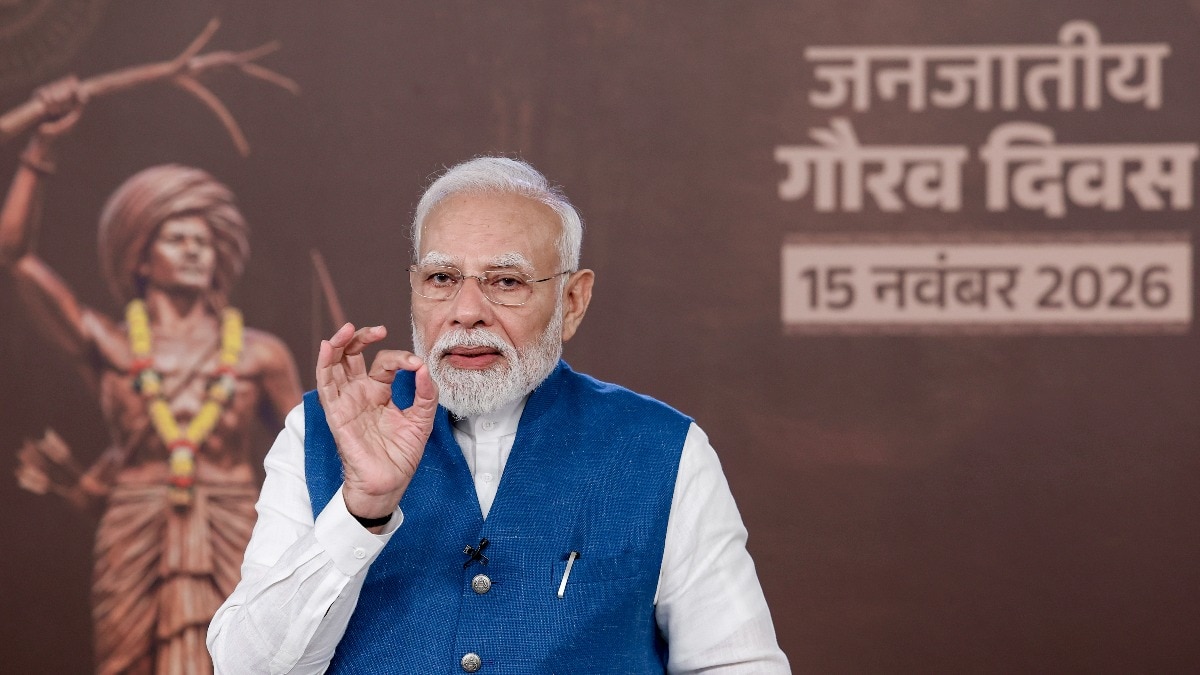
Prime Minister Narendra Modi addressed the Janjatiya Gaurav Diwas programme in Gadchiroli virtually. He linked improved security with expanding education, employment and welfare in tribal regions.
Prime Minister Narendra Modi on Sunday said tribal communities had suffered the most from Naxal violence and had even been denied voting rights in Maoist-affected areas, while previous governments left them to fend for themselves, news agency Press Trust of India reported.
Addressing a Janjatiya Gaurav Diwas programme marking the 151st birth anniversary of tribal freedom fighter Birsa Munda, PM Modi also highlighted the government's welfare and development initiatives for tribal communities and called for collective efforts to build a developed India.
Speaking virtually at the programme in Gadchiroli, Maharashtra, PM Modi said previous governments had remained silent when Maoists forcibly took away children and abducted young tribal women. “Naxals denied the tribal communities voting rights but the previous governments remained mute spectators,” he said.
PM Modi said the situation had since changed with the elimination of Maoist violence. Tribal women were now blessing the government because they felt secure, while children whose childhood had been affected by violence were receiving education and employment opportunities, he added.
According to PTI, the Prime Minister said nearly 50 crore people had emerged from extreme poverty over the past 12 to 13 years, describing it as one of India's biggest achievements since Independence. Citing a World Bank report, he attributed this to the collective efforts of citizens and society, along with government welfare schemes.
PM Modi said the Centre had allocated more than Rs 1 lakh crore for the PM-JANMAN scheme and the Dharti Aaba Janjatiya Gram Utkarsh Abhiyan to speed up development in tribal areas that lacked basic facilities.
He said the government had prioritised disadvantaged communities by providing more than four crore permanent houses to poor families, supplying electricity to 18,000 villages that had remained without power for decades after Independence, and offering free treatment of up to Rs 5 lakh under the Ayushman…
Mo…
Début de l'article, extrait de India Today. Pour lire la suite, ouvrez l'article chez le média.
MarketNews présente le titre et le résumé publiés par le média. L'article complet se lit sur le site de l'éditeur. (www.indiatoday.in)