Vietnamese enterprises urged to overcome technical barriers under VEFTA
Detailed summary
The Vietnam-EFTA Free Trade Agreement (VEFTA) offers domestic enterprises access to high-purchasing-power Northern European markets, though transforming tari...
At a workshop hosted by the Vietnam Chamber of Commerce and Industry (VCCI) on November 11, experts discussed strategies for Vietnamese businesses to utilize the Vietnam-EFTA Free Trade Agreement (VEFTA), which has established a framework for bilateral trade cooperation, since it was signed in Hanoi on October 18, 2026.
The European Free Trade Association (EFTA) consists of Switzerland, Norway, Iceland, and Liechtenstein.
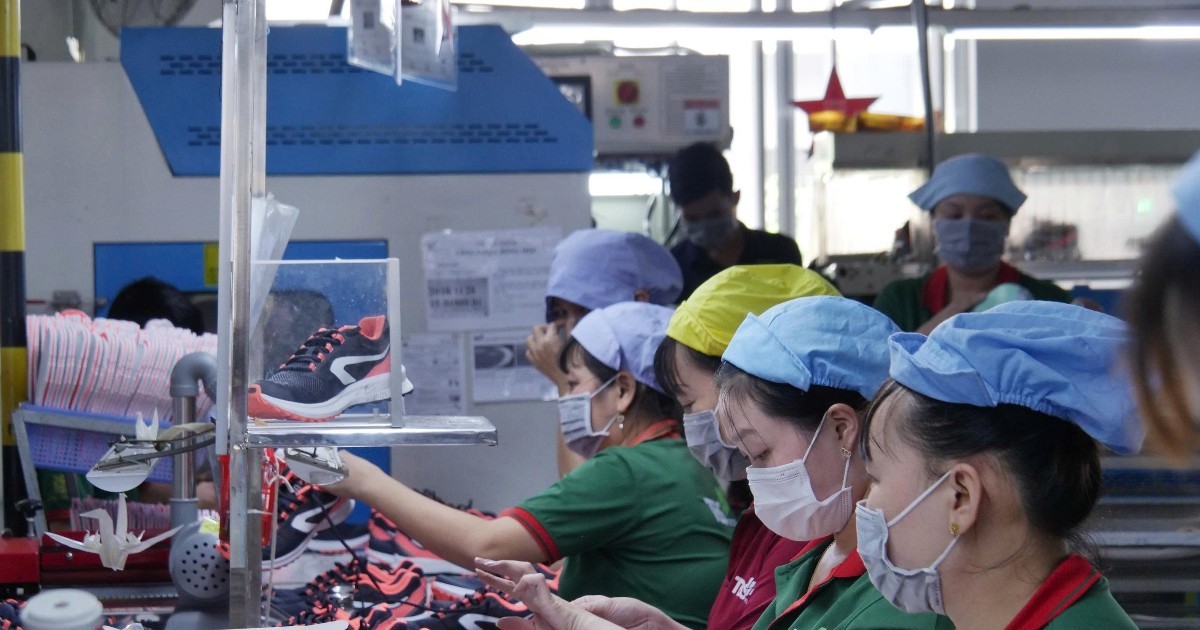
Mr. Dau Anh Tuan, Vice General Secretary of VCCI, stated that market diversification serves as a core strategy to mitigate risks for Vietnam’s open economy. Although EFTA member states maintain independent customs regimes, they feature high per capita incomes and strong purchasing power. Bilateral trade shows structural complementarity, with EFTA exporting high-tech machinery, pharmaceuticals, and precision equipment, while Vietnam exports textiles, footwear, seafood, and consumer electronics.
Customs data indicates two-way trade reached $1.92 billion in 2025, up 29 percent year-on-year. Vietnam imported $1.52 billion in high-tech products and exported $405 million in manufactured goods and agricultural products.
Ms. Nguyen Son Tra from the Ministry of Industry and Trade noted that the $405 million export figure leaves substantial headroom for growth. Adhering to standards in Switzerland or Norway provides Vietnamese exporters with established credibility across global markets.
VEFTA commitments feature high rates of market opening. Ms. Nguyen Phuong Linh from the Ministry of Finance highlighted that VEFTA achieves a degree of trade liberalization comparable to CPTPP and EVFTA.
EFTA members committed to eliminating tariffs on over 90 percent of tax lines immediately upon entry into force, covering 99.5 percent of import value from Vietnam. Industrial goods and seafood receive immediate zero-percent tariffs, alongside preferential rates for key agricultural items including coffee, rice, and fruits.
In return, Vietnam will eliminate tariffs on 86.7 percent…
Opening of the article, excerpted from VnEconomy. To read the rest, open the article on the publisher's site.
MarketNews shows the headline and summary published by the outlet. The full article is on the publisher's website. (en.vneconomy.vn)