No, protecting Australia’s maritime trade isn’t like the movie Greyhound
Detailed summary
Arguing that the Navy can’t protect maritime trade — and thus investment is a mere excuse for AUKUS — misrepresents how Australia would actually keep critical supply flowing in a conflict.
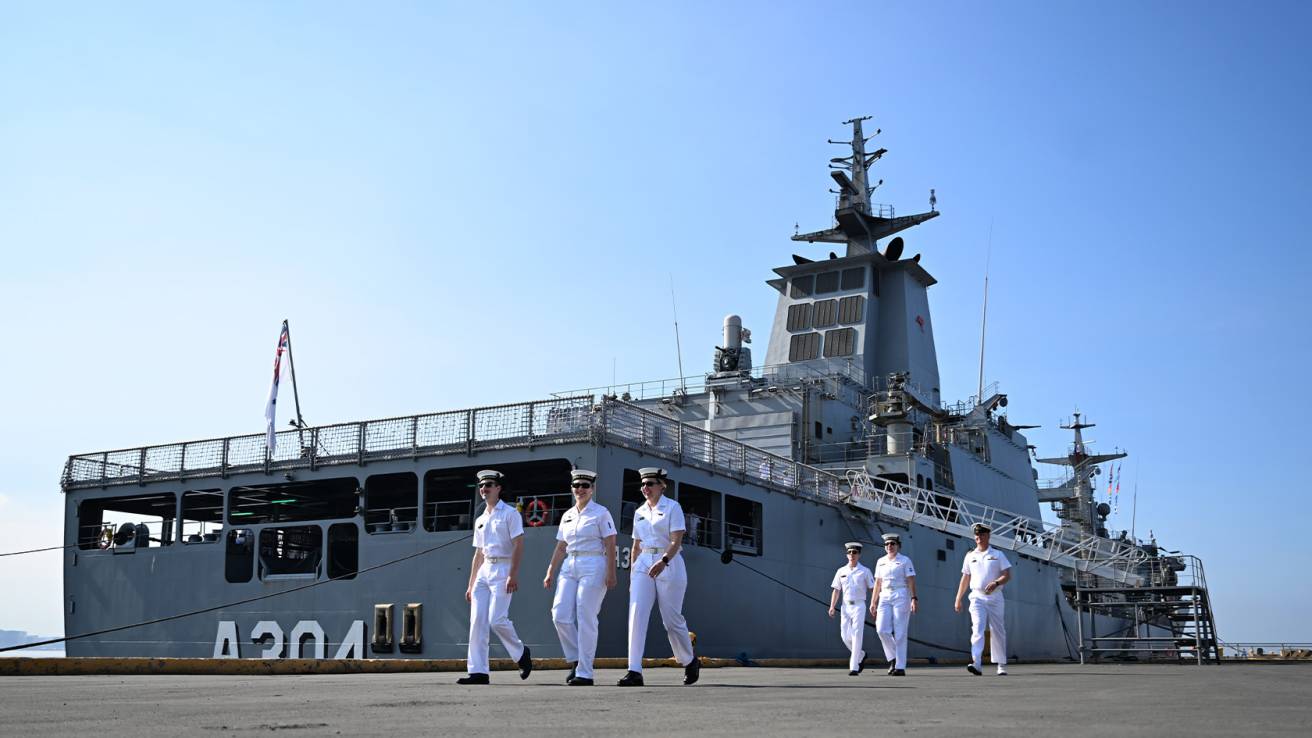
In a recent article for Crikey, Dr Albert Palazzo argued the Royal Australian Navy cannot protect maritime trade and thus is being set up for failure. The analysis fundamentally misunderstands how maritime trade is protected in crisis, which is not through warships escorting every ship visiting Australia, but rather through a layered maritime strategy that moves from industrial policy through to partnerships and, at the end point, warships and submarines.
But first, why is protecting maritime trade important and exactly what are we protecting?
The debate about continental vs maritime strategy is perhaps the oldest in Australian strategic history. Are we defending the land only or also our vital connections to the world? Throughout our history, our dependence on maritime connections has remained constant. From Federation onwards, Australia has recognised that to keep our economy functioning and defend ourselves, ships carrying fuel, food, pharmaceuticals, fertiliser and more must make it to Australia. The statistics are stark: 99% of Australia’s international trade by volume comes by ship.
There is a common misconception about the kind of threat Australia likely faces in future. This is dictated as much by our geography as it is by the changing world order. A large-scale conventional invasion is a far less likely danger than maritime coercion or disruption: being squeezed on the oceans through interdiction of the critical goods that travel through the maritime domain. So at a time when the world’s oceans are increasingly contested, it makes sense that Australia would design its Defence Force to address this critical vulnerability.
So how do you do it? Dr Palazzo states that 5,841 individual cargo vessels visited Australia in 2024–25. These vessels made 32,142 port calls. Neither number represents the number of ships Australia would need to protect during a conflict. Palazzo, however, mistakenly implies that Australia must protect all of these.
By continuing, you agree to…
Opening of the article, excerpted from Crikey. To read the rest, open the article on the publisher's site.
MarketNews shows the headline and summary published by the outlet. The full article is on the publisher's website. (www.crikey.com.au)