The Great Pacific Garbage Patch may now have so much plastic, it’s changing ocean's colour
Résumé détaillé
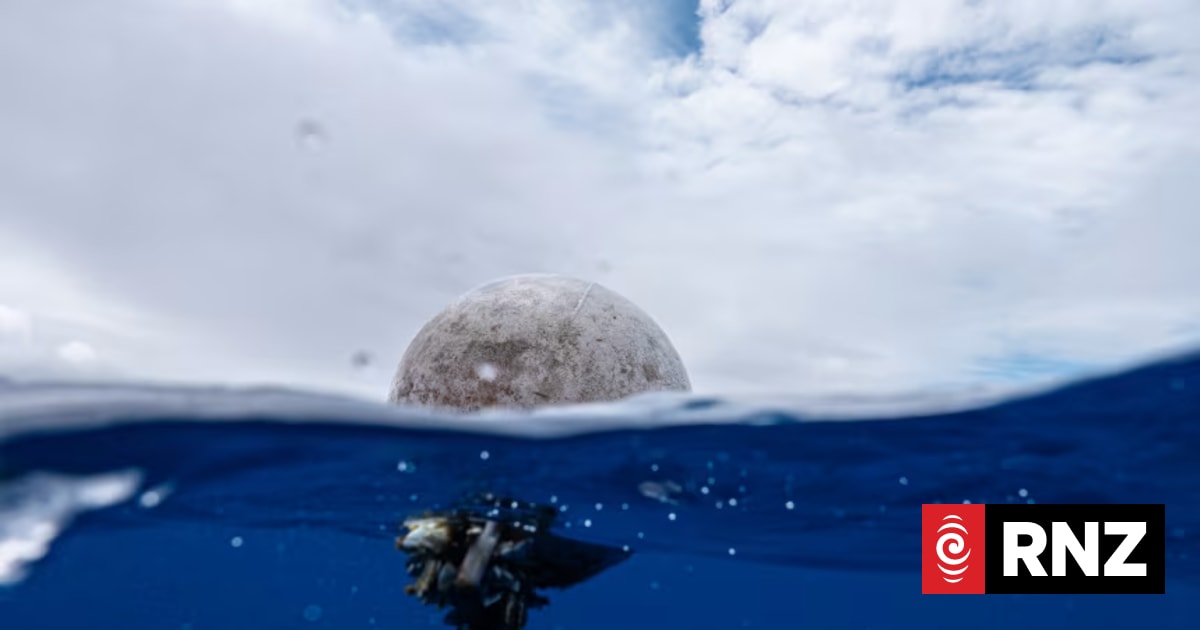
Scientists have discovered that microplastics could be changing the colour of the ocean in areas of the Great Pacific Garbage Patch (GPGP) .
Scientists have discovered that microplastics could be changing the colour of the ocean in areas of the Great Pacific Garbage Patch (GPGP) .
The GPGP is a swirl of plastic trash between Hawaii and California, more than twice the size of Texas.
Scientists at Norway's University of Bergen analysed three satellite datasets of seawater colour from parts of the GPGP between 2002 and 2022.
Shea Cheatham and her colleagues found there was a significant brightening of seawater - making it appear bluer and greener.
In 2016, seawater in the GPGP was found to contain 17 milligrams of larger microplastic particles per cubic metre.
To test whether the changes were due to natural causes, the scientists modelled how the colour of seawater changed in relation to the amount of microplastics present in it.
They found simulations with microplastics were four times more likley to experience brightening than those without microplastics.
This was the case with even small amounts of microplastics and was especially pronounced for cyan wavelengths.
Cheatham cautioned that further testing was needed, but results suggested seawater becoming brighter or changing colour could signal there were higher amounts of microplastics.
Début de l'article, extrait de RNZ. Pour lire la suite, ouvrez l'article chez le média.
MarketNews présente le titre et le résumé publiés par le média. L'article complet se lit sur le site de l'éditeur. (www.rnz.co.nz)