Does a win for Gambia mean a win for South Africa?
Résumé détaillé
On November 19, while US President Donald Trump was meeting Russian President Vladimir Putin and Chinese President Xi Jinping at Kylin Villa in Shenzhen, China, a historic…
On November 19, while US President Donald Trump was meeting Russian President Vladimir Putin and Chinese President Xi Jinping at Kylin Villa in Shenzhen, China, a historic decision was reached in The Hague at the International Court of Justice. The ICJ is a short distance from the very court that issued an arrest warrant for Mr Putin in March 2023, the International Criminal Court.
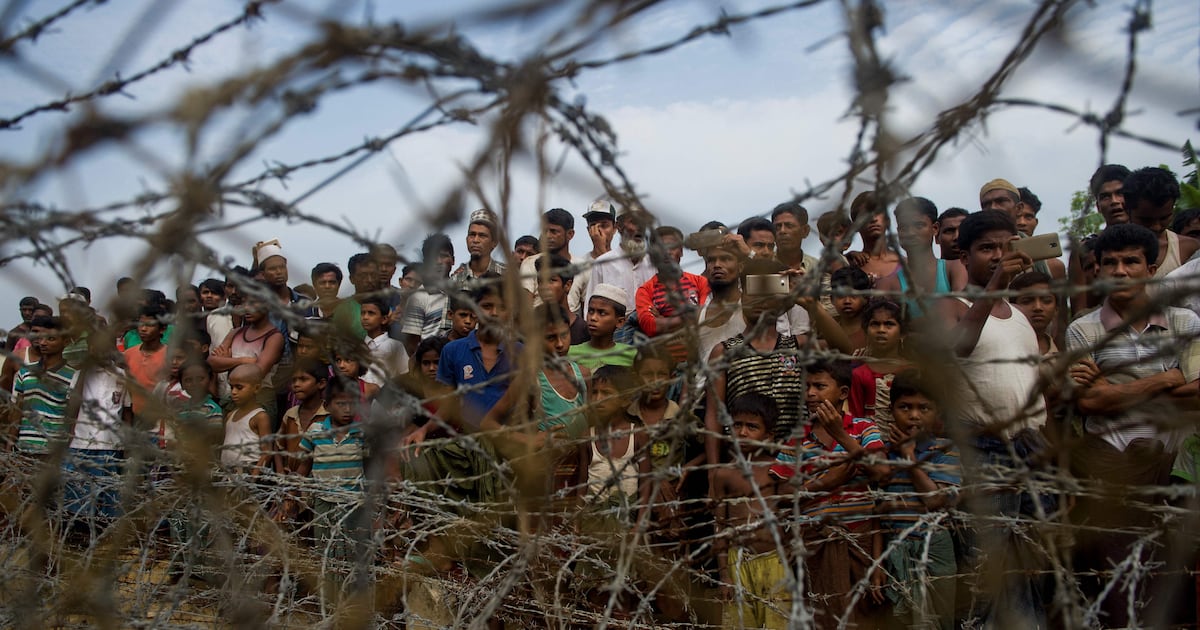
On the same day as the historic trilateral summit in Shenzhen, the ICJ, the UN's highest court, ruled that Myanmar committed genocide against the Rohingya people in a brutal 2017 military operation where villagers were hunted down and sometimes burnt alive in their huts. Where babies and children were slaughtered, and men and women raped in a “clearance operation”.
It was the first time a state had been found responsible for genocide.
What is stunning about the decision is that the case was brought by a small West African nation, the Gambia, which had no skin in the game and lies thousands of kilometres from Myanmar, on the Atlantic Ocean. One man, the former justice minister Abubacarr Tambadou, a lawyer and politician, essentially awakened the conscience of the world.
In 2018, as part of a delegation from the Organisation of Islamic Co-operation, Mr Tambadou visited the refugee camps in Cox's Bazar, Bangladesh. Survivors' stories of rape, mass killings and ethnic cleansing reminded him too clearly of Rwanda, where he had spent a decade as a prosecutor at the UN's International Criminal Tribunal for Rwanda. "I could smell the stench of genocide from miles away."
In earlier cases, the court never found that a state had itself committed genocide. Even in Bosnia v Serbia (2007), a war where hideous atrocity crimes occurred, it ruled that Serbia had failed to prevent the genocide at Srebrenica.
In Croatia v Serbia (2015), the court completely dismissed the genocide claims.
This is because proving genocide is hard. The bar is high because intent must be proven.
Myanmar argued their brutal tactics…
Début de l'article, extrait de The National. Pour lire la suite, ouvrez l'article chez le média.
MarketNews présente le titre et le résumé publiés par le média. L'article complet se lit sur le site de l'éditeur. (www.thenationalnews.com)