‘It’s an embarrassment’: how LA’s desperately needed airport tram went off the rails
Résumé détaillé
The SkyLink people mover is less than 2.5 miles long but it’s $1bn over budget and has been delayed by four yearsWhat purportedly modern, world-class city has an airport where…
The SkyLink people mover is less than 2.5 miles long but it’s $1bn over budget and has been delayed by four years
What purportedly modern, world-class city has an airport where millions of visitors step off their planes, glide their bags on to the sidewalk and are greeted by a terrifying scrum of bumper-to-bumper traffic?
A journey to the Los Angeles international airport (LAX) is notorious for its dreaded gridlock, the result of an outdated horseshoe street design that offers only one way in and out of one of the busiest airports in the world.
“You have to really love somebody to drive them to LAX,” said Eli Lipmen, executive director of Move LA, a local non-profit coalition that organizes for improved transit and housing.
Enter the people mover: a long-awaited rail line of less than 2.5 miles (4km) that would offer congestion relief by finally providing a direct rail connection between terminals, a ride-share zone, a new transit center and a car rental hub.
The project, officially named SkyLink, broke ground in 2019 under then mayor Eric Garcetti. Since then, the city has been through a lot. A global pandemic. #FreeBritney. A pair of devastating fires. The Dodgers winning the World Series thrice. Trump 2.0’s immigration raids and the massive protests in response. Two mayors and a new one on the way.
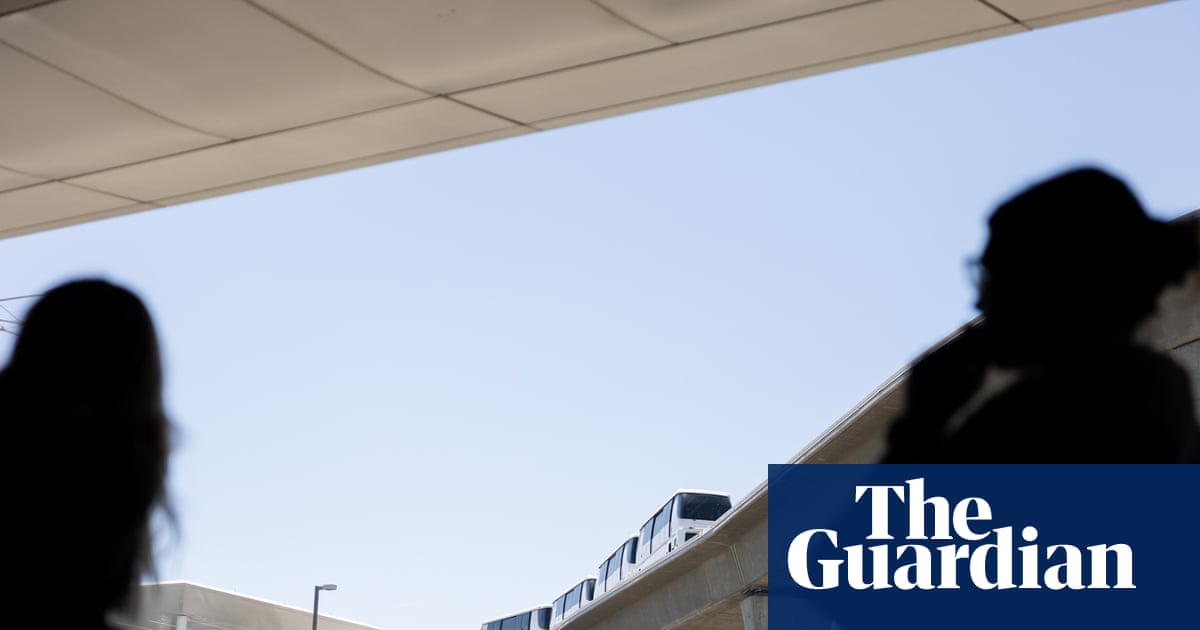
And in those nearly eight years, the LAX people mover’s elevated track has gone up and its train cars are rolling between stations, but they’re moving precisely zero people. It’s also gone more than $1bn over budget, and is expected to overshoot its intended 2023 opening date by four years (and counting).
The project – part of a $30bn plan to modernize LAX – has been hampered by disputes between the contractor hired to execute it and the city, along with a litany of technical issues.
Officials report the project is 99% complete, but the final testing phase, which requires at least 30 consecutive days of uninterrupted operation, has stretched more than 200 days.
Début de l'article, extrait de The Guardian Business. Pour lire la suite, ouvrez l'article chez le média.
MarketNews présente le titre et le résumé publiés par le média. L'article complet se lit sur le site de l'éditeur. (www.theguardian.com)