Eurovision Asia: a diverse and spectacular showcase of Asian pop
Detailed summary
Some major regional players were missing, but the inaugural Asian edition showed it has the potential to be a powerful global platform for Asian pop.
On November 14, Asia fired up its wind machines and pyrotechnics for the inaugural Eurovision Song Contest Asia, aka Eurovision Asia.
Eleven countries competed – from Bangladesh and Bhutan to Vietnam and host country Thailand. Notably absent this first year were most of the continent’s most populous nations: China, India, Japan, Pakistan and Indonesia.
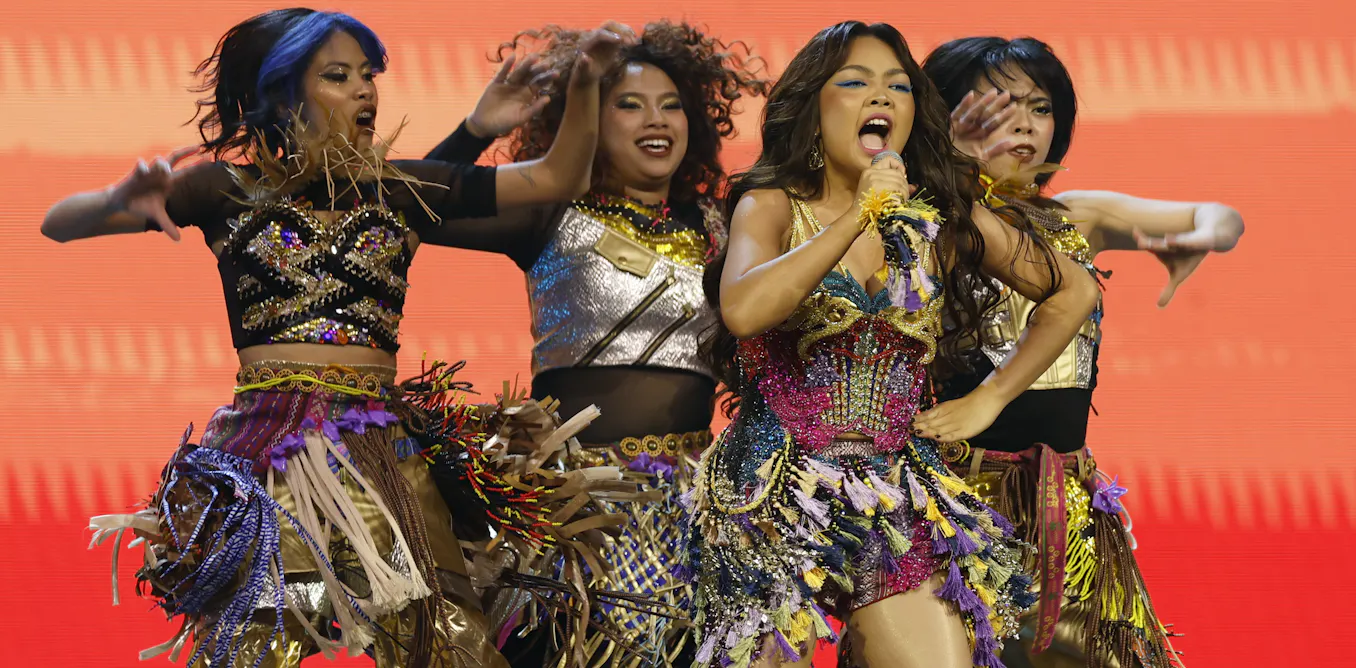
The format was familiar: three-minute songs performed with no more than six people permitted on stage. But there was a distinct regional inflection in the staging, costuming and language choices.
Many of the artists wove in elements of traditional sound and traditional dress, and artists expressed gratitude to the audience with the traditional Thai gesture wai (hands together).
While the original Eurovision is hosted in a combination of English and French, Eurovision Asia was delivered in English only. But most artists performed either in their own language (36%) or a combination of that language with English (54%). Only South Korea’s song was performed entirely in English.
By comparison, Eurovision 2026 featured 43% of songs entirely in English, 38% in languages other than English, and 19% multilingual.
Musically, it was a diverse offering. The delicate lotus leaves of Vietnam’s Tóc Tiên and her back-up dancers broke into a high-energy opening number, Em Tiên. Malaysia’s Aina Abdul finished the show with a pitch-perfect power ballad, Bluest Sky.
In between, audiences were treated to Cambodian and Bhutanese ballads, Bengali a capella, South Korean K-pop and, perhaps most surprisingly, Nepali rock.
But it was the Philippines’ Carmelle – the youngest contestant, at 19 – who won the night with Sobra-Sobra. The focus of the empowering pop song in English and Tagalog was about Filipino women’s right to be who they want to be.
Opening of the article, excerpted from The Conversation AU. To read the rest, open the article on the publisher's site.
MarketNews shows the headline and summary published by the outlet. The full article is on the publisher's website. (theconversation.com)