Why I walked over 200km across Spain in 9 days after burning out at work
Résumé détaillé
A panic attack and a mid-career crisis led this writer to set off on this long, arduous walk. What did he learn in the end?
A panic attack and a mid-career crisis led this writer to set off on this long, arduous walk. What did he learn in the end?
I was a broken man by the time I arrived at the Cathedral of Santiago de Compostela, the final destination for those who undertake the Camino de Santiago pilgrimage.
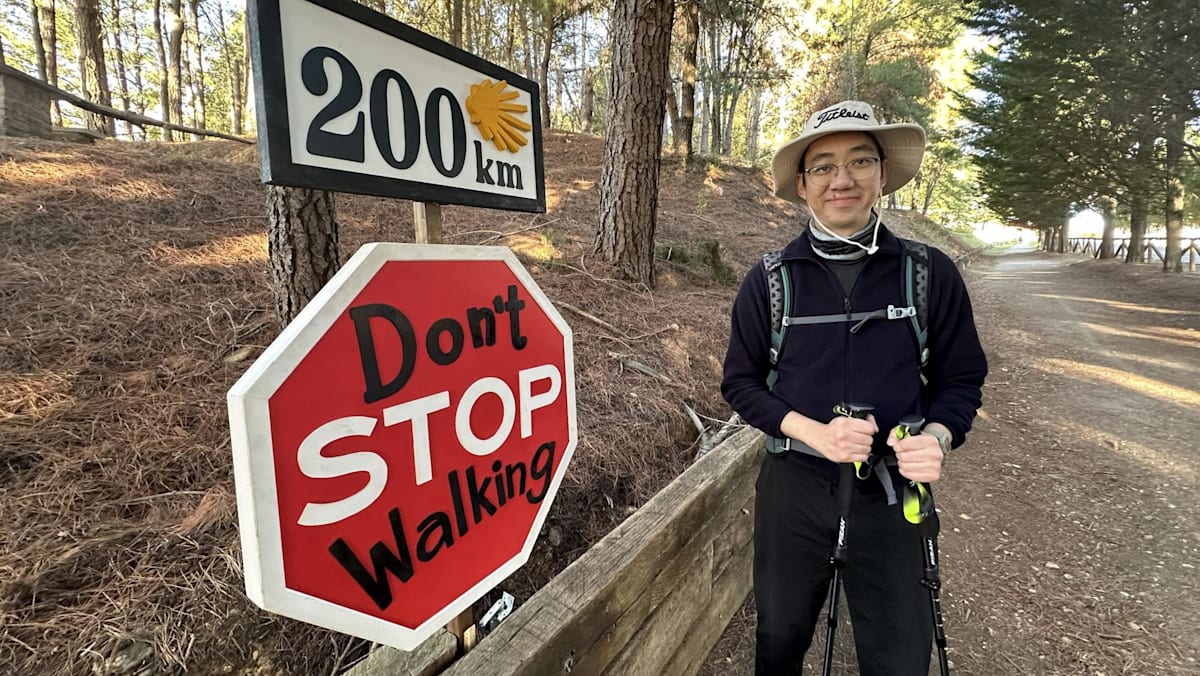
I had a swollen, elephantine right ankle; a hot, searing pain under my left foot; a pair of stiffened thighs; and two bruised big toes already turning into the shade of brinjal. Every part of my body was screaming for mercy, begging me to stop walking. I did stop – after walking for nine days across 210km.
I collapsed on the plaza, hiking poles strewn this way and that, and basked in the weak October sun with the granite cold on my sore back.
The Camino de Santiago, or the Way of St James, is a network of historic pilgrimage routes that stretch across Europe and converge at the Cathedral of Santiago de Compostela in Galicia, northwestern Spain. The pilgrimage tradition began in the 9th century, when the tomb believed to be that of St James, one of Jesus' 12 apostles, was reportedly discovered in the region.
A chapel was soon erected on the site, and a settlement grew up around it, eventually becoming the city of Santiago de Compostela. As word spread, pilgrims began to arrive, first mainly from the Iberian Peninsula and later from across Europe, and they have continued to make the journey for more than a thousand years.
I completed the Camino de Santiago in October 2026. However, my journey began two years earlier after I suffered what felt like a panic attack. It was a brief yet harrowing episode, complete with heart palpitations, and partial and momentary blindness, followed by weeks of crushing inertia at work. While the self-assessments available online disregarded stroke and depression as probable causes, they did hint at a potential burnout.
Maybe it was a mid-career crisis that finally boiled over, or maybe it was turning 40 and all the alarm bells going off at once.
As a person…
Début de l'article, extrait de CNA. Pour lire la suite, ouvrez l'article chez le média.
MarketNews présente le titre et le résumé publiés par le média. L'article complet se lit sur le site de l'éditeur. (www.channelnewsasia.com)