Why Eswatini’s future depends on constitutional monarchy
Résumé détaillé
Eswatini must transition from an absolute monarchy to a democratic constitutional monarchy, enabling citizens to elect accountable leaders, oversee public…
A monarchy can survive a change of government. Eswatini should no longer expect its citizens to endure a system in which they cannot meaningfully change theirs. The country needs a negotiated transition from absolute monarchy to a democratic constitutional monarchy: a settlement in which the Crown retains its non-partisan national role while elected institutions exercise governing authority.
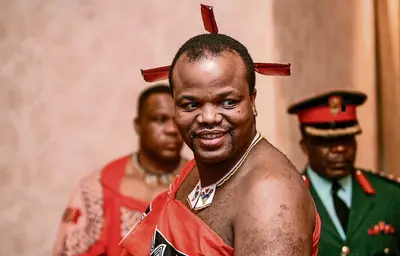
Not another consultation that leaves executive power untouched, but a constitutional bargain in which elected leaders govern, Parliament controls public expenditure, and citizens can peacefully remove a government. King Mswati III could remain a custodian of national identity and tradition. What must change is the concentration of governing power around the Crown.
Constitutional reform will not abolish poverty by proclamation. But durable, inclusive development requires institutions that let citizens challenge priorities and replace leaders whose policies fail. Democratic constitutional monarchy is therefore not a decorative reform to consider after economic recovery. It is a necessary foundation for making that recovery accountable to the people.
Eswatini’s economic performance demonstrates why growth alone is insufficient. The World Bank estimates that real GDP expanded by 4.8% in 2025 and projects growth of 3.8% in 2026. Inflation moderated to 2.5% in July 2026. Yet it estimates that 54% of the population lived below its $4.20-a-day lower-middle-income poverty line in 2025, while roughly one-fifth remained food insecure.
These figures do not mean that monarchy alone causes poverty. They show that economic expansion has not delivered sufficient security and opportunity. Young people need employment, households need affordable essentials, and communities need reliable services. The continuing HIV burden makes dependable healthcare and medicine supplies indispensable.
But citizens also need the power to change the national response when it fails.
That arrangement weakens the…
Début de l'article, extrait de Mail & Guardian. Pour lire la suite, ouvrez l'article chez le média.
MarketNews présente le titre et le résumé publiés par le média. L'article complet se lit sur le site de l'éditeur. (mg.co.za)