World's Deepest Explosive Volcanic Eruption Just Discovered in an Oceanic Trench
Résumé détaillé
Scientists have found evidence of a pyroclastic flow—an avalanche of scorching-hot rock, ash, and gas—on the walls of the Challenger Deep. There’s just one problem: It shouldn’t…
Scientists have found evidence of a pyroclastic flow—an avalanche of scorching-hot rock, ash, and gas—on the walls of the Challenger Deep. There’s just one problem: It shouldn’t exist.
It’s difficult to imagine somewhere on Earth more intimidating than the Pacific Ocean’s Challenger Deep. At a maximum depth of 35,876 feet—about the same distance below the sea surface as passenger jets fly above it—it is the deepest point in the world’s oceans. It’s dark, cold, and subject to such intense pressures that it’s largely unexplored and mostly mysterious.
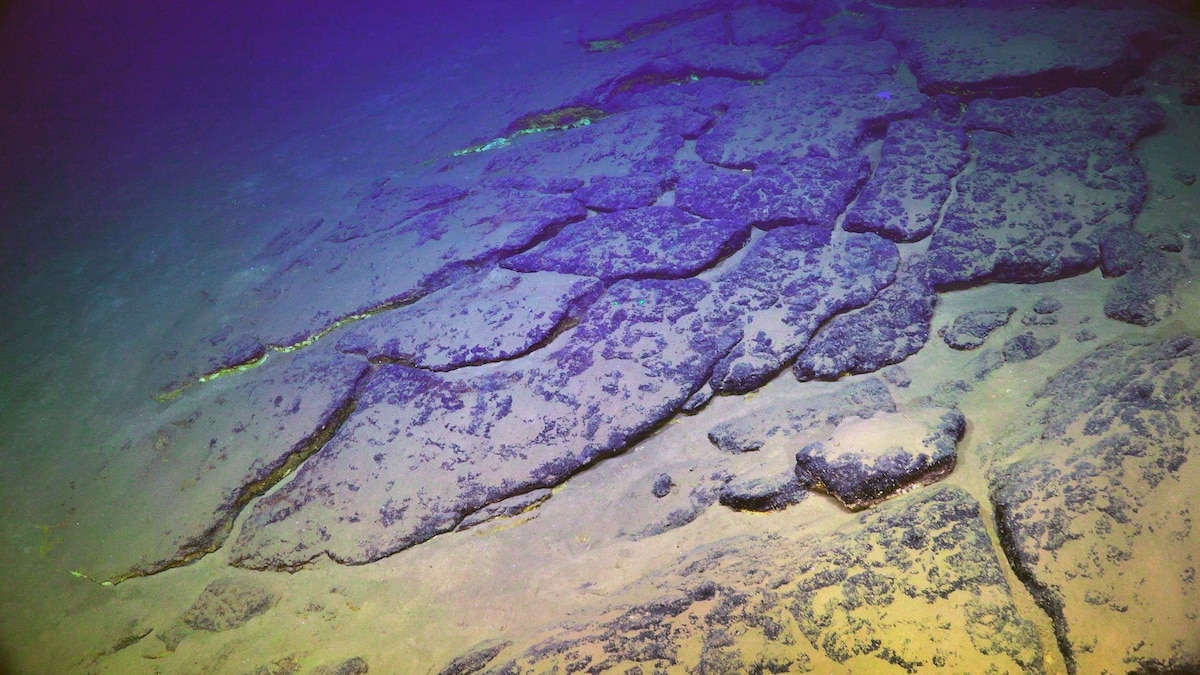
But now, thanks to some daring robotic submersibles, something new and strange has been discovered in this aquatic underworld: the remnants of an explosive volcanic eruption. Reported today in the journal Frontiers in Earth Science, this odd rocky wreckage is by far the deepest explosive volcanic eruption deposit ever found.
Volcanic activity on the seafloor isn’t unusual. In fact, it’s all over the place: There are chains of volcanic islands and underwater seamounts in the middle of tectonic plates, and oodles of lava-making vents popping up at mid-ocean ridges. But explosive volcanism—think the cataclysmic violence of Mount St. Helens’ eruption in 1980 rather than Hawai‘i’s Kīlauea, which intermittently unleashes fountains of gloopy lava—should only exist at shallower depths. It shouldn’t appear at Challenger Deep because the extreme weight of the ocean above it should suppress it.
Down there, if a volcano erupts it “can’t physically explode and throw things out,” says Robert Stern, a professor emeritus of geosciences at the University of Texas at Dallas and an author of the new study. And yet there it is: A robotic scout spotted a jagged jigsaw of debris some 20,170 feet deep that came from a volcanic explosion of some kind. The discovery, says Stern, is “completely unexpected.”
“This study touched upon a real frontier in volcanology. How deep magma can still erupt explosively, or at least fragment, is really an open…
Challe…
Début de l'article, extrait de National Geographic. Pour lire la suite, ouvrez l'article chez le média.
MarketNews présente le titre et le résumé publiés par le média. L'article complet se lit sur le site de l'éditeur. (www.nationalgeographic.com)