China ‘full stop, is ahead of us’: SpaceX alum building a $13 billion defense startup warns of Beijing’s hypersonic weapons
Résumé détaillé
The Pentagon admits China “has the world’s leading hypersonic missile arsenal,” and $13 billion defense tech startup Castelion is racing to close the gap.
While Jensen Huang’s resignation has put a renewed spotlight on the U.S.-China race for dominance in chips and artificial intelligence, another technological contest could have even more direct national security implications: hypersonic weapons.
And the U.S. is already trailing behind, according to Andrew Kreitz, cofounder and CFO of Castelion—a $13 billion defense startup focused on developing hypersonic missiles.
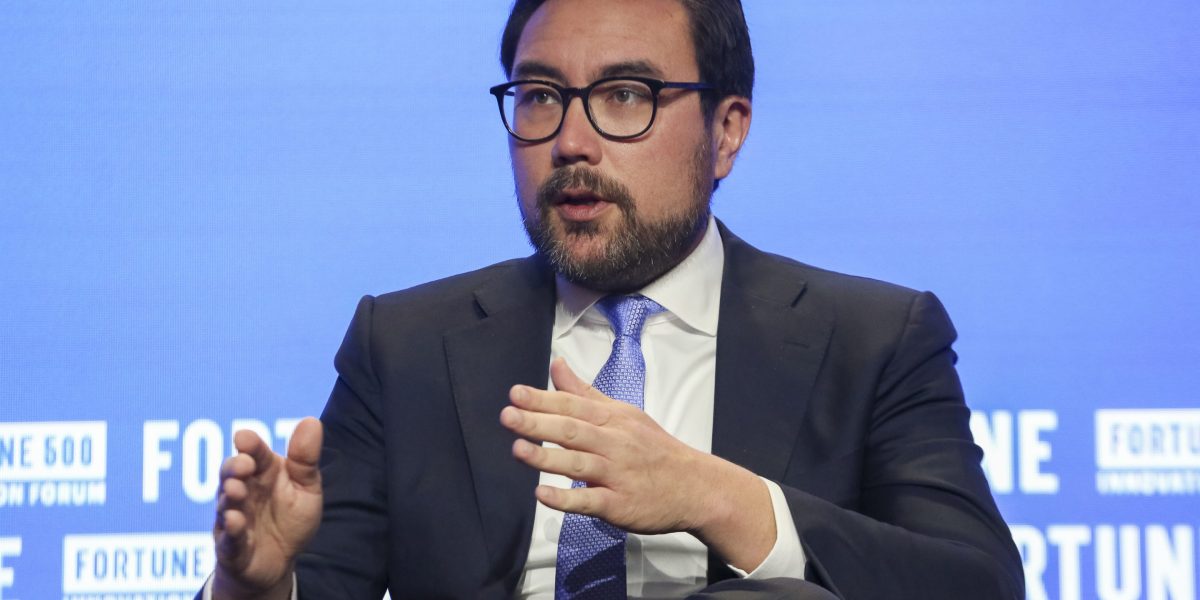
“Unfortunately, China, especially, full stop, is ahead of us in hypersonics,” Kreitz told Fortune’s Andrew Nusca at the Fortune 500 Innovation Forum in Detroit, Mich.
The U.S., for its part, has begun fielding its first long-range hypersonic missile system, known as “Dark Eagle.” China, meanwhile, has been steps ahead for years and “has the world’s leading hypersonic missile arsenal,” according to the U.S. Department of Defense’s 2025 report to Congress.
Kreitz pointed to several reasons for the gap, starting with how the U.S. defense industry develops and builds weapons. He said the Pentagon has often prioritized the most advanced technology without giving enough thought to cost or how easily it can be manufactured. Cost-plus contracts, which reimburse contractors for their expenses, also give companies less incentive to control costs.
The aerospace and defense industry also suffers from failing to test hardware early and often, Kreitz said, arguing that fewer tests mean slower learning and development.
“Unfortunately, our adversaries very much took the opposite approach,” Kreitz said on stage. “The Chinese have tested and iterated very, very fast, and they’ve been relentlessly focused on industrializing and manufacturing these weapons at a very large scale.”
Kreitz and fellow cofounders Sean Pitt and Bryon Hargis left SpaceX in 2022 to start Castelion, aiming to disrupt the defense industry by building weapons faster, cheaper, and at a much larger scale.
In just four years, Castelion has grown to more than 400 employees, reached a $13 billion valuation, and…
Début de l'article, extrait de Fortune. Pour lire la suite, ouvrez l'article chez le média.
MarketNews présente le titre et le résumé publiés par le média. L'article complet se lit sur le site de l'éditeur. (fortune.com)