Why the World’s Climate Talks Broke Down—and What Happens Now
Detailed summary
The European Union and others rejected a draft that didn’t explicitly mention fossil fuels, leaving COP31 without a broad agreement.
COP31, the United Nations’ annual climate change summit, ended on Sunday without consensus on an overarching climate deal after about two days of overtime in Antalya, Türkiye.
The annual conference brings together delegates to shape and formalize an approach to combating the effects of global warming. This year, the main dispute was whether the agreement should explicitly call for a transition away from fossil fuels.
That commitment traces back to the Paris Agreement, a 2015 climate treaty that calls for efforts to limit global warming to 1.5°C (2.7°F) above preindustrial levels.
Among the countries that opposed language calling for a transition away from fossil fuels were Russia and Saudi Arabia, while the European Union, the United Kingdom, and others refused to agree to any deals that did not acknowledge the leading cause of climate change.
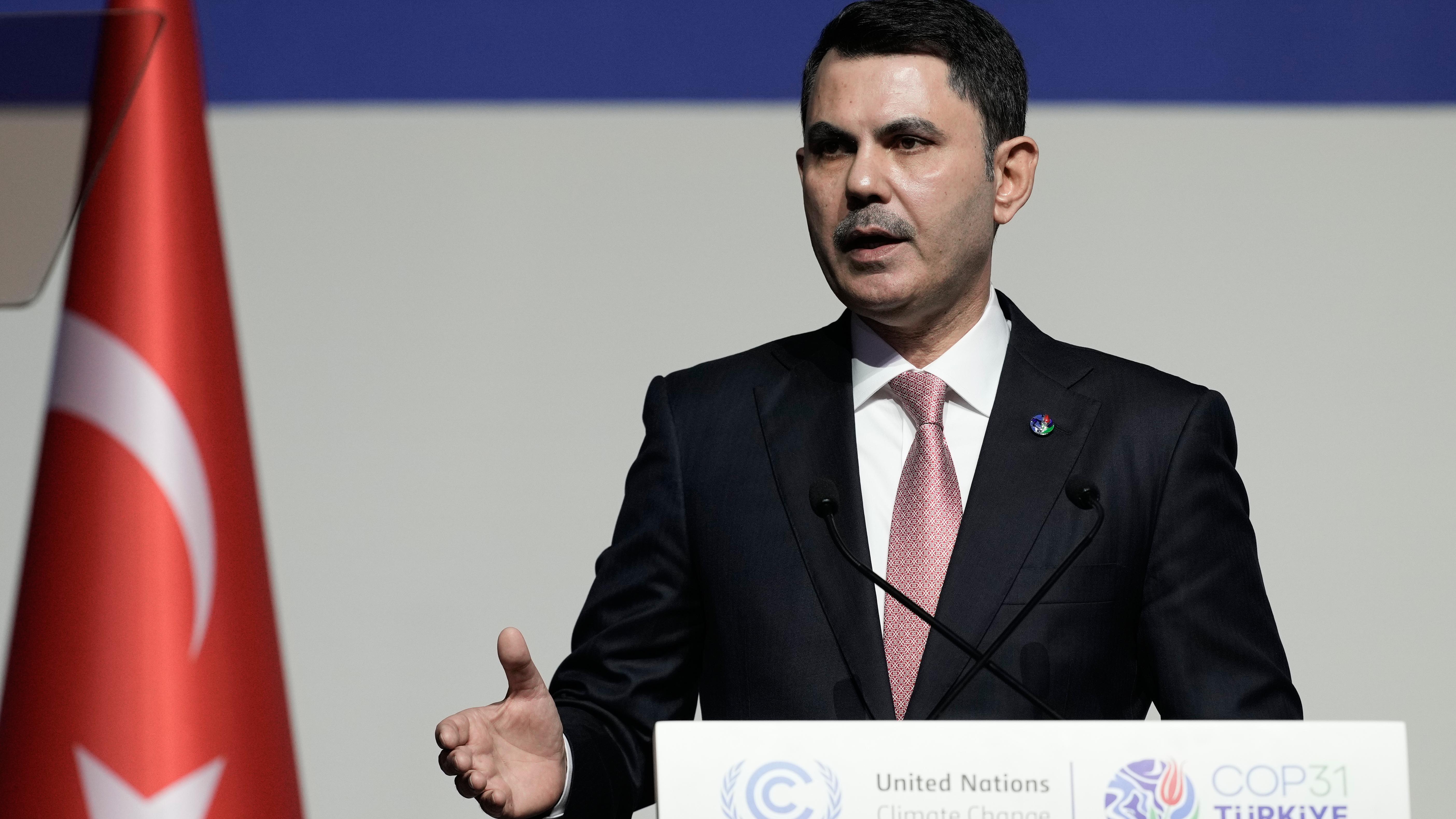
COP31’s President Murat Kurum announced on Sunday that a deal had not been reached.
“It is clear that there are parties in this hall who oppose this text. We recognize that there is no consensus on this document. Therefore, these decisions have not been adopted,” he said.
Australia’s Climate Change and Energy Minister Chris Bowen was a co-leader at the event, acting as President of Negotiations. “Unfortunately we were unable to reach agreement on a cover decision and that’s very disappointing,” he said Sunday.
Failure to reach an agreement is not unheard of, but it is uncommon; the last comparable deadlock was in Copenhagen in 2009. At the time, an irreconcilable clash emerged over which countries should cut greenhouse gas emissions, how deep those cuts should be, and whether the commitments should be legally binding.
“Despite the range of expectations among states going into COP31, no delegation left believing it had been a win,” says Lavanya Rajamani, a professor of international environmental law at the University of Oxford who helped draft the Paris Agreement.
Opening of the article, excerpted from Time. To read the rest, open the article on the publisher's site.
MarketNews shows the headline and summary published by the outlet. The full article is on the publisher's website. (time.com)