COPD is world’s 3rd leading cause of death. Are better treatments coming?
Résumé détaillé
At 42, Valerie Chang was waking up breathless every night and finding it hard to keep up with her children while hiking around their home in ...
At 42, Valerie Chang was waking up breathless every night and finding it hard to keep up with her children while hiking around their home in Hawaii. She went to see her primary care doctor, who deemed her in excellent health after a physical exam and a heart test.
Chang, who had never smoked, was ultimately diagnosed with emphysema, a lung disease. It’s one of the main types of chronic obstructive pulmonary disease, or COPD, which is the third leading cause of death worldwide. The disease is expected to affect an increasing number of people as the population ages.
For years, COPD and its causes were not fully understood, and the treatment options limited. But new medications approved in the last few years, and others on the horizon, are changing how doctors approach COPD.
When Dr. MeiLan Han began practicing as a pulmonologist 20 years ago, patients came in annually simply to ask if she had any new treatment to offer. For years, “the answer was no, no, no,” said Han, now chief of the division of pulmonary and critical care at the University of Michigan Health.
But now she does have something additional to offer: biologic drugs, including one Chang takes, that better target the mechanisms of the disease. And doctors have a clearer understanding of the factors beyond smoking that can drive COPD and how the disease develops, in some cases starting as early as childhood.
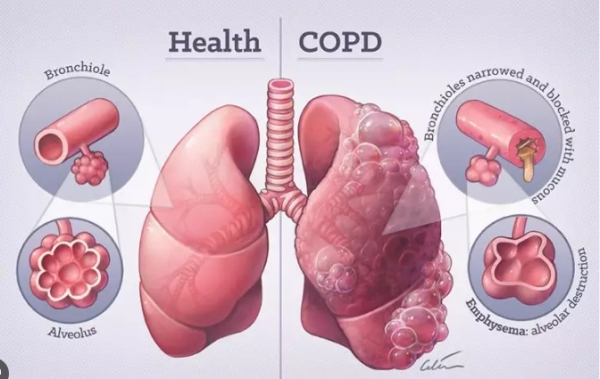
COPD is an umbrella term that includes mainly emphysema and chronic bronchitis. People can have just one condition, but most people have both, to varying degrees.
In emphysema, the tiny air sacs in the lungs that facilitate the exchange of oxygen and carbon dioxide become damaged, and the walls between them can collapse. This leaves huge bubbles that reduce the surface area for gas exchange, making it harder to breathe, explained Dr. Francesca Polverino, a professor of medicine at Baylor College of Medicine in Houston.
In chronic bronchitis, persistent inflammation of the airways and excessive mucus…
Doctors…
Début de l'article, extrait de Oman Observer. Pour lire la suite, ouvrez l'article chez le média.
MarketNews présente le titre et le résumé publiés par le média. L'article complet se lit sur le site de l'éditeur. (www.omanobserver.om)