We built an AI you can dance with. It taught us about developing the technology responsibly
Résumé détaillé
An experiment in an Auckland dance studio suggests a different approach to AI – one that gives people more say in shaping the technology they use.
In recent months, top researchers have quit leading artificial intelligence companies, warning the AI race is moving too quickly, with too little oversight and accountability.
When those building this technology sound the alarm, we should pay attention.
But more than warnings, what’s needed are working examples of how AI could be developed differently. In an Auckland dance studio, we’ve found one.
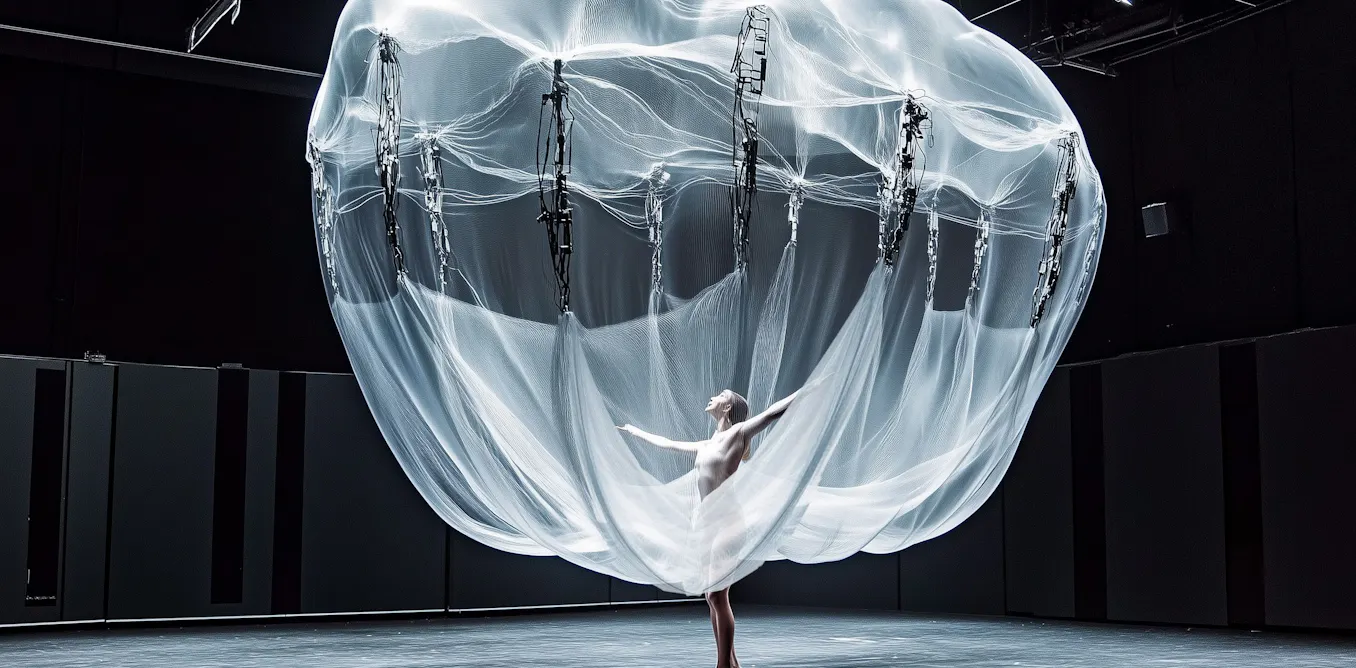
Over ten months, our team built an AI dance partner in “extended reality” (which blends the physical world with digital elements) as part of our laboratory’s research into the relationships between people and digital-physical environments.
We wanted to know whether an architectural avatar – a digital structure that moved in response to a dancer – could become an improvisational dance partner, and what would make it a good one.
A choreographer, an architectural designer and two professional dancers developed and tested our AI dance partner.
The dancers wore motion-capture suits tracked by ten cameras. Where large language models such as ChatGPT learn from text, our generative AI learned from their movements. The dancers met their partner through a headset blending digital images with the real room, while the rest of us watched on screens.
Improvisational dance is a tough test for AI. Partners read each other in fractions of a second, through movement, breath, rhythm and weight. This let us test whether a machine could respond like part of a duet. We worked out what mattered, and to whom, by moving with the AI as we developed it.
One dancer wasn’t enough. The AI had to be trained on a duet because what we wanted it to learn lived in the space between the dancers. We were composing a relationship.
Début de l'article, extrait de The Conversation AU. Pour lire la suite, ouvrez l'article chez le média.
MarketNews présente le titre et le résumé publiés par le média. L'article complet se lit sur le site de l'éditeur. (theconversation.com)