New Five-Year Lecanemab Data from Clarity AD Study Long-Term Extension Presented at CTAD 2026
Detailed summary
Benefits of continuous lecanemab treatment in early Alzheimer's disease accrue over time Lecanemab reduced the relative risk of progression to the next stage of disease by 36% vs.…
Benefits of continuous lecanemab treatment in early Alzheimer's disease accrue over time
Lecanemab reduced the relative risk of progression to the next stage of disease by 36% vs. ADNI
62% of patients with low tau showed improvement in cognitive function and activities of daily living (CDR-SB) at five years
TOKYO and CAMBRIDGE, Mass., Nov. 16, 2026 /PRNewswire/ -- Eisai Co., Ltd. and Biogen Inc. (Nasdaq: BIIB) announced today that the latest findings demonstrating the benefits of continuous treatment with lecanemab-irmb (U.S. brand name: LEQEMBI®), an anti-amyloid beta (Aβ) protofibril antibody, were presented at the 19th Clinical Trials on Alzheimer's Disease (CTAD) conference, being held in Boston and online.
Five Years of Continuous Lecanemab Treatment Extended the Time Patients Remained in the Early Stages of AD Compared with the Natural History of AD, with Benefits Continuing to Accrue Over TimeClarity AD is a global Phase 3, placebo-controlled, double-blind, parallel-group, randomized study involving 1,795 patients with early Alzheimer's disease (AD) (898 in the lecanemab group, treated with 10 mg/kg by intravenous infusion every two weeks; and 897 in the placebo group). Of the patients who completed the 18-month core study, 95% chose to participate in the long-term extension (LTE) study that followed the core study, and 351 patients received five years of continuous treatment.
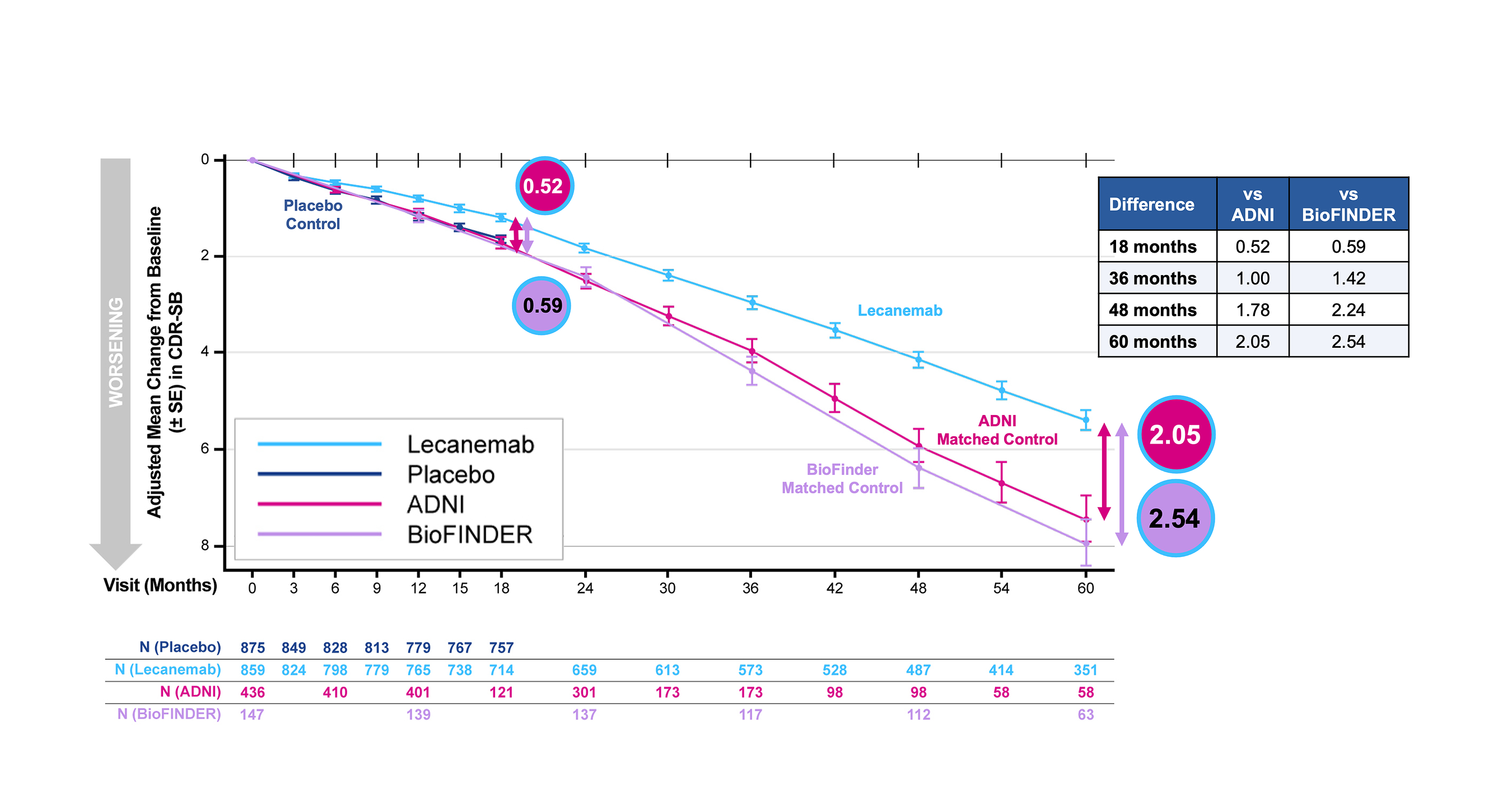
Among patients who received five years of continuous treatment through the core study and LTE, the difference in mean change from baseline in CDR-SB compared with the decline in AD based on data from the Alzheimer's Disease Neuroimaging Initiative (ADNI)* was −1.00 points at three years, −1.78 points at four years and −2.05 points at five years, with the benefit continuing to accrue over time.
Opening of the article, excerpted from PR Newswire. To read the rest, open the article on the publisher's site.
MarketNews shows the headline and summary published by the outlet. The full article is on the publisher's website. (www.prnewswire.com)

