More Cancer Cases But Fewer Deaths In Hong Kong
Detailed summary
More Cancer Cases But Fewer Deaths In Hong Kong Hong Kong has made considerable progress in reducing cancer deaths, despite a steady increase in diagnoses over the past four…
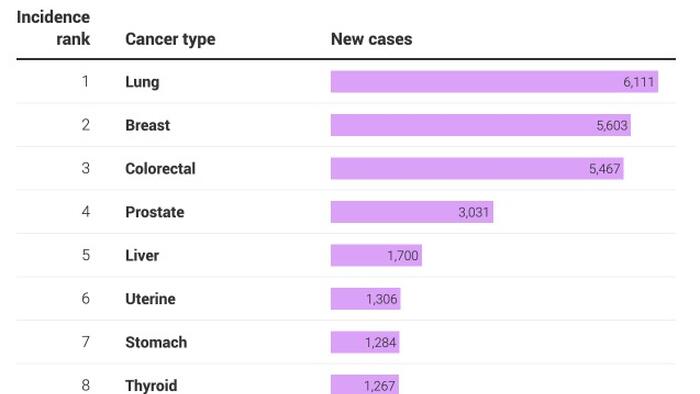
Hong Kong has made considerable progress in reducing cancer deaths, despite a steady increase in diagnoses over the past four decades.
Between 1983 and 2023, annual new cases rose from approximately 15,000 to 38,000, while the age-adjusted mortality rate fell from 136.7 to 71.1 per 100,000 people.
Cancer nevertheless remains the city's leading cause of death, responsible for nearly 15,000 fatalities in 2023. Medical advances have contributed to improved survival, but healthcare professionals believe further progress depends on prevention, earlier diagnosis and better access to treatment, according to the South China Morning Post.
One major concern is that many patients only discover their illness after it has progressed significantly. In 2023, more than half of lung cancer cases and over 45% of liver cancer cases were identified at advanced stages, limiting treatment options.
Although Hong Kong has established screening services for several common cancers, participation remains relatively low. For instance, only around half of eligible women have ever received cervical cancer screening, compared with the World Health Organization's recommended coverage target of 70%.
Specialists suggest that wider access, clearer screening guidance and greater involvement from family doctors could encourage more people to undergo regular examinations.
New technology could also help overcome existing screening limitations. Researchers at the Chinese University of Hong Kong have been testing artificial intelligence to interpret lung scans, particularly among nonsmokers with a family history of the disease.
The project has examined approximately 1,800 individuals and identified a small proportion requiring medical intervention. By reducing reliance on specialist image interpretation, AI could potentially lower screening expenses by half, making large-scale detection programmes more practical.
Preventing liver cancer is another important priority, particularly because hepatitis B remains…
Opening of the article, excerpted from ZeroHedge. To read the rest, open the article on the publisher's site.
MarketNews shows the headline and summary published by the outlet. The full article is on the publisher's website. (www.zerohedge.com)