Montréal’s school service centre is evicting community groups in its surplus buildings. An urban neighbourhood shows the cost
Detailed summary
A wider shift is taking place in which the Quebec government is pushing responsibility for social infrastructure off itself and onto community organizations.
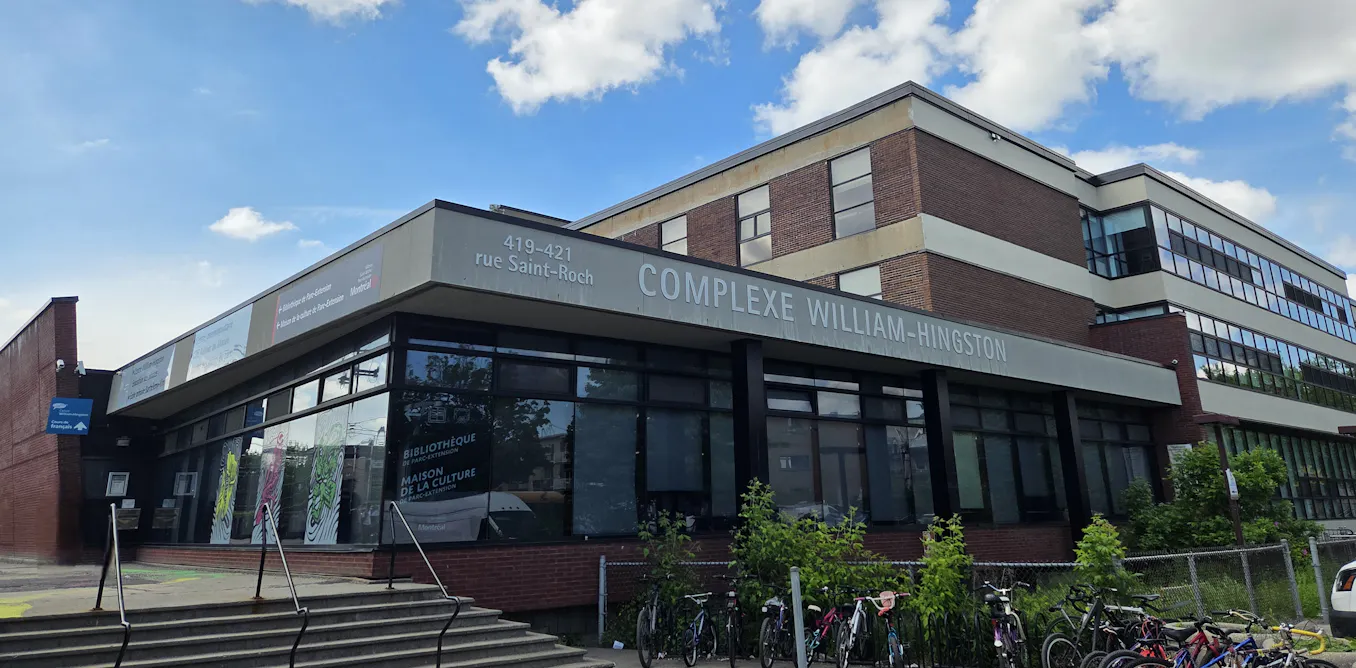
For newcomers to Montréal’s Parc-Extension neighbourhood, the William-Hingston Centre was a place to find several kinds of supports under one roof. As the largest community centre in the area, it housed 15 community groups in a neighbourhood where roughly 14,000 people rely on local organizations each month.
They included Afrique au Féminin, which offered women’s support; the Comité d'action de Parc-Extension, which provided housing assistance; and the Parc-Extension Youth Organization, which ran youth programming.
That changed in 2021, when the Centre de services scolaire de Montréal (CSSDM), which owns the building, notified the groups of plans for major renovations. All 15 groups were required to relocate by June 2025 at the latest. The timing could hardly have been worse: the neighbourhood was already grappling with land speculation and rising rents.
The mass eviction has placed further pressure on a vulnerable immigrant community. But what happened at William-Hingston is not an isolated case. It’s part of a citywide pattern that reflects a growing tendency for the state to transfer responsibility for addressing social problems to private entities.
Parc-Extension is one of Montréal’s most multicultural and economically vulnerable neighbourhoods. It’s home to a large number of families and immigrants: 69 per cent of residents speak a mother tongue other than French or English, and 39 per cent of the population living in low income, compared with 21 per cent for the city of Montréal as a whole.
Over the past few years, the neighbourhood has faced rapid land speculation and rising evictions. The inauguration of the Université de Montréal’s Campus MIL, which straddles Parc-Extension’s southern border, has sparked waves of displacement, with rent increases disproportionately affecting the most vulnerable residents.
Following their displacement, the William-Hingston groups had to seek new locations within Montréal’s competitive and increasingly unaffordable real estate…
Only…
Opening of the article, excerpted from The Conversation AU. To read the rest, open the article on the publisher's site.
MarketNews shows the headline and summary published by the outlet. The full article is on the publisher's website. (theconversation.com)