Siemens’ automation chief on Silicon Valley’s ‘toxic and self-serving’ AI jobs story and the exciting ‘greenfield’ era of data centers and factories
Detailed summary
He counts about 30,000 new industrial projects across the Americas, from food plants to chip fabs, and says factories now compete with Starbucks for workers.
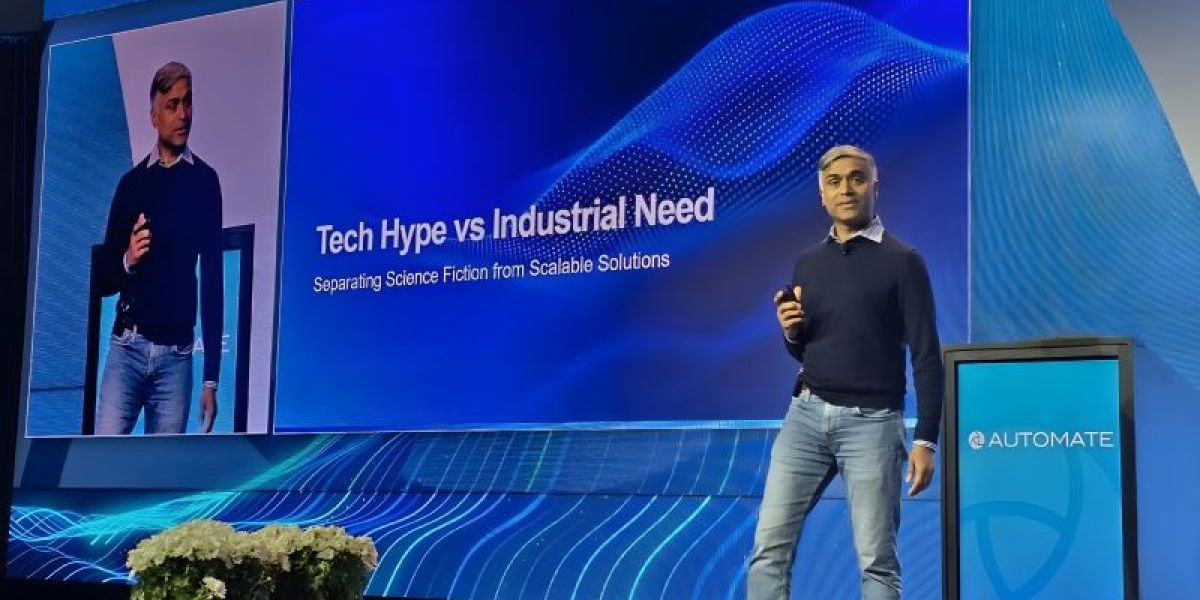
Kumar has spent 27 years remaking those factories. He started at General Motors in Detroit, spent 10 years at GE and seven at Honeywell, ran the robot maker Teradyne Robotics, and is now president of Siemens’ automation business in the Americas. He says he’s meeting five or six CEOs a week because of a wave of new factory projects, pitching them the controllers, software and robots that run modern plants. He also thinks the tech industry did lasting damage with how it talked about what AI would do to workers.
“The AI industry, especially the high-tech story coming out of Silicon Valley was pretty toxic and self-serving,” Kumar said. “It was almost like gloating, saying, ‘Oh, it is a good thing that it is eliminating every job.’”
Kumar didn’t name anyone, but the best-known version of the warning came from Anthropic CEO Dario Amodei, who told Axios in May 2025 that AI could eliminate half of all entry-level white-collar jobs within five years and push unemployment as high as 10% to 20%.
“That is not how we in the industrial world talk,” Kumar said. “You won’t see anyone from the industrial DNA talking like that.” He said industrial companies have raised it with their tech partners: “I have no idea why we would gloat about human beings losing their job, everybody going on UBI [universal basic income]. Like, that doesn’t excite people.”
Data centers became a political flashpoint in the midterm elections, with Democrats campaigning against big projects and voters pushing back over electricity costs, water use and a lack of local say, and the opposition wasn’t confined to one party. What ensued was a “blue tsunami” that saw Democrats win in states such as Mississippi and Texas, where they hadn’t won in decades, and in Kansas, where it’s been nearly a century.
Kumar was at the SuperComputing2026 trade show in Chicago the week after the vote, and he said the results reshuffled what the industry talked about.
He doesn’t read the vote as a rejection of building.
Opening of the article, excerpted from Fortune. To read the rest, open the article on the publisher's site.
MarketNews shows the headline and summary published by the outlet. The full article is on the publisher's website. (fortune.com)