Johnny Depp returns to the screen as Scrooge – Dickens might have some notes
Résumé détaillé
Charles Dickens wrote A Christmas Carol as a ‘sledgehammer’ to make Victorian Britain aware of child poverty. Modern film adaptations like Ebenezer soften the blow.
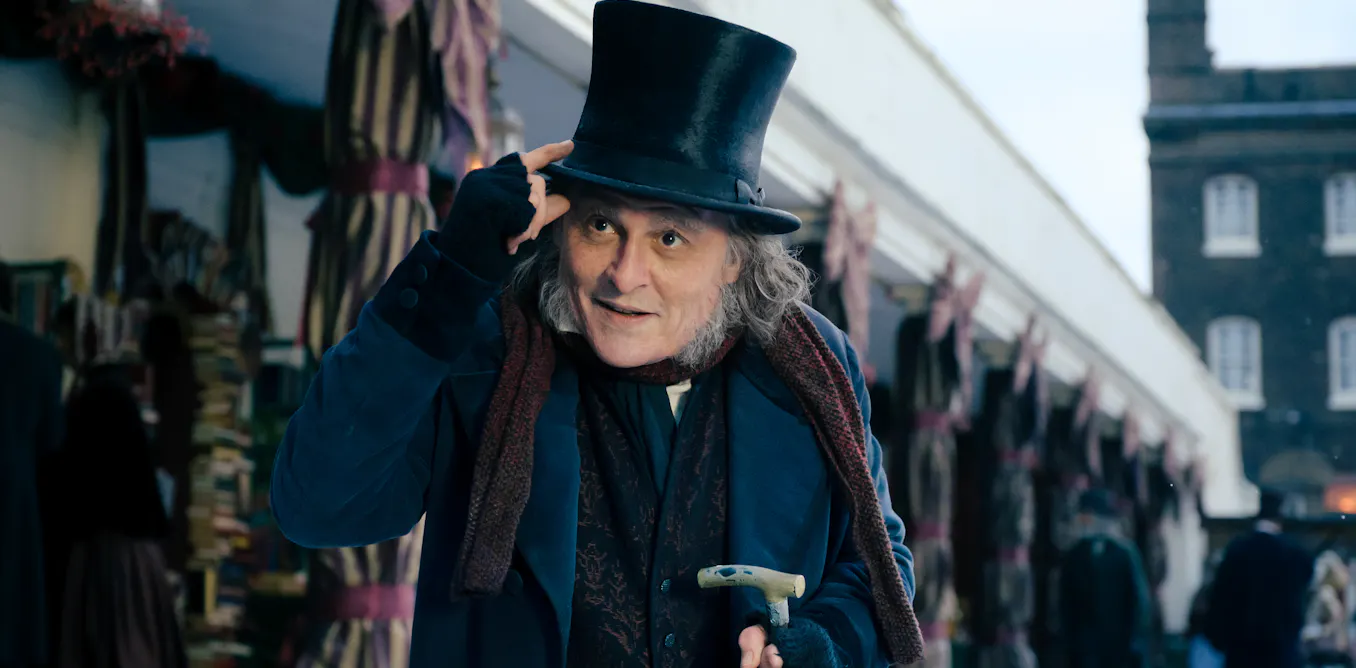
Another festive season beckons, and with it another adaptation of Charles Dickens’ perennial favourite, A Christmas Carol – this time as a vehicle for Johnny Depp’s return to family-friendly roles.
Boasting an all-star cast, Ebenezer explores the miserly Ebenezer Scrooge’s backstory. Dickens’ ghosts become zombies, and his London is a dark, violent place, filled with predators and danger.
Against this backdrop, we see a different side to Scrooge: a man scarred by bullying and abuse, whose worldly ambition masks his vulnerability. It’s also a reminder of how much the focus of Dickens’ original story has shifted in the retelling, and of the author’s real intentions when writing it.
An instant hit when it was first published in December 1843, the tale of Scrooge and Tiny Tim has been synonymous with Christmas ever since. It began a series of annual “Christmas books” through which Dickens sought to capitalise on his novella’s success.
While always commercially savvy, Dickens had another, more pressing motive behind his story of Scrooge’s haunting and redemption: he wanted to bring about widespread radical social change.
Known for his commitment to social reform through novels such as Oliver Twist, which exposed the cruelty of the Victorian workhouse, Dickens himself had experienced a brush with poverty as a child when his father was imprisoned for debt.
Forced to work in a blacking factory at the age of 12 or 13, he knew the horrors of penury and the dangers the streets posed to vulnerable children.
In the early 1840s, Dickens read two early drafts of reports from the Children’s Employment Commission. He was horrified by their accounts of child workers and the abuse they suffered in factories and coal mines.
Around the same time, he also visited a “ragged school” and was appalled by the conditions in which pauper children were expected to learn.
Début de l'article, extrait de The Conversation AU. Pour lire la suite, ouvrez l'article chez le média.
MarketNews présente le titre et le résumé publiés par le média. L'article complet se lit sur le site de l'éditeur. (theconversation.com)