New Homo erectus fossils from two caves in Guangxi offer fresh clues to human evolution in China
Detailed summary
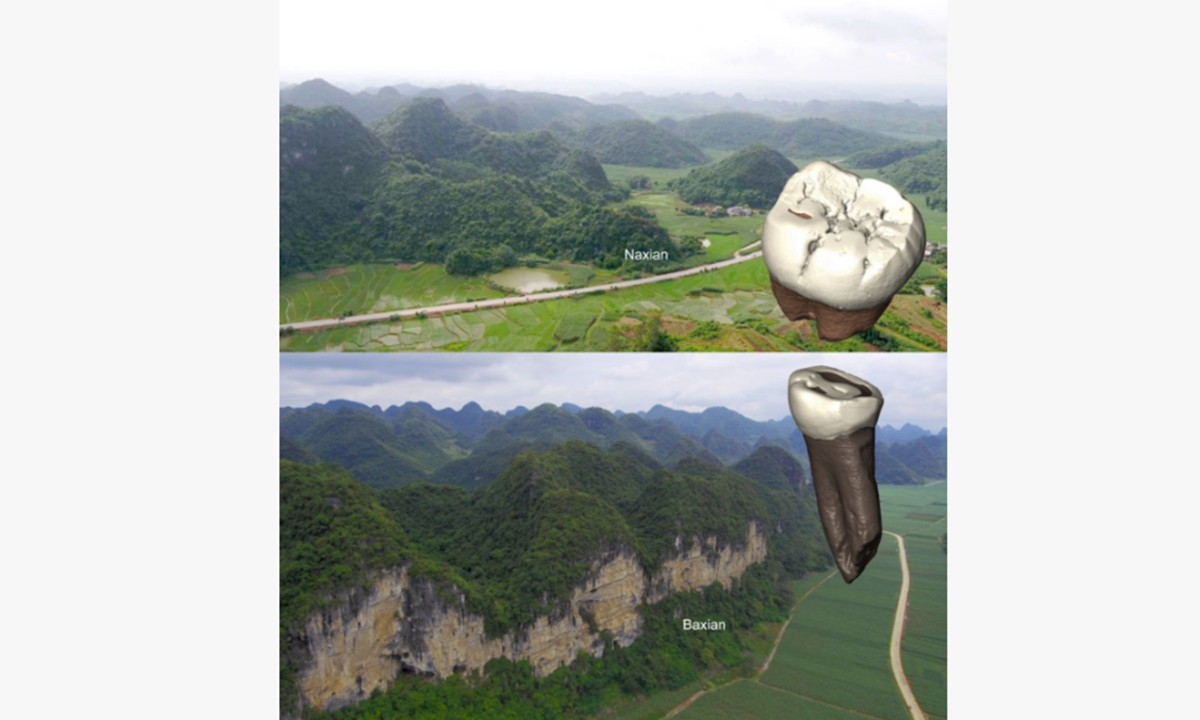
Scientists from China and abroad have confirmed that eight of nine fossils of ancient human teeth discovered from the Baxian Cave and Naxian Cave in Chongzuo city, Guangxi Zhuang Autonomous Region, southern China, belong to Homo erectus. The fossils date to between 324,000 and 184,000 years ago and represent the latest known Homo erectus fossil record in China.
Illustration of the ancient human tooth fossils found in Baxian Cave and Naxian Cave. Credit: Courtesy of the research group
Marking the 80th anniversary of the opening of the International Military Tribunal for the Far East, or the ...
China has both the capacity and willingness to play a bigger role in global marine biodiversity governance, including ...
Once a thriving crossroads on the Silk Road in northwest China's Xinjiang Uygur Autonomous Region, the ancient kingdom ...
Opening of the article, excerpted from Global Times. To read the rest, open the article on the publisher's site.
MarketNews shows the headline and summary published by the outlet. The full article is on the publisher's website. (www.globaltimes.cn)