Catching rogue agents and preventing cyberattacks—quantum computing is about to have its ‘ChatGPT moment’
Résumé détaillé
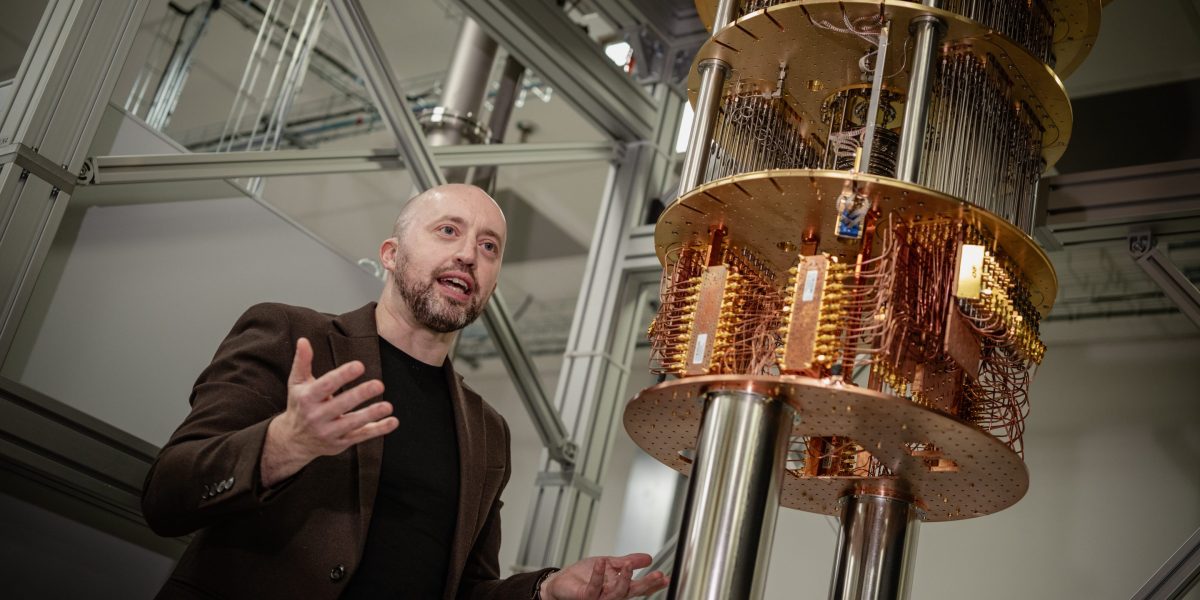
Oxford Quantum Circuits closed the biggest Series C fund raise for a quantum computing company in Europe. Its CEO Gerald Mullally says the technology is finally moving to the commercialization phase.
A boardroom’s job is to see around corners. Ten years ago, large language models were the approaching challenge, a fledgling technology with a wide range of plausible applications. Today it is quantum computing.
Quantum will change the way we consider computing power. At present, classical computing encodes everything using “bits”. Bits only have two states, 0 or 1. Quantum uses quantum bits, or qubits, which are more adventurous. They can be 0 or 1 or a mixture of both, called “superposition.” This flexibility allows them to perform many more tasks than classical computing at a speed high enough to revolutionize how we work.
This has advantages as well as risks. Most of life is more complicated than a series of ones and zeros. Understanding the delicacy of a human protein and its relationship to disease, how the climate works or the interaction of sub-atomic particles in fluids requires significant amounts of computing power. In the battle to keep business and personal data safe from bad actors, the more powerful the technical smarts at our fingertips, the better. Financial services firms already have quant capabilities to help them trade and would like more.
But qubits can be erratic and prone to error. Small fluctuations in temperature and atmospheric pressure can cause malfunctions. Expensive isolation chambers are the norm. We might all like to drive a supercar, but sometimes a basic family runaround—classic computing—is more reliable.
Many companies are working hard to make quantum computing the next ubiquitous technology. IBM, Google, and Microsoft have significant quantum divisions. Pure play operators such as D-Wave Quantum, Rigetti Computing, and IonQ are seeing valuations in the multiple billions of dollars.
Europe is getting in on the scene. In June, Oxford Quantum Circuits (OQC) executed the biggest C-series raise for a quantum computing company in Europe at £260 million ($345 million).
“Some of the earliest use cases of quantum are the ability to conduct…
The…
Début de l'article, extrait de Fortune. Pour lire la suite, ouvrez l'article chez le média.
MarketNews présente le titre et le résumé publiés par le média. L'article complet se lit sur le site de l'éditeur. (fortune.com)