When the Grid Fails, Solar Does Not Wait for the State
Résumé détaillé
Most power systems are built from the center outward. A government plans power stations. A utility signs fuel contracts, builds transmission lines and connects households. Large…
Leon Stille has a background in energy sciences (MSc and BSc) and is pursuing a PhD in energy policy. He currently runs his own company,…
Most power systems are built from the center outward. A government plans power stations. A utility signs fuel contracts, builds transmission lines and connects households. Large investors finance assets expected to operate for decades. The model assumes a state capable of making decisions, enforcing contracts and protecting infrastructure.
In fragile and conflict-affected countries, those assumptions can disappear before electricity demand does.
Syria offers a striking alternative. Solar panels now cover rooftops around the Umayyad Mosque in Damascus and are increasingly visible across Aleppo and other cities. This is not the result of a carefully executed national energy-transition strategy.
It is what happens when households stop waiting for the power system to recover. According to the latest IRENA capacity statistics, Syria’s off-grid solar capacity increased from 249 MW in 2022 to 2,060 MW in 2025. That is an eightfold increase in three years. Around a quarter of Syrian households are estimated to own some form of solar equipment.
The growth reveals an overlooked advantage of renewable energy. Solar is not only becoming cheaper than conventional generation. It can be deployed in pieces small enough to function when the institutions normally responsible for energy supply do not.
A new gas or coal plant is not merely a generator. It requires fuel imports or domestic production, creditworthy buyers, pipelines or ports, large construction contracts, transmission capacity, and a state capable of protecting the entire chain.
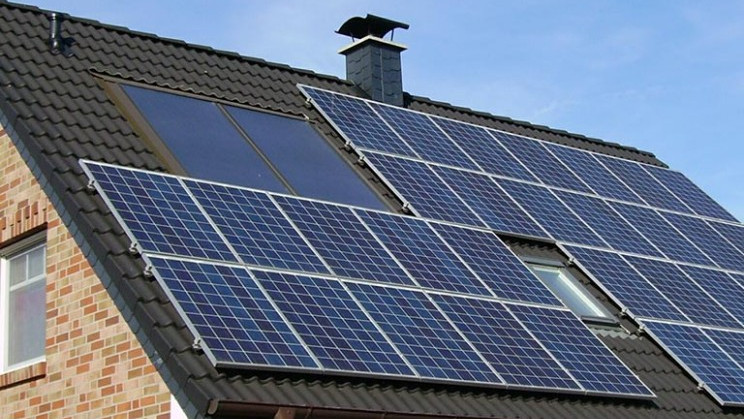
A rooftop solar system requires a panel, inverter, wiring, and usually a battery. That does not make it simple or universally affordable. But it radically lowers the minimum viable scale of investment. A household can purchase one panel. A shop can add enough capacity to run refrigerators and lights.
Each installation…
Début de l'article, extrait de OilPrice.com. Pour lire la suite, ouvrez l'article chez le média.
MarketNews présente le titre et le résumé publiés par le média. L'article complet se lit sur le site de l'éditeur. (oilprice.com)