Top UN court rules Myanmar committed genocide against Rohingya in landmark judgement
Résumé détaillé
This marks the first time the International Court of Justice has found a state responsible for committing genocide.
This marks the first time the International Court of Justice has found a state responsible for committing genocide.
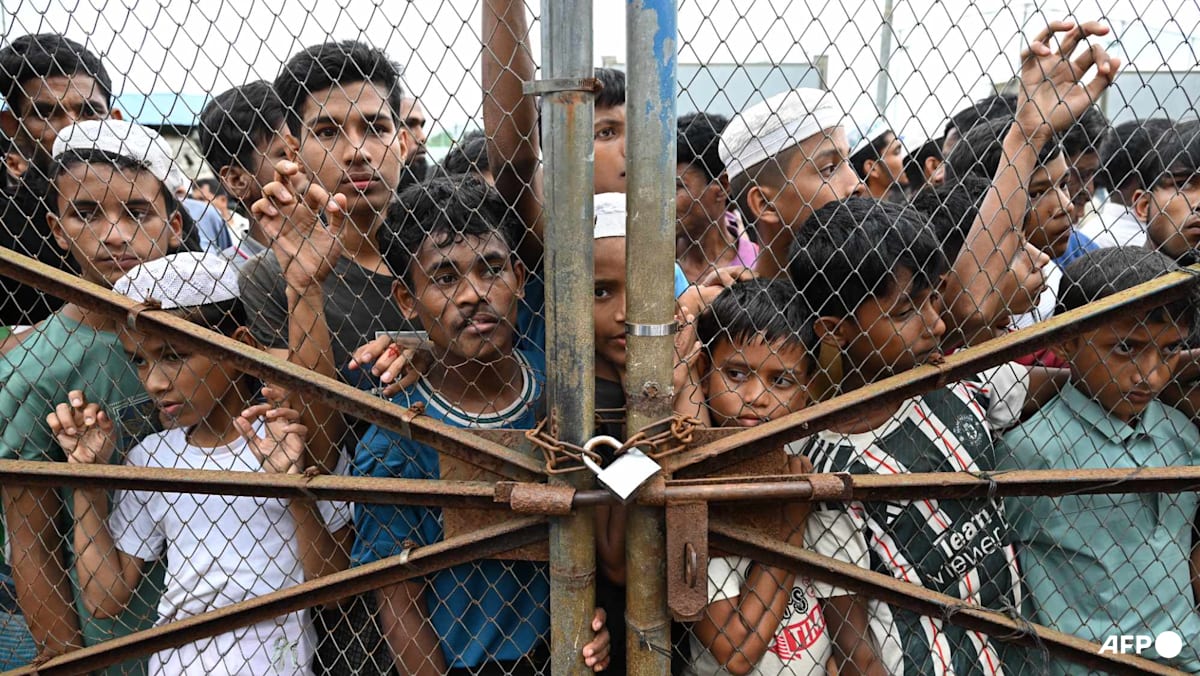
THE HAGUE: The United Nations’ highest court on Thursday (Nov 19) ruled that Myanmar committed genocide against its Rohingya community, in a landmark judgment nearly a decade after a military crackdown forced hundreds of thousands of Rohingya Muslims to flee the country.
The International Court of Justice (ICJ) said that actions by Myanmar against the Rohingya in 2017 had the “intention to destroy” a substantial part of the Muslim minority population, meeting the legal threshold for genocide.
The decision, seven years after the case was filed by predominantly Muslim Gambia, marked only the fourth time since the Nazi Holocaust that an international court ruled that the legal threshold to prove genocide had been met.
“The court finds that Myanmar’s security forces killed thousands of Rohingya civilians, perpetrated widespread acts of sexual violence as well as acts of extreme violence against children and attacked fleeing Rohingya as they sought to flee in large numbers to Bangladesh,” presiding judge Yuji Iwasawa said.
Myanmar must also allow the safe return of the Rohingya Muslim minority to their place of residence and allow reunification of families, the judge said. It also has to investigate individuals suspected of having committed acts of genocide and to punish them where warranted.
"Myanmar is under an obligation to compensate the Rohingya group and its members for the damage caused by the violations of its obligations ... in so far as such damage is not made good by restitution," said Iwasawa.
Genocide has rarely been established in international courts, largely because prosecutors must prove that there was a specific intent to destroy, in whole or in part, a national, ethnic, racial or religious group.
The ruling by the International Court of Justice comes seven years after Gambia brought the case against Myanmar, alleging that Myanmar’s repression…
Début de l'article, extrait de CNA. Pour lire la suite, ouvrez l'article chez le média.
MarketNews présente le titre et le résumé publiés par le média. L'article complet se lit sur le site de l'éditeur. (www.channelnewsasia.com)