COP31 collapse: countries reject deal without mention of transition away from fossil fuels
Detailed summary
This year’s climate summit ended without agreement on an overarching deal and little progress on other goals, including more financing for developing countries.
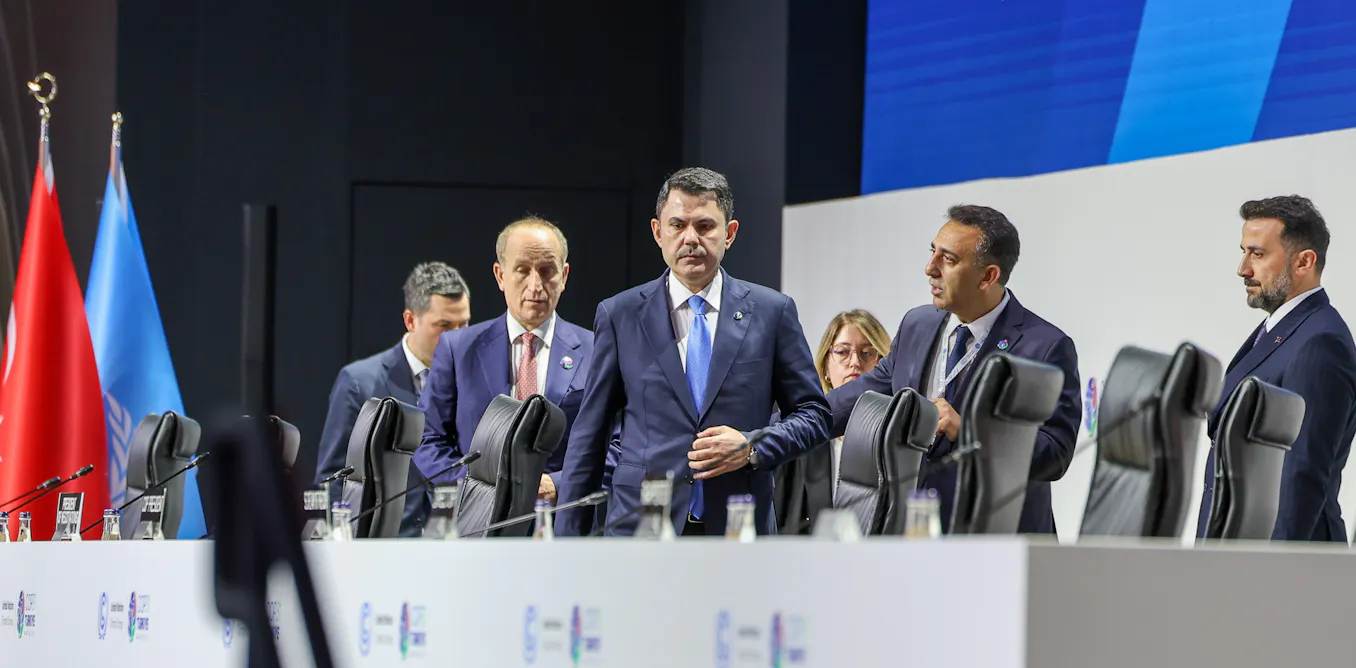
After stretching almost two days overtime, the COP31 climate summit in Antalya, Turkey, collapsed after countries failed to agree on an overarching deal to combat climate change.
The breaking point was a draft text with no mention of a phase-out of fossil fuels. Nearly 40 countries, including those in the European Union, the United Kingdom, Panama and vulnerable Pacific island nations such as Vanuatu and the Marshall Islands, formally objected to the final text.
EU representatives called a climate deal that ignored phasing out fossil fuels “unconscionable”.
But the summit also failed to deliver on several other significant issues. It was billed as the “implementation COP”, but delivered very few of the goals set by its co-presidents, Turkey and Australia.
The rejection of the final text centred on other interrelated concerns: a lack of response to science that shows the world is about to breach 1.5°C of warming and inadequate financing for developing countries to respond to climate change.
The aim was to triple adaptation financing to US$120 billion a year. That figure is now off the table, even though adaptation needs in the Global South alone are estimated at around US$500 billion a year.
Talks about a just transition mechanism also made little progress. Even the goal for clean electricity to supply 35% of the world’s energy use by 2035 was only supported as a voluntary pledge by 90 countries.
I attended the summit in my role as chair of the World Climate Research Programme. My job, alongside other UN agencies, was to make sure the best available science underpinned the negotiations.
The International Panel on Climate Change (IPCC) delivers its major reports every six or seven years and is currently working on its latest assessment. In between, the UN Environmental Programme’s (UNEP) annual Emissions Gap and Adaptation Gap reports and the World Meteorological Organization’s State of the Global Climate report show how far off track nations are from meeting commitments…
Opening of the article, excerpted from The Conversation AU. To read the rest, open the article on the publisher's site.
MarketNews shows the headline and summary published by the outlet. The full article is on the publisher's website. (theconversation.com)