From equal rights to the death penalty, seven Constitutional Court judgments that shaped SA
Detailed summary
Over three decades, some Constitutional Court decisions have reached far beyond the people and disputes that first brought them there, changing laws, shifting government policy…
Over three decades, some Constitutional Court decisions have reached far beyond the people and disputes that first brought them there, changing laws, shifting government policy and leaving a mark on how South Africa works today. We look back at seven judgments whose impact is still being felt.
It is hard to imagine South Africa without the Constitutional Court, which, over the past 30 years, has been called on to decide some of the country’s biggest questions, from whether the state can take a person’s life to whether two people of the same sex can marry, whether government can be forced to provide healthcare and housing, and how far those occupying the highest political offices can exercise their power.
These cases have often made it to the court through the lives of ordinary people. Others reached the court because of battles over corruption, government power and whether a president could be held accountable.
Under the apartheid government, Parliament was supreme. In democratic South Africa, the Constitution is supreme, giving the courts the power to test laws and government decisions against it.
Lawson Naidoo, Executive Secretary of the Council for the Advancement of the South African Constitution, said this fundamentally changed the role of the judiciary.
“They exercise their functions independently, and what that means is that they have the power and the authority to overturn decisions or decisions of Parliament that are inconsistent with the Constitution,” Naidoo said.
“That, I think, is a significant power and responsibility that the court has.”
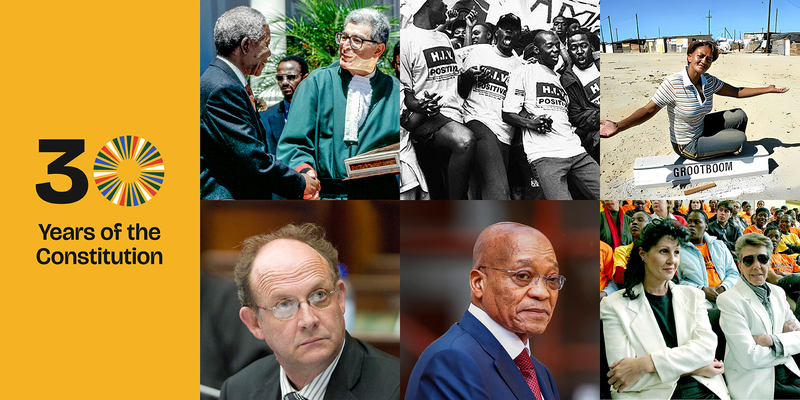
We look at seven landmark judgments (in no particular order) that show how the Constitutional Court has changed South African law, protected rights and held power to account.
S v Makwanyane and Another was the first case heard by the newly established Constitutional Court in 1995, and it resulted in one of the most important decisions of the new democracy – the abolition of the death penalty in South Africa.
Opening of the article, excerpted from Daily Maverick. To read the rest, open the article on the publisher's site.
MarketNews shows the headline and summary published by the outlet. The full article is on the publisher's website. (www.dailymaverick.co.za)
