SpaceX is set to make an audacious grab for ‘holy grail’ of rocketry. Here are the risks
Résumé détaillé
A crucial test today could bring SpaceX one step closer to revolutionising spaceflight - or cast new uncertainty on the company's boldest ambitions.
A crucial test today could bring SpaceX one step closer to revolutionising spaceflight - or cast new uncertainty on the company's boldest ambitions.
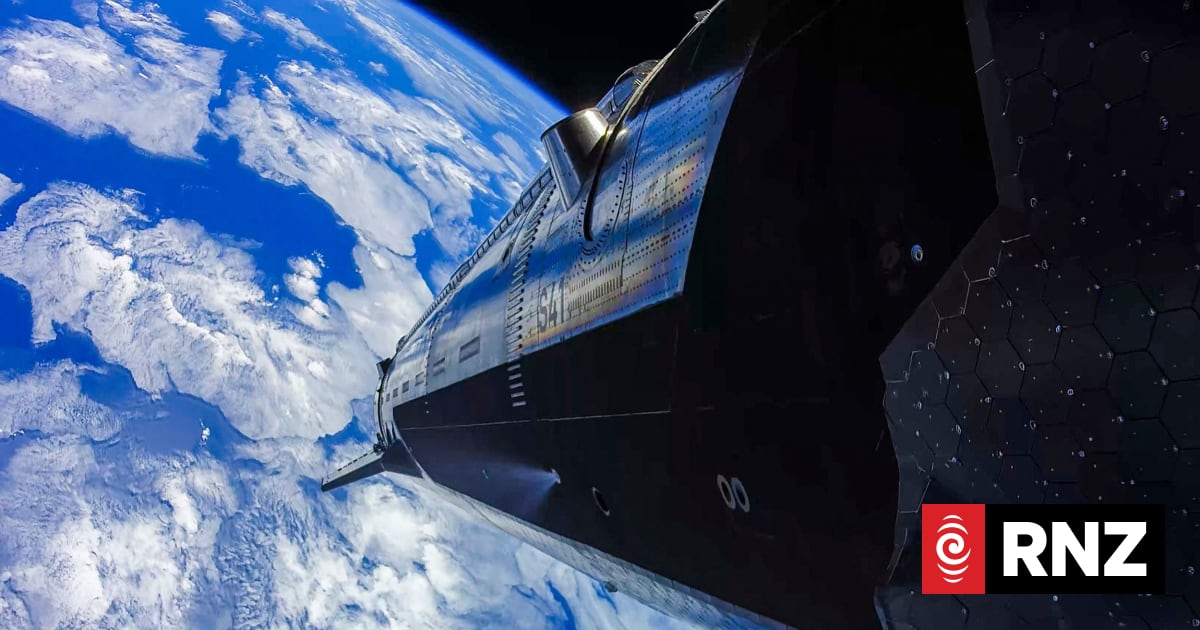
SpaceX will for the first time attempt to bring every part of its massive Starship, the most powerful rocket ever built, back to dry land - intact - during a mission set to launch on Friday between 5:45pm and 7:00pm ET (11:45am and 1:00pm Saturday NZT).
The aim is to develop a fully reusable launch system, a goal the company has deemed the "holy grail" of rocketry because it would eliminate the need to throw away multimillion-dollar rocket parts after a single mission. That in turn could dramatically lower the cost of a single launch - by orders of magnitude, SpaceX CEO Elon Musk hopes - and open a new world of possibilities for space exploration.
But to realise its vision, SpaceX needs to figure out how to bring Starship's upper half, a 171-foot-tall (52 metre) spacecraft, back from orbit to a safe, upright landing within the arms of the company's South Texas launch tower.
But SpaceX has long made clear that recapturing and reflying the entire Starship vehicle is imperative to achieve some of the company's most audacious goals and, as the company said in a statement, "unlock the true capability of Starship."
The company intends for the gargantuan rocket to tackle a wide range of lofty, extraterrestrial projects - such as helping NASA to establish a permanent human presence on the moon, expand its space-based Starlink internet network, launch an orbital data centre, and "extend the light of consciousness to the stars, and make life multiplanetary," the company said in a statement, nodding to Musk's longtime goal of using Starship to colonise Mars.
If all goes according to plan during Saturday's test, SpaceX will put on an extraordinary show beginning just minutes after liftoff. That's when the bottom half of the Starship, called the Super Heavy rocket booster, is expected to break away from the upper spacecraft - or "ship."
Th…
Début de l'article, extrait de RNZ. Pour lire la suite, ouvrez l'article chez le média.
MarketNews présente le titre et le résumé publiés par le média. L'article complet se lit sur le site de l'éditeur. (www.rnz.co.nz)