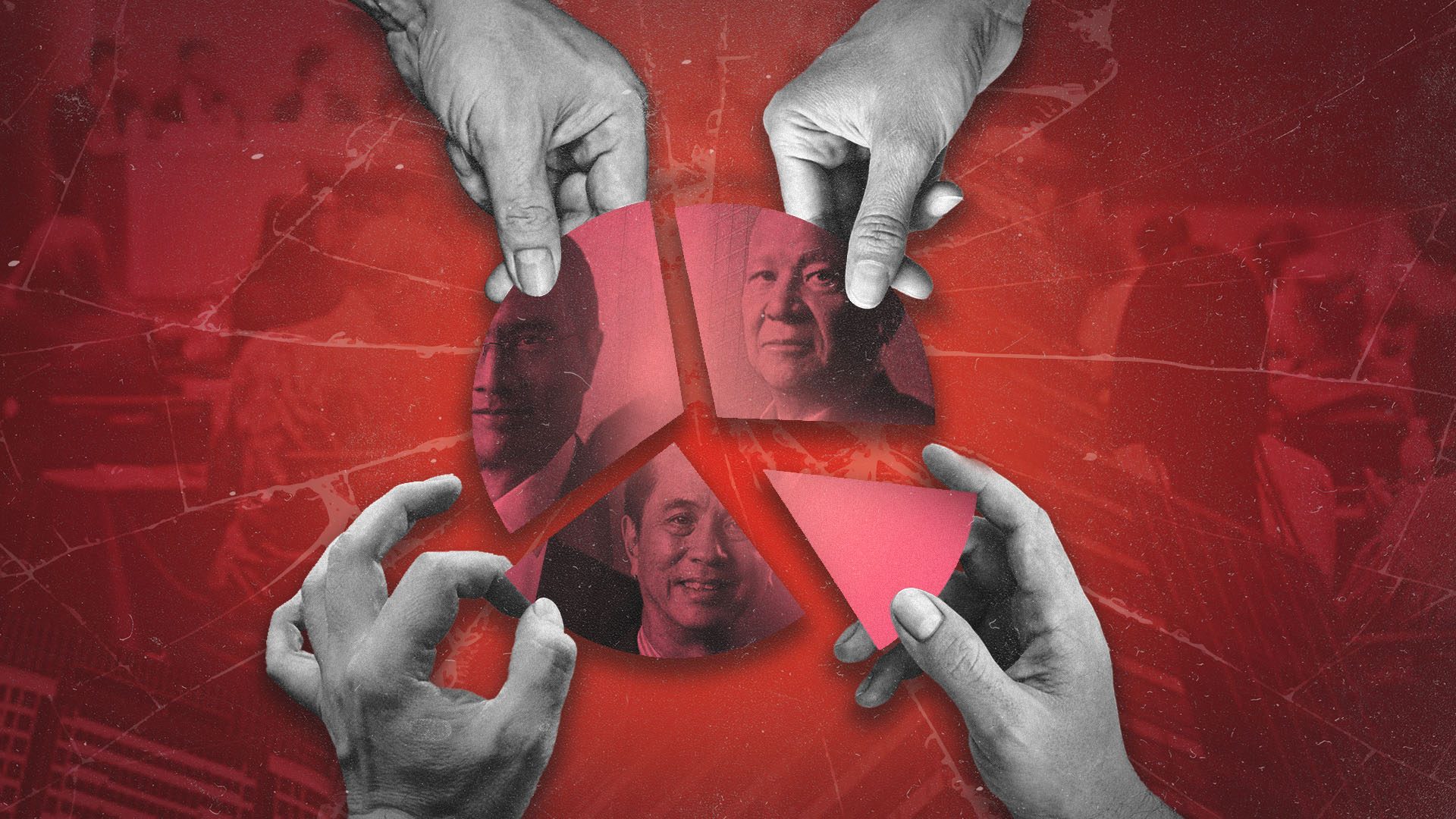
Dividing the Lopez empire: Who decides what a family business is worth?
Detailed summary
The experiences of other business families suggest that a workable settlement requires more than a willingness to stop fighting
This is AI-generated. Read the article for full context. Report any errors.
PART 1 | Why the Lopez cousins are breaking up — and what other feuding dynasties teach us
What months of fighting in boardrooms, shareholders’ meetings, and public statements could not accomplish, the buying and selling of shares may finally achieve: a separation of the Lopez family businesses.
Between August and November 2026, Eugenio “Gabby” Lopez III’s branch sold its 25.68% stake in apex parent Lopez Inc. to Ramon Ang for ₱11.56 billion and agreed to buy First Philippine Holdings’ (FPH) controlling stake in Rockwell Land for ₱15.92 billion. In between, cousin Federico “Piki” Lopez locked down the boards of Lopez Holdings and FPH, securing his grip on the group’s energy and industrial core. (Click on these links below for the author’s special reports on these developments:
Part 1 | The Lopez heirs who ran Rockwell but never controlled itPart 2 | Why Gabby Lopez wants Rockwell as ABS-CBN strugglesPart 3 | Why Piki Lopez is letting Rockwell go
The cousins appear to be finding a way to stop running the same businesses together. But separating a family business is not as simple as dividing an inheritance, especially when the family’s interests are held through layers of private and publicly listed companies with other shareholders, employees, creditors, and business partners whose interests cannot simply be divided among the cousins.
Who decides what each business is worth? Who approves the sale? What happens when the buyer and seller are connected to rival branches of the same family? And what protects shareholders who were never part of the quarrel?
In the first story of this series, we examined why business families fight and why some choose to stay together while others separate. The Lopezes are hardly the first to confront these questions. Other families have negotiated settlements, divided companies, bought out dissatisfied relatives, or found ways to continue working together.
One source of…
Opening of the article, excerpted from Rappler. To read the rest, open the article on the publisher's site.
MarketNews shows the headline and summary published by the outlet. The full article is on the publisher's website. (www.rappler.com)