We found a seaweed that hadn’t been spotted in 90 years - and discovered vast underwater forests
Résumé détaillé
Adult specimens of the Sargassum howeanum seaweed were last found in the 1930s.
That’s what botanist A.H.S. Lucas found in 1935 while conducting research near Lord Howe Island, a World Heritage-listed site known for its unique biodiversity. After collecting some large adult specimens of this previously unidentified seaweed, Lucas named it Sargassum howeanum.
Over the next 90 years, only small, immature specimens were ever found in the shallow waters surrounding Lord Howe Island. This puzzled scientists, who could only wonder where all the adult populations of S. howeanum had gone.
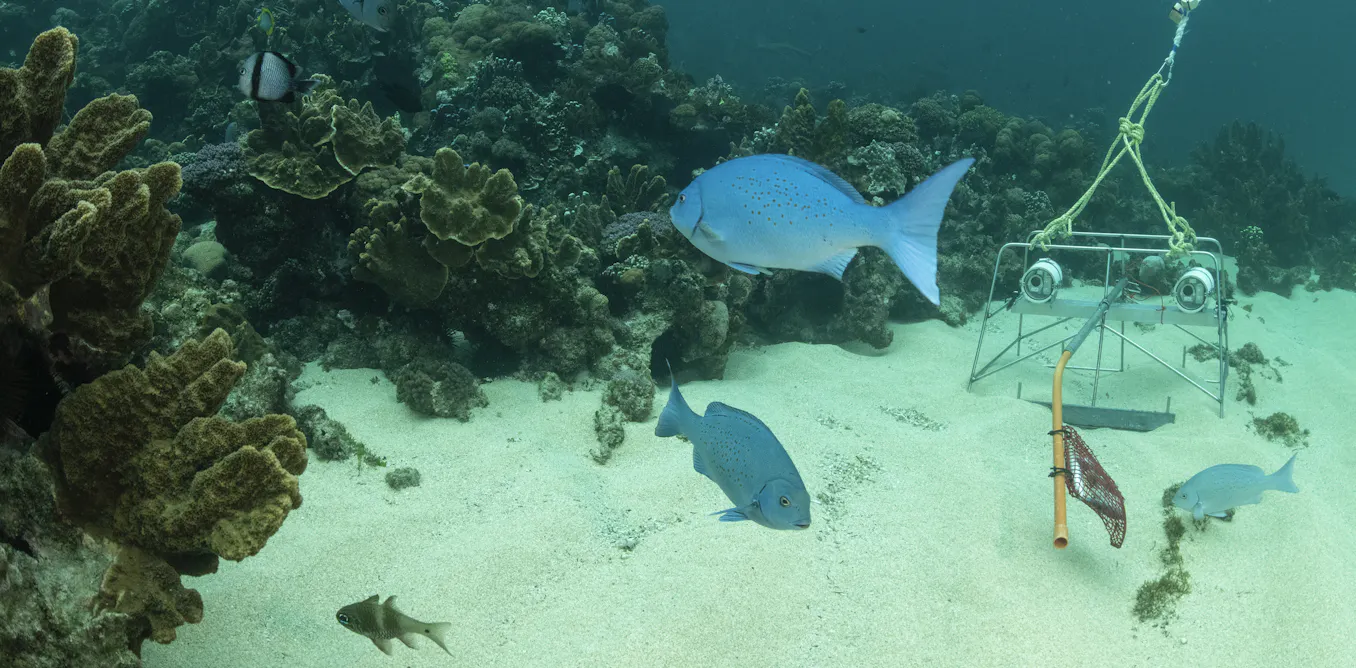
Using underwater cameras, we discovered vast seaweed forests near Lord Howe Island at depths of 20-38 metres. Our new study suggests these deep water habitats could act as potential refuges for seaweed, particularly as climate change warms the world’s oceans.
As ocean temperatures rise, the world’s seaweed forests are rapidly shrinking. In some regions such as Tasmania and Northern California, kelp forests have declined by 95%. Marine heatwaves and ocean warming are the main factors driving these declines, but growing populations of invasive, seaweed-eating sea urchins can also have an impact.
This is deeply worrying. Seaweed forests provide vital habitat and food for many marine species, including species of reef fish, seadragons and abalone. Seaweed also removes nearly 56 million tonnes of carbon from the atmosphere each year.
Researchers rely on long-term environmental monitoring to track how seaweed forests are faring. In 2022, our team helped monitor several marine parks surrounding Lord Howe Island, located about 600 kilometres off Australia’s eastern coast. There, we took underwater videos of shelf habitats found 20-50 metres below the ocean’s surface.
This involved deploying baited remote underwater video systems, which scientists commonly use to estimate the abundance and diversity of fish and their habitats. They are particularly useful in sensitive environments, such as World Heritage-listed sites and marine parks.
After our first day of surveys, we reviewed this…
Début de l'article, extrait de The Conversation AU. Pour lire la suite, ouvrez l'article chez le média.
MarketNews présente le titre et le résumé publiés par le média. L'article complet se lit sur le site de l'éditeur. (theconversation.com)