U.S. boycotts U.N. human rights review for second year running
Detailed summary
The U.S. has skipped a key U.N. human rights review for the second year running. Rights groups warn the absence risks undermining global accountability.
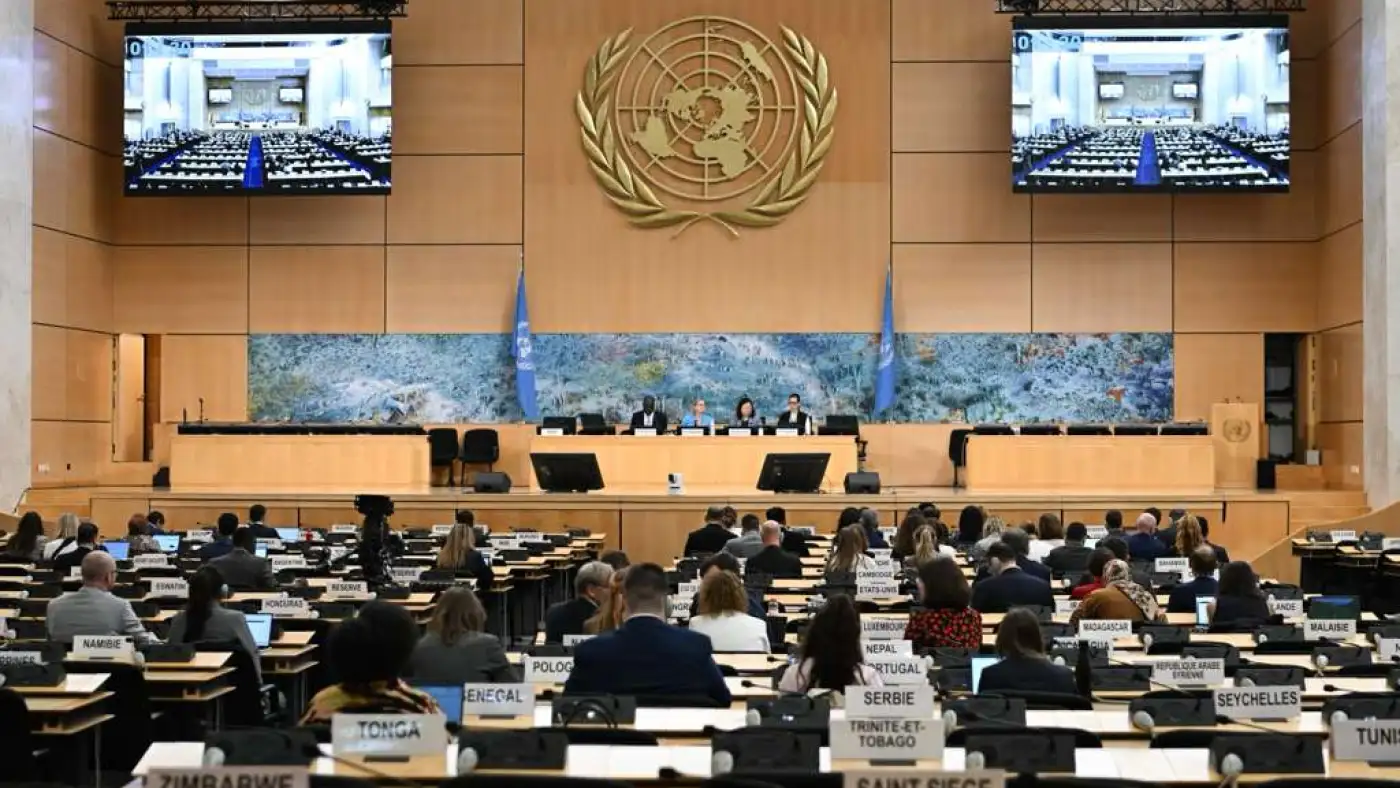
The U.N. Human Rights Council meets at the Palais des Nations in Geneva on September 30, 2026. The United States has boycotted its human rights review for the second year running. Lian Yi/Xinhua via Getty Images hide caption
GENEVA, Switzerland — The United States has left an empty chair at a key United Nations human rights review for the second year running, becoming the only U.N. member state ever to do so.
The review, known as the universal periodic review, is meant to be just that: universal. Each state is reviewed every four to five years by fellow member states. The aim is to ensure that every country, however powerful, undergoes a peer review of its human rights record.
As well as diplomats from countries under review, civil society groups are allowed to submit evidence too. Several made the trip to Geneva, led by the American Civil Liberties Union.
Jamil Dakwar, the ACLU's human rights director, told journalists that the current U.S. administration was continuing to violate human rights "unabashed," citing the treatment of immigrants, student protesters and the LGBTQ community as examples.
Dakwar said the U.N. must hold the U.S. accountable, warning that the Trump administration wanted to "dismantle human rights." In a written response, the State Department pointed out that Washington had already formally withdrawn from the U.N. Human Rights Council, accusing it of "pushing anti-American rhetoric."
In fact, leaving the council, which has 47 elected members, does not mean the U.S. can easily get out of the review process, which is obligatory for all 193 U.N. member states. Human rights groups see Washington's stance as part of a pattern of disengagement and even active opposition to multilateral organizations, pointing to U.S. sanctions on the International Criminal Court and the decision to leave the World Health Organization.
So what happens now? The U.N. has few sanctions against a country that does not cooperate with the review process.
Rights groups would like…
Opening of the article, excerpted from NPR. To read the rest, open the article on the publisher's site.
MarketNews shows the headline and summary published by the outlet. The full article is on the publisher's website. (www.npr.org)