Inflation is proving more stubborn in Australia than elsewhere, making the RBA’s job harder
Résumé détaillé
Higher interest rates alone won’t be enough to bring down inflation.
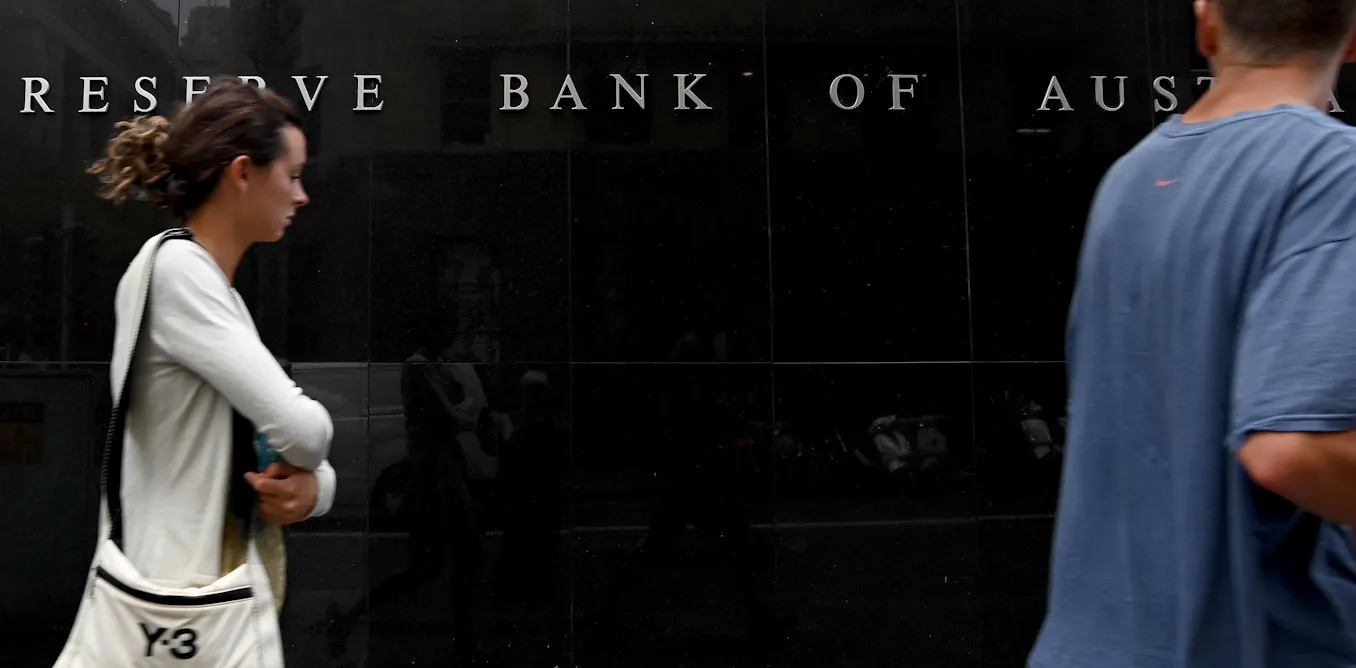
For most of 2026, inflation has remained more persistent in Australia than in similar economies, and the Reserve Bank has been hiking interest rates more aggressively than other central banks. Australian households have been feeling the pain.
Official figures measure both the headline rate or consumer price index (CPI), which includes goods and services typically consumed by a household, and underlying inflation. Underlying inflation excludes unusually large price movements and can give a clearer picture of longer-term price pressures.
Underlying inflation remains higher in Australia than in the United States, the United Kingdom and Canada. In those countries, it has fallen closer to 2–2.5%. In Australia, underlying inflation as measured by the “trimmed mean” has remained around 3.5–3.6%.
This helps explain why the Reserve Bank of Australia has taken a tougher approach to interest rates than some overseas central banks. The RBA has raised rates five times this year versus just one increase in the US and the UK in the past two years.
Australia has not consistently recorded the highest headline inflation rate among advanced economies recently, though. At times in 2025, the UK and US had higher headline inflation.
However, inflation has proved more persistent in Australia in late 2025 and 2026. This period has coincided with rapid growth in investment in data centres.
Immediately after the pandemic, inflation was driven by a strong rebound in consumer demand, which pushed up prices.
More recently, however, “supply constraints” are playing a larger role. Supply constraints occur when businesses face higher costs or shortages. When supply cannot keep pace with demand, prices tend to rise.
One example is housing. Australia does not have enough homes to meet population growth. This has pushed up rents and construction costs.
Début de l'article, extrait de The Conversation AU. Pour lire la suite, ouvrez l'article chez le média.
MarketNews présente le titre et le résumé publiés par le média. L'article complet se lit sur le site de l'éditeur. (theconversation.com)